To determine if wild plants are safe to eat without a guide, start by examining their features—avoid plants with milky sap, hollow stems, or bright, unnatural colors, as these often indicate toxicity. Use a cautious, step-by-step testing method: test small amounts on your skin, then on your lips, before trying tiny bites if no reaction occurs. Understanding these visual cues and testing techniques helps you confidently identify edible options—continue exploring for more insights on safe foraging.
Key Takeaways
- Conduct a universal edibility test by applying small amounts of the plant to skin, then progressing cautiously to lips and tiny mouthfuls if no reaction occurs.
- Avoid plants with toxic indicators such as milky sap, hollow stems, bright unnatural colors, or mushroom features like a volva or ring.
- Observe environmental cues and animal interactions, but do not rely solely on wildlife feeding patterns to determine edibility.
- Test for toxins step-by-step: start with skin contact, then lips, then a tiny taste, monitoring for adverse reactions at each stage.
- Combine visual inspection with cautious testing methods to reliably assess plant safety without a field guide.
Have you ever wondered how some professionals pass essential field tests without a hitch? The secret often lies in their ability to quickly assess edibility through simple, reliable methods—especially when a field guide isn’t available. When you’re out in the wild, your primary concern becomes toxin detection and ensuring foraging safety. Knowing how to spot safe food sources can be the difference between a nourishing meal and a dangerous mistake.
Master quick, reliable methods to identify safe, edible wild foods without a field guide.
The first step is to develop a keen eye for identifying plants, fungi, and berries that are potentially edible versus those that are toxic. Many edible species share common features, such as specific leaf shapes, growth patterns, or color traits, but don’t rely solely on appearance. Instead, you want to use a combination of methods to verify safety. One effective approach involves observing the plant’s environment and its interaction with wildlife. If animals are feeding on a particular plant without any apparent harm, that’s a good sign—but it’s not foolproof. Always double-check with trusted, tested methods, especially when it comes to toxin detection.
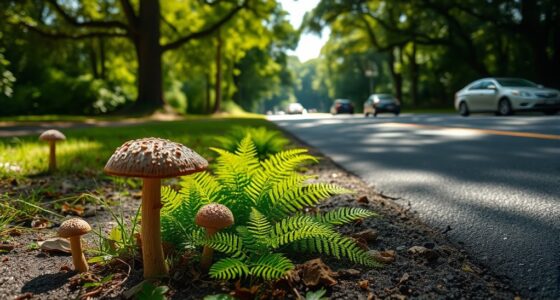
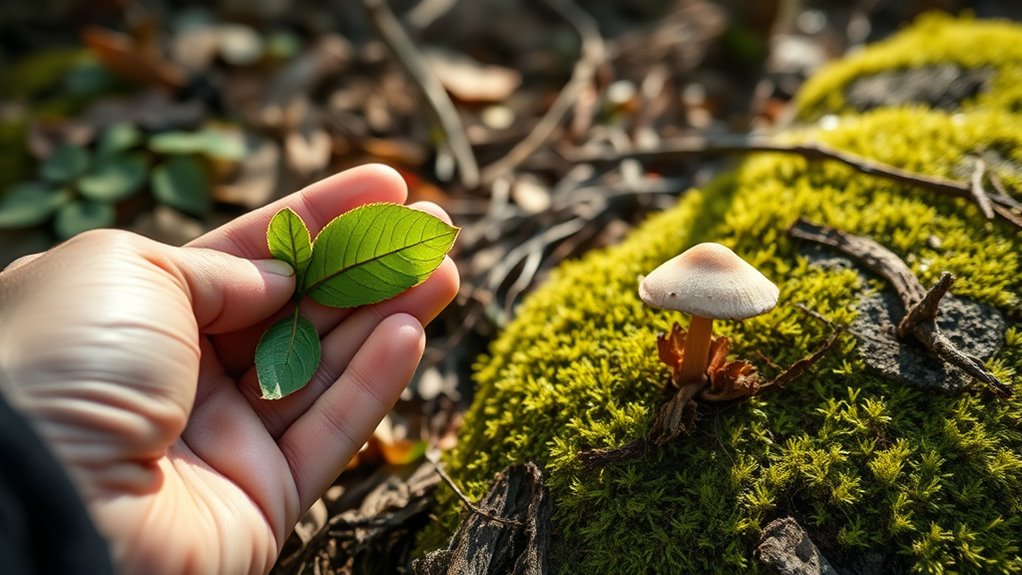
Another key aspect of foraging safety is understanding the importance of avoiding certain plant features that are often linked to toxicity. For example, plants with milky sap, hollow stems, or bright, unnatural colors are frequently poisonous. You should also steer clear of mushrooms with white gills, a volva at the base, or a ring around the stem, as these are common indicators of toxic varieties. Learning these visual cues helps you quickly eliminate dangerous options and focus on safer choices.
However, visual inspection alone isn’t enough—testing for toxins is essential. When you’re in the field, simple tests like the universal edibility test can help determine whether a plant is safe to consume. This involves a step-by-step process: first, test a small amount of the plant on your skin for any reaction, then on your lips, and finally, if no adverse effects occur, try a tiny piece in your mouth before swallowing. This cautious approach helps detect potential toxins early, reducing the risk of poisoning. Additionally, understanding the Cultural Impact of technology on artistic expression can inform your ability to interpret subtle cues in plant identification.
Frequently Asked Questions
Can All Wild Mushrooms Be Tested With This Method?
Not all wild mushrooms can be tested with this method. Mushroom poisoning can be deadly, so foraging safety is vital. This test might help identify some edible varieties, but it’s not foolproof for every mushroom type. Never rely solely on a field test to determine edibility. Always research thoroughly or consult an expert, as misidentification can lead to serious health risks. When in doubt, avoid consuming wild mushrooms altogether.
How Long Does the Edibility Test Take?
You’re enthusiastic to know the test duration, huh? Well, the timing accuracy varies, but typically, this edibility test takes about 24 hours. It’s not a quick snack check—more like a suspenseful Netflix binge. Don’t rush it; rushing ruins the test duration and accuracy. So, if you’re patient enough, you’ll get a clearer answer. Remember, a little time ensures safer foraging, and that’s worth the wait!
Are There Any Risks Involved in This Testing?
You should know there are risks involved in testing wild plants for edibility. Liability concerns can arise if you get sick, and ethical considerations come into play when risking harm to yourself or the environment. Always be cautious, as misidentification can lead to poisoning. Relying solely on field tests without proper knowledge can be dangerous, so consider consulting experts or guides whenever possible to minimize these risks.
Can This Method Identify Specific Mushroom Species?
Think of mushrooms as a garden of surprises—you never know what variety you’ll find. This method can’t reliably identify specific mushroom species, as many varieties look alike but differ in edibility. Relying solely on simple tests risks confusing safe varieties with deadly ones. For accurate species identification, it’s vital to use detailed field guides or consult experts, ensuring your foraging adventure remains safe and enjoyable.
Is This Test Reliable in All Environmental Conditions?
You wonder if this test remains reliable under different environmental conditions. Variability in environment can affect test consistency, making results less dependable. Factors like humidity, temperature, and contamination may alter outcomes, so don’t rely solely on this method. Always consider environmental variability and use additional identification techniques. It’s best to combine tests with other methods to improve accuracy and avoid dangerous mistakes when foraging.

Gift for Women, Mom, Her – 9 Herb Indoor Window Garden Kit | Complete Herb Seeds Starter Set with Pots, Soil, Tools & Markers | Heirloom Herbs | Birthday, Housewarming, New Home, Mother's Day
- Complete 9-Herb Indoor Garden Kit: Includes seeds, pots, soil, tools, and markers
- Beginner-Friendly Gardening: Step-by-step guide for easy planting and care
- Premium Quality Seeds and Soil: Heirloom seeds with high germination rates and coconut coir soil
As an affiliate, we earn on qualifying purchases.
Conclusion
As you carry out this simple test, it’s funny how nature often provides subtle clues—like a berry’s scent or the way a leaf feels—that can guide your judgment. Sometimes, a quick glance at a plant’s surroundings reveals whether it’s safe to eat, almost like the universe nudging you. Trust your instincts and observations, because in the wild, the tiniest coincidence can be the difference between a safe meal and a dangerous mistake. Stay attentive, stay safe.

PLANTMEW Indoor Herb Garden Starter Kit - Mothers Day Gifts - 4 Non GMO, Heirloom Culinary Herb Seeds, Unique Gardening Gift for Women, Mom, Her, Birthday, Housewarming, Plant Lovers
- Complete Indoor Herb Garden Kit: Includes pots, soil, markers, seeds, tools
- Non-GMO Heirloom Herb Seeds: Cilantro, Basil, Chives, Parsley
- High-Germination, Fresh Seeds: Seeds sourced from latest growing season
As an affiliate, we earn on qualifying purchases.

Indoor Herb Garden Kit, Culinary Herb Starter Kit with Seeds & Tools for Beginners, Kitchen Decor, House Warming Gifts for New Home, for Christmas, Ultimate Birthday Gifts for Women Men Mom Dad
- Complete Indoor Herb Garden Kit: Includes seeds, soil, pots, and tools
- Beginner-Friendly Gardening: Step-by-step guide for easy growing
- High Germination Seeds: Non-GMO, fresh, and flavorful
As an affiliate, we earn on qualifying purchases.