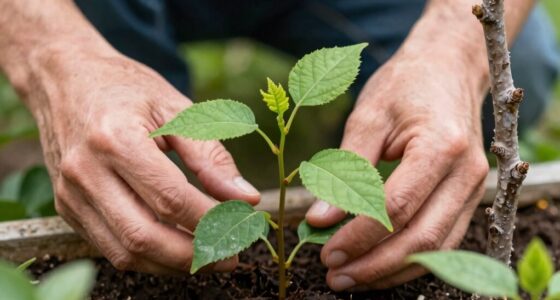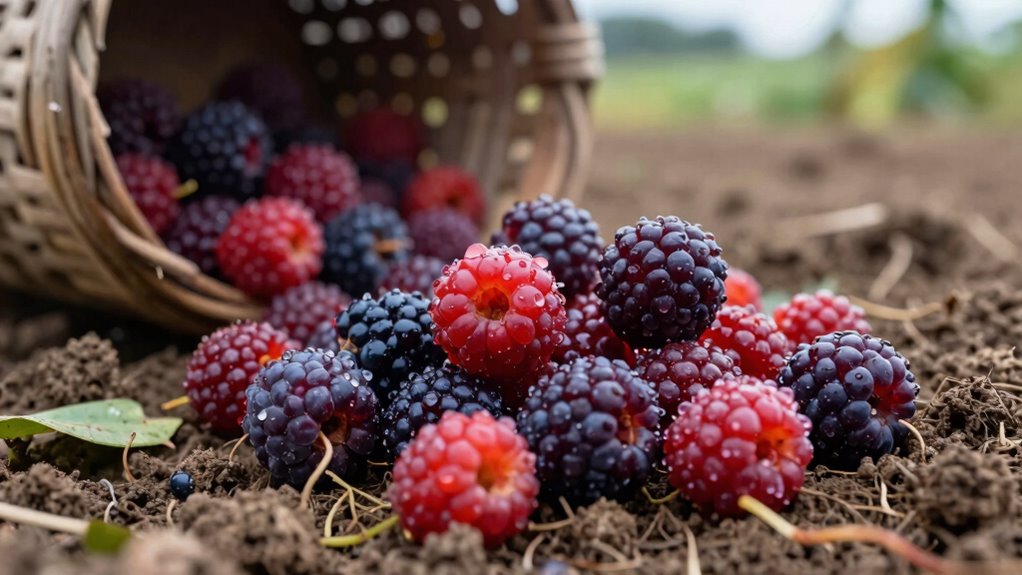

Sampling small harvests helps you spot growth patterns and plant-specific needs that big hauls can hide. It allows you to test different techniques, timing, and ripeness, leading to better crop management. With detailed observations, you can identify what’s thriving and what needs adjustment. This approach minimizes waste and boosts your understanding of your crops. Keep exploring, and you’ll discover practical ways to improve your harvests and grow more sustainably.

Get garden gear delivered free — and shop member deals
- Fast, free delivery on millions of items
- Access to Prime Big Deal Days deals on October 6–7
- Prime Video, Amazon Music and more included
Key Takeaways
- Small sample harvests reveal detailed growth and ripening differences often missed in large quantities.
- They enable precise observation and adaptation of harvesting techniques for better crop quality.
- Sampling allows for ongoing data collection to inform improvements and responsive management.
- They facilitate experimentation with harvest timing and methods without risking entire crops.
- Small-scale harvests promote continuous learning and refinement of skills for sustainable farming.
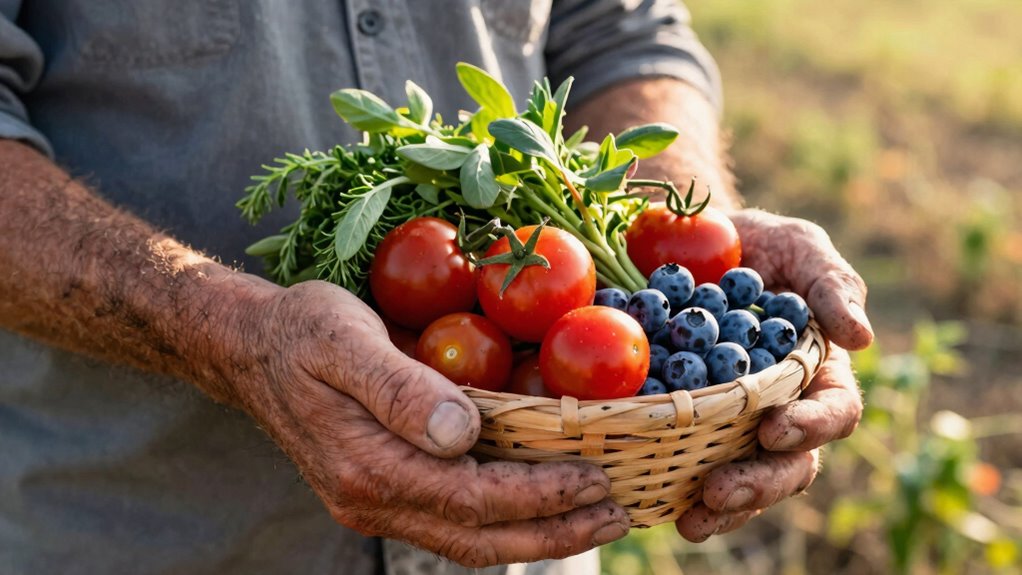
When you focus on small sample harvests instead of just aiming for large hauls, you often learn more about your crops and methods. This approach allows you to observe the nuances of your plants’ development, revealing insights that might be lost when rushing to gather a big quantity. Sampling gives you a clearer picture of how different varieties or strains are performing, especially when it comes to genetic diversity. By harvesting small amounts from various plants, you can identify which ones are thriving and which need adjustments, helping you make better decisions for future plantings. It also minimizes waste and preserves resources, so you can experiment more freely without risking entire crops.
Focusing on small harvests reveals growth nuances, improves decision-making, and conserves resources for better future yields.
Focusing on sample harvests encourages you to refine your harvesting techniques. Instead of applying a one-size-fits-all method to large quantities, you become more attentive to the specific needs of each plant or variety. For example, you might notice that certain crops ripen earlier or require different handling to prevent damage. This detailed attention improves your overall harvesting skills and ensures the quality of your produce. Over time, you develop a more nuanced understanding of the timing and methods that work best, which leads to more efficient and successful harvests in the long run. Recognizing the importance of data collection helps you track your progress more effectively. Incorporating observation skills into your routine further enhances your ability to make precise adjustments. Developing a habit of continuous monitoring ensures you stay responsive to your crops’ changing needs. Additionally, small sample harvests can help you better understand the genetic diversity within your crops, guiding more resilient plant selection. Understanding how to interpret harvest data also plays a crucial role in optimizing your crop management.
Sampling also helps you track the progress of your crops more accurately. Instead of waiting for a uniform, large-scale harvest, you can pick small portions at different stages of maturity to determine the *best* time for full harvests. This more precise timing results in better flavor, potency, and yield quality. It also allows you to test different harvesting techniques on small samples, so you can see what minimizes damage and maximizes preservation. The iterative process of testing and adjusting based on small samples teaches you about the subtle differences in your crops and how best to handle them.
Furthermore, small sample harvests foster a mindset of continuous learning. You become more observant and adaptable, noticing patterns and responses that might go unnoticed in larger, more hurried harvests. This attentive approach fosters a deeper understanding of your crops’ genetic diversity, enabling you to select for traits that improve resilience, flavor, or yield over time. By regularly experimenting with small samples, you build a knowledge base that helps you *maximize* your entire growing process, ultimately making your harvests more successful and sustainable.
As an affiliate, we earn on qualifying purchases.
Frequently Asked Questions
How Do Sample Harvests Influence Long-Term Farming Strategies?
Sample harvests influence your long-term farming strategies by helping you understand crop diversity and market timing. When you analyze small samples, you identify which crops perform best and when to sell them for maximum profit. This approach allows you to diversify your crops, reduce risks, and adapt to market fluctuations. Over time, these insights enable you to make smarter decisions, ensuring sustainable growth and better resilience against changing conditions.
What Are the Common Mistakes When Conducting a Sample Harvest?
You might make mistakes during a sample harvest by ignoring soil variability, which can lead to unrepresentative results. Also, sampling too infrequently prevents you from tracking changes over time. To improve accuracy, guarantee you collect samples from multiple spots within your field and increase sampling frequency if conditions change. This keeps your data reliable, helping you make better-informed decisions for your crop management.
How Can Small Samples Provide Accurate Data for Large-Scale Planning?
You might think small samples can’t predict massive harvests, but they actually hold the secret to precision planning! By carefully selecting diverse crop samples, you capture a snapshot of crop diversity and pest management issues, allowing you to make surprisingly accurate decisions. These tiny samples reveal trends and problems that data from large hauls might overlook, helping you optimize resources and boost yields for large-scale farming.
What Tools Are Essential for Effective Sample Harvesting?
To guarantee sampling accuracy, you need essential tools like a properly calibrated sampling container and a precise measurement device. Regular tool calibration is vital to maintain accuracy, preventing errors that could skew data. Use a consistent sampling scoop or core sampler to collect representative samples, and always double-check calibration before starting. These tools help you gather reliable data, making your sample harvests more effective for informed decision-making.
How Do Sample Harvests Impact Resource Allocation Decisions?
Think of sample harvests as a compass guiding your resource allocation amid crop variability. By focusing on timely harvests, you gather precise data that reveal patterns and anomalies, helping you decide where to invest effort and resources. These small, strategic samples prevent overcommitment and guarantee you adjust harvest timing effectively, optimizing yield and minimizing waste. Fundamentally, sample harvests shape smarter decisions, balancing risk and reward in your resource management.
crop monitoring and data collection kit
As an affiliate, we earn on qualifying purchases.
As an affiliate, we earn on qualifying purchases.
Conclusion
So, next time you’re tempted by a big haul, remember that a small sample can teach you more about what truly matters. It’s like they say, “small but mighty,” and that’s exactly how your little harvests can reveal the secrets to bigger successes. Pay attention to the details, learn from each one, and you’ll find that sometimes, less really is more. Keep harvesting smart, and you’ll always come out ahead.
As an affiliate, we earn on qualifying purchases.
As an affiliate, we earn on qualifying purchases.
Halloween Picks
halloween
As an affiliate, we earn on qualifying purchases.