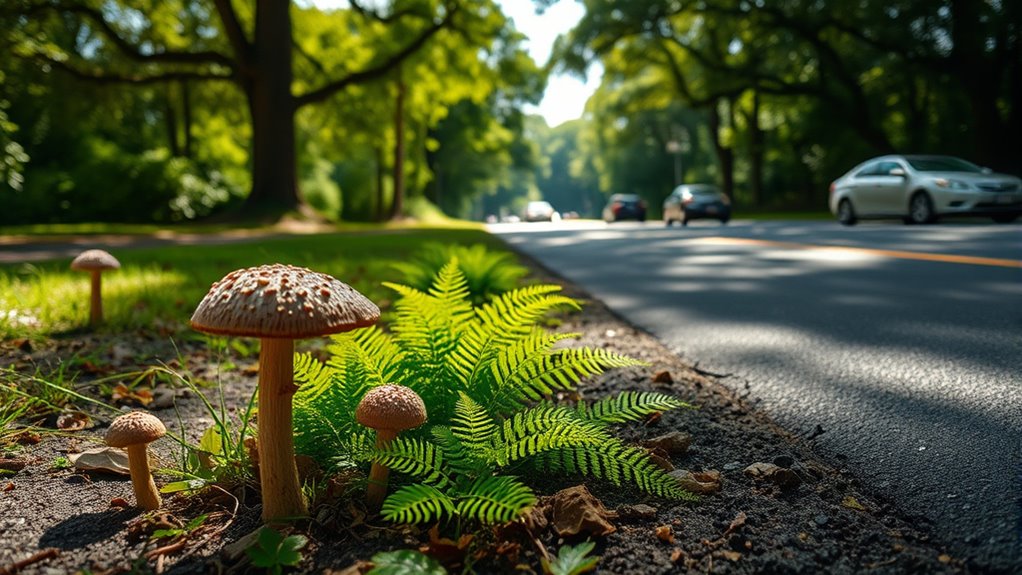

Foraging in roadside and park areas can expose you to unseen chemical hazards from vehicle emissions, industrial pollutants, and contaminated soil. These toxins settle on plants or are absorbed into their tissues, making them unsafe to eat even if they look healthy. Surface rinsing helps, but it doesn’t eliminate internal chemical buildup. To stay safe, understand pollution sources and inspect plants carefully. Want to discover more ways to avoid contamination risks while foraging?
Key Takeaways
- Plants near roads and industrial areas can absorb harmful pollutants like heavy metals and chemicals, making them unsafe to eat.
- Visible plant damage or discoloration does not necessarily indicate contamination; chemical hazards are often invisible.
- Rinsing plants reduces surface dirt but may not remove chemicals absorbed internally into plant tissues.
- Research area history and avoid foraging in zones with pollution sources, recent spills, or heavy traffic.
- Proper inspection and knowledge of environmental risks help prevent health issues from consuming contaminated wild plants.

Foraging can be a rewarding activity, but it also comes with significant risks if you’re not careful. When you venture into roadside or park areas to gather wild edibles, pollution hazards are a major concern. Vehicles and industrial activities release pollutants into the environment, which can settle onto plants and soil. These contaminants don’t just stay in the air; they can settle on the leaves, stems, and roots of plants you might consider eating. As a forager, you might assume that the plants in parks or along roadsides are safe, but in reality, they can harbor dangerous chemical contamination from nearby traffic, factories, or land runoff. This contamination can include heavy metals like lead and cadmium, or persistent organic pollutants that linger in the environment for years.
Chemical contamination is particularly tricky because it’s not always visible. Your nose or eyes won’t necessarily detect these hazards, so it’s easy to mistakenly collect plants that seem healthy but are actually tainted. For example, plants growing close to busy roads are especially vulnerable, as they absorb pollutants from the soil and air. These chemicals can accumulate in the plant tissues, making them unsafe to consume. Consuming such contaminated plants can lead to health problems, from mild stomach upset to more serious issues like neurological damage or long-term exposure to carcinogens. It’s essential to be aware of the location where you forage and to avoid areas that are likely to be polluted. Additionally, understanding the role of projectors in image quality can help you appreciate the importance of detailed visual cues in assessing environmental conditions.
Chemical contamination often goes unnoticed, so avoid foraging near busy roads to stay safe from hidden toxins.
To minimize these risks, you should do some research before heading out. Know the history of the area—if it’s near a highway, an industrial site, or an area with recent chemical spills, it’s best to avoid gathering there. When you do find plants, inspect them carefully—avoid those with discolored, damaged, or slimy surfaces, which may be signs of contamination or decay. Rinsing plants thoroughly can help reduce surface pollutants, but it doesn’t eliminate chemicals that are absorbed into the plant tissue. Hence, the safest approach is to forage away from roads, factories, and other potential pollution sources.
Ultimately, understanding pollution hazards and chemical contamination is crucial to safe foraging. Don’t assume that all wild plants are safe simply because they grow in a natural setting. By being cautious and informed, you can protect yourself from hidden dangers lurking in the environment. Remember, the goal is to enjoy the bounty of nature while keeping your health intact, and that means choosing your foraging spots wisely and staying alert to environmental risks.
Frequently Asked Questions
Are Roadside Plants Safe to Eat Despite Pollution Levels?
You shouldn’t eat roadside plants despite pollution levels. Soil contamination from vehicles and industry can introduce harmful chemicals into the soil, which plants absorb through bioaccumulation. These toxins can accumulate in plant tissues, making them unsafe for consumption. Even if a plant looks healthy, it might contain dangerous substances. To stay safe, avoid foraging near busy roads and polluted areas, and choose plants from clean, uncontaminated environments.
How Can I Identify Contaminated Plants in Parks?
Identifying contaminated plants is like spotting a sore thumb; look for signs like plant discoloration, which indicates possible soil contamination. Avoid plants with unusual spots, wilting, or abnormal coloring, as these may signal toxin absorption. Check for areas with visible pollution or proximity to busy roads, and steer clear of plants growing in soil that looks disturbed or unclean. Your best bet is to forage in clean, well-maintained parks to stay safe.
What Signs Indicate Chemical Contamination in Foraged Foods?
You can spot chemical contamination in foraged foods by looking for unusual discoloration patterns, such as spots or areas that differ from the plant’s natural color. Be alert for chemical residue, which may appear as a sticky or oily film on leaves or stems. If plants show strange odors or unnatural textures, avoid consuming them. Trust your senses—if something seems off, it’s safest not to eat it.
Is It Safer to Forage in Urban or Rural Areas?
You’d be crazy to think urban foraging is safer than rural harvesting! In cities, you’re risking exposure to insane levels of pollution, chemicals, and toxins from cars, factories, and litter. Rural areas, on the other hand, usually offer cleaner, fresher air and soil, making them safer for foraging. So, if you want to avoid turning your foraged goodies into chemical cocktails, stick to rural harvesting whenever possible.
Are There Specific Times of Day Better for Safe Foraging?
The best foraging times are early morning or late afternoon when plants are freshest and less exposed to pollution. During these ideal harvest hours, you’re more likely to find healthy, uncontaminated specimens. Avoid foraging midday when heat and sun can degrade plants and increase your risk of exposure to pollutants. Stick to these best foraging times to guarantee safe, high-quality foraged foods and reduce contamination risks.
Conclusion
As you venture into roadside and park foraging, remember that contamination risks are lurking like shadows in the sunlight. Always be vigilant, test your finds, and avoid areas near busy roads or polluted sites. Think of it as charting a minefield—you don’t want to step on hidden dangers. By staying cautious, you protect yourself and enjoy nature’s bounty safely, turning a risky trail into a rewarding adventure rather than a hazardous one.