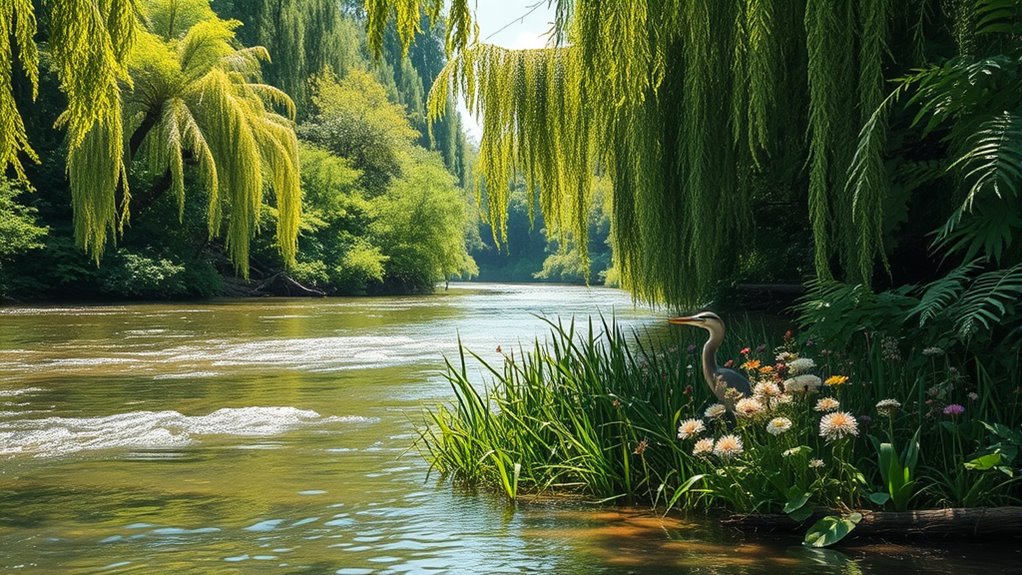

Water’s edge foraging takes advantage of riparian ecosystems, which are essential zones where land meets water. These areas support rich vegetation and diverse wildlife, providing abundant food sources for birds and aquatic creatures. Healthy riparian zones filter pollutants, prevent erosion, and buffer floods, creating ideal foraging grounds. By understanding the natural dynamics and management practices that sustain these ecosystems, you’ll gain insights into their critical role in maintaining a balanced and resilient environment. Exploring further reveals how these ecosystems benefit both nature and land users.
Key Takeaways
- Riparian ecosystems provide rich foraging habitats for birds and aquatic species along water edges.
- Natural floodplain dynamics deposit nutrients, supporting diverse plant growth that attracts foraging wildlife.
- Healthy riparian vegetation stabilizes banks and offers cover for foraging animals at water’s edge.
- Proper management of invasive species enhances habitat quality for foraging in riparian zones.
- These ecosystems act as buffers filtering pollutants, ensuring clean foraging areas for aquatic and terrestrial species.
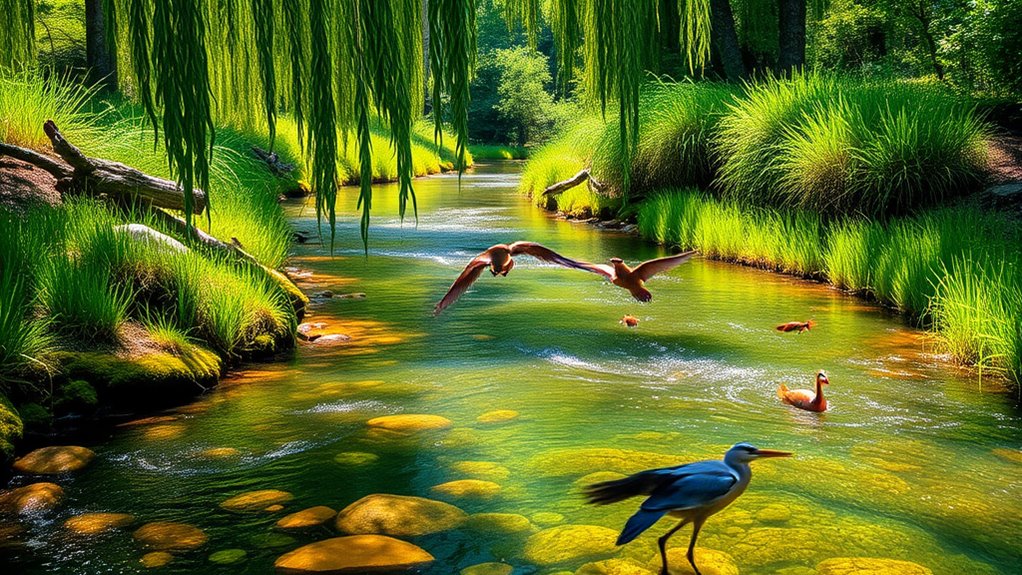
Riparian ecosystems are vibrant zones where land meets water, playing a essential role in maintaining the health of rivers, streams, and lakes. These areas are shaped by floodplain dynamics, which refer to the natural processes of flooding and water flow that influence the landscape over time. When floodwaters rise, they spread across the floodplain, depositing nutrients and sediments that support lush vegetation and rich habitats. Understanding these dynamics helps you appreciate how natural flooding benefits riparian zones, creating a constantly changing environment that sustains diverse plant and animal life. Managing riparian vegetation effectively becomes necessary to preserve this delicate balance. Proper riparian vegetation management involves controlling invasive species, promoting native plants, and preventing overgrowth that could hinder water flow or lead to erosion. You can contribute to this effort by supporting or implementing restoration projects that restore natural plant communities along waterways. Healthy riparian vegetation acts as a buffer, filtering pollutants and reducing sediment runoff into water bodies, which improves water quality. It also stabilizes banks, preventing erosion during flood events, and provides habitat for wildlife, including foraging birds and aquatic species. When floodplain dynamics are left unmanaged, the risk of excessive erosion or flood damage increases, which can threaten both ecosystems and human communities. Effective riparian vegetation management ensures that floodplains retain their natural ability to absorb floodwaters, reducing the severity of floods downstream. It’s a proactive approach that aligns with the natural rhythms of the landscape, allowing water to spread naturally during flood events while maintaining the integrity of the land-water interface. Your role might involve participating in local conservation efforts, supporting policies that protect riparian corridors, or simply being mindful of how land use impacts these sensitive zones. Recognizing the importance of floodplain dynamics helps you understand how interconnected these processes are with the health of aquatic ecosystems. By managing riparian zones thoughtfully, you help sustain the ecological functions essential for water filtration, flood mitigation, and habitat diversity. This, in turn, supports the broader health of entire watersheds, ensuring that water’s edge environments remain resilient and productive for generations to come. Whether you’re a landowner, conservationist, or simply a water enthusiast, your awareness and actions can help maintain the vitality of riparian ecosystems, ensuring that they continue to serve as essential buffers and foraging grounds in the landscape. Additionally, incorporating proper land management practices can further enhance the resilience and ecological integrity of these vital zones.
Frequently Asked Questions
How Do Riparian Zones Influence Local Climate?
You’ll notice riparian zones influence your local climate by providing microclimate regulation and shade provision. These areas cool nearby air and soil, reducing temperature extremes, especially during hot days. The dense vegetation offers shade, which lowers temperatures and conserves moisture. As a result, riparian zones create a more stable, comfortable environment for plants, animals, and humans, helping to mitigate climate impacts and enhance biodiversity along water bodies.
What Are the Main Threats to Riparian Ecosystems?
You should know that pollution impacts and invasive species are the main threats to riparian ecosystems. Pollution from agricultural runoff, sewage, and chemicals degrades water quality, harming native plants and animals. Invasive species outcompete native species for resources, disrupting the ecological balance. Together, these threats weaken riparian zones, reducing their ability to support biodiversity, filter pollutants, and prevent erosion, ultimately jeopardizing the health of these essential ecosystems.
How Can Humans Sustainably Forage in Riparian Areas?
You can sustainably forage in riparian areas by practicing traditional harvesting methods that minimize environmental impact. Focus on selective gathering, avoiding overharvesting, and respecting seasonal cycles. Engage in community stewardship to monitor and protect these ecosystems, ensuring they remain healthy for future generations. By working with local groups and following sustainable guidelines, you help maintain riparian ecosystems while enjoying their resources responsibly.
Are Riparian Ecosystems Resilient to Climate Change?
Yes, riparian ecosystems show resilience to climate change, thanks to their rich flora diversity and essential animal habitats. You can help by protecting native plants and avoiding overharvesting, which supports ecosystem stability. These areas naturally adapt through water regulation and species diversity, but your efforts to maintain their health ensure they continue to withstand climate impacts and sustain the wildlife and plant life that depend on them.
What Role Do Riparian Zones Play in Water Purification?
Imagine standing beside a clear river, feeling its purity. Riparian zones act like natural filters, performing riverbank filtration that cleans water as it flows through. They play a vital role in nutrient cycling, trapping pollutants and excess nutrients before reaching larger water bodies. You see, these ecosystems help maintain water quality, providing you with cleaner water while supporting diverse plant and animal life along the shoreline.
Conclusion
You stand at the water’s edge, witnessing nature’s bustling marketplace. Riparian ecosystems are like vibrant tapestries woven with life, where every leaf and ripple tells a story. By understanding and protecting these delicate habitats, you become a guardian of this lush, living boundary between land and water. Remember, caring for these ecosystems is like tending to a precious garden—each act helps keep the symphony of life flowing harmoniously, ensuring they thrive for generations to come.