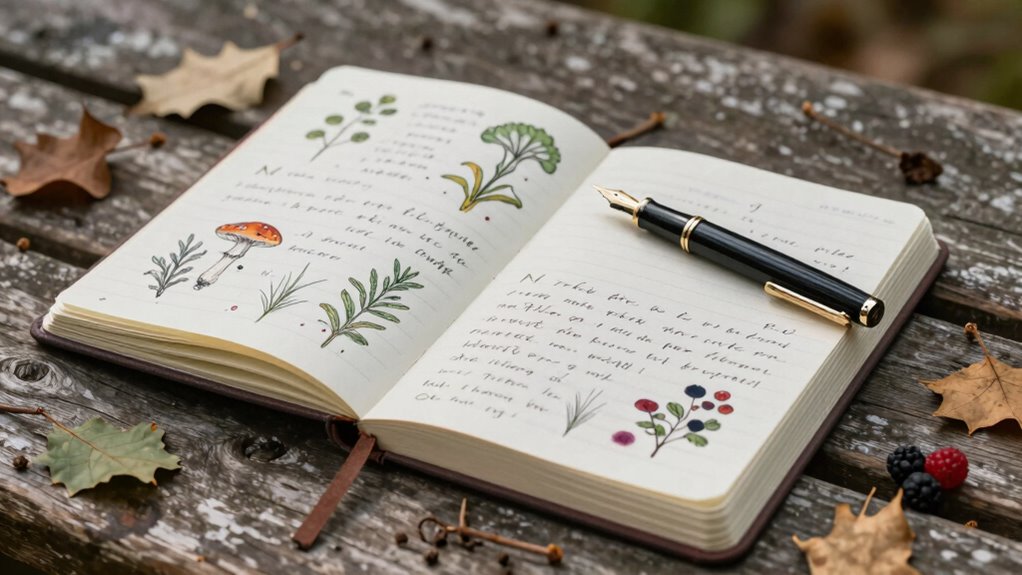

A foraging journal helps you track key details every time you harvest wild edibles, making your foraging safer and more successful. Log specifics like location, date, and plant condition, along with detailed descriptions, photos, and habitat info. Record harvesting tips and preparation techniques to refine your skills. Maintaining these notes turns each outing into a learning experience, boosts confidence, and builds a personalized guide. Keep going to discover the six essential notes you’ll wish you always recorded.
Key Takeaways
- Record exact location, date, and plant condition for accurate tracking and future reference.
- Include detailed plant descriptions: visual, olfactory, tactile, and accompanying photos.
- Note habitat specifics like sunlight exposure and nearby environmental features.
- Log harvesting techniques, timing, and preparation tips for safe and effective foraging.
- Document seasonal changes, environmental factors, and plant ripeness to improve future foraging skills.
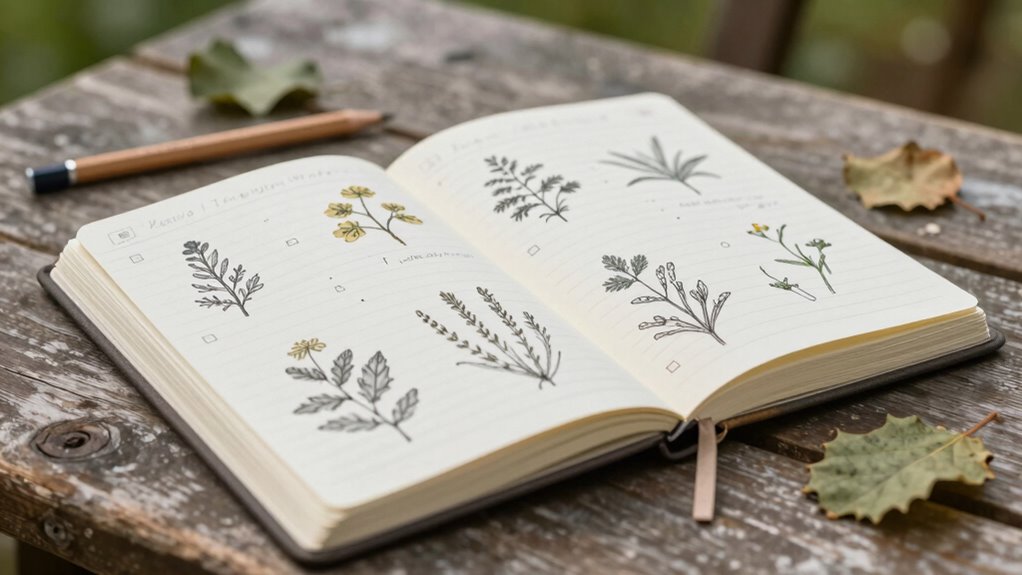
Have you ever wanted to track your foraging adventures more effectively? A well-organized foraging journal template can be just what you need to improve your skills and increase your confidence in wild edible identification. By logging each outing, you create a valuable resource that helps you recognize patterns, learn from mistakes, and refine your techniques over time. Keeping detailed notes about what you find, where, and when makes future foraging more productive and enjoyable. Plus, it’s a fantastic way to document your progress and build a personal reference guide tailored to your local environment.
Track your foraging trips to boost skills, confidence, and create a personalized edible plant guide.
When it comes to seasonal foraging tips, a journal becomes even more *essential*. Wild edibles tend to appear at specific times of the year, so tracking when you find certain plants helps you anticipate their availability. For example, you might notice that certain wild berries ripen in late summer or that young greens emerge in early spring. Recording these seasonal shifts allows you to plan your foraging trips better, ensuring you’re harvesting at peak ripeness and avoiding the temptation to pick before a plant is ready or after it’s past its prime. Over time, these notes will turn into a seasonal calendar that guides your foraging calendar, making each outing more efficient and rewarding.
In your journal, be sure to include details like the exact location of your find, the date, and the condition of the plant. Describe how the plant looks, smells, and feels—these sensory details are *vital* for wild edible identification, especially when you’re trying to distinguish between edible and potentially toxic lookalikes. Take photos if you can; images serve as quick visual references and help you compare specimens later. Also, jot down the habitat specifics, such as whether it’s growing in shaded woods or sunny meadows, since habitat can influence plant appearance and availability throughout the seasons.
Additionally, note any harvesting tips or preparation methods you learn along the way. For instance, some plants require specific handling to remove bitterness or toxins. Record what works best for you, so you’re not only identifying wild edibles but also knowing how to prepare them safely. Your notes on seasonal foraging tips might include the best times to harvest roots versus leaves or how weather conditions impact the abundance of certain species.
Ultimately, a good foraging journal isn’t just a log of what you find; it’s a personalized guide that evolves with your experience. It helps you become more confident in wild edible identification, sharpens your seasonal foraging skills, and turns each adventure into a learning opportunity. When you look back through your entries, you’ll see how much you’ve learned—and how much more there is to explore.
Frequently Asked Questions
How Can I Customize My Foraging Journal Template?
You can customize your foraging journal template by exploring various personalization options and digital customization tools. Add sections for specific plant details, notes on habitat, or photos to make it more tailored to your needs. Use digital platforms that allow you to modify layouts, fonts, and colors easily. This way, your journal becomes a practical and personalized resource, helping you track your foraging experiences more effectively.
What Are Essential Entries for Beginners?
As a beginner, you should include species identification details, such as plant descriptions and photos, to evade confusion. Note the location, date, and weather conditions to track patterns. Record safety tips and any potential hazards you observe for foraging safety. Jot down your observations on taste, smell, and texture after sampling. These entries help you learn quickly and guarantee safe, successful foraging experiences.
How Do I Track Seasonal Variations Effectively?
Imagine capturing the wild dance of seasonal patterns with every visit! To track seasonal variations effectively, record precise dates of harvest timing and note environmental cues like weather and plant changes. Use a dedicated journal or app to log these details consistently. Over time, you’ll see the rhythm of nature unfold, helping you anticipate the best harvests and deepen your understanding of the land’s yearly cycle.
Can I Include Images or Sketches in My Journal?
Yes, you can definitely include images or sketches in your journal. Incorporate plant identification by sketching detailed drawings using simple sketching techniques like noting key features and proportions. Adding sketches helps you remember plant details and spot variations over time. Photos can supplement sketches, providing clarity, especially for complex plants. Both methods make your journal more engaging and valuable for future reference.
What Privacy Considerations Exist for Shared Foraging Logs?
When sharing your foraging logs, you should consider privacy concerns and data sharing risks. Avoid including specific location details that could identify you or sensitive sites, especially if they’re private or protected. Limit access to your logs and be cautious about sharing personal information. Using anonymized data and secure platforms helps protect your privacy while still allowing you to share valuable foraging insights with trusted friends or groups.
Conclusion
By keeping these six notes in your foraging journal, you’ll turn every outing into a learning adventure. Remember, “A wise man learns more from his mistakes than his success.” So, stay curious, document thoroughly, and trust the process. Over time, you’ll become more confident and skilled in your foraging journey. Happy foraging, and don’t forget—every detail counts on the path to becoming a seasoned forager!