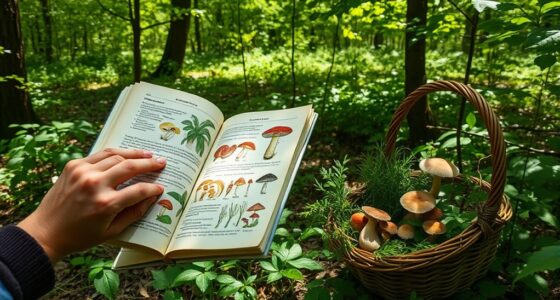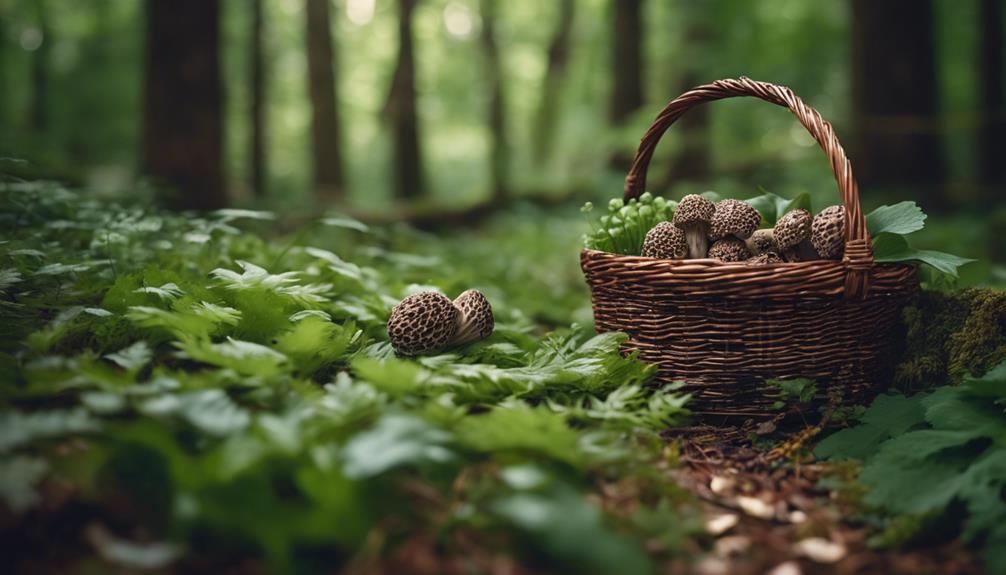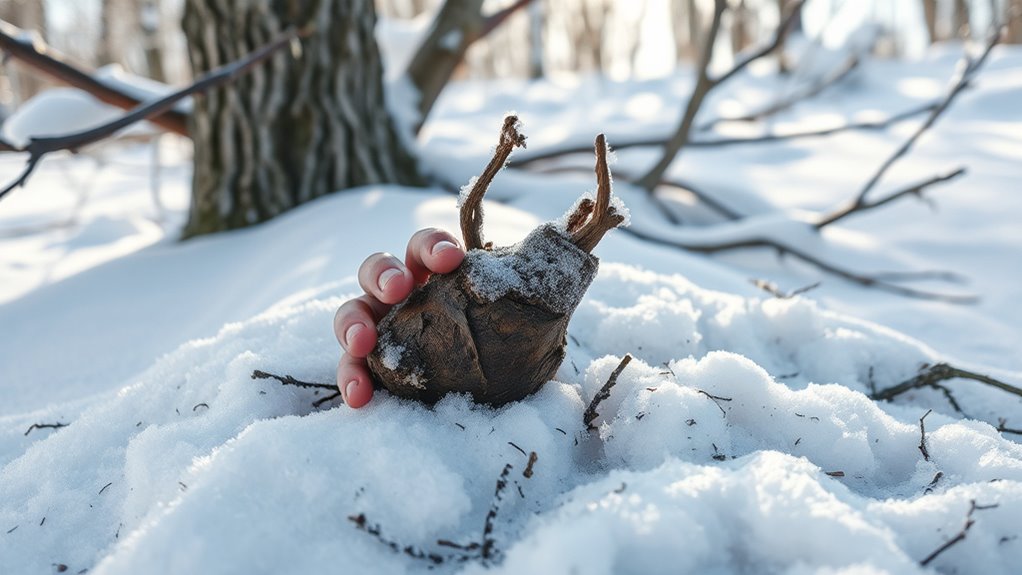

In winter, your foraging focuses on hardy, resilient plants like wintergreen berries, chickweed, and dandelion greens, which can be found in protected spots even under snow. You can also dig for underground roots such as carrots and parsnips, or harvest bark from trees like birch, maple, and pine carefully to avoid harming them. With proper identification and sustainable practices, you can uncover a nutritious winter bounty—if you keep exploring, you’ll discover even more hidden resources.
Key Takeaways
- Identify resilient plants like wintergreen berries, chickweed, and dandelion greens that are accessible even under snow.
- Locate and safely harvest underground roots such as carrots, parsnips, and wild radishes for winter nutrition.
- Recognize and collect edible tree bark, including birch, maple, and pine, ensuring sustainable harvesting practices.
- Use proper techniques to avoid damaging plants or harming trees when harvesting bark and roots.
- Prioritize plant identification and sustainable foraging to ensure safety and resource renewal during winter.
Winter foraging might seem challenging, but with the right knowledge, you can find a surprising variety of wild foods even in the cold months. During winter, your focus shifts from lush greenery to hardy, resilient edible plants, roots, and bark that can sustain you in winter survival situations. Knowing what to look for and how to identify these resources is key. Many edible plants become less obvious, but some species, such as wintergreen berries, are unmistakable even when snow covers the ground. These berries contain minty oils and can be used in teas or as flavorings. Other plants, like chickweed or dandelion greens, may persist in protected spots, providing essential nutrients during scarcity.
Winter foraging reveals resilient wild foods like wintergreen berries, chickweed, and dandelion greens even under snow.
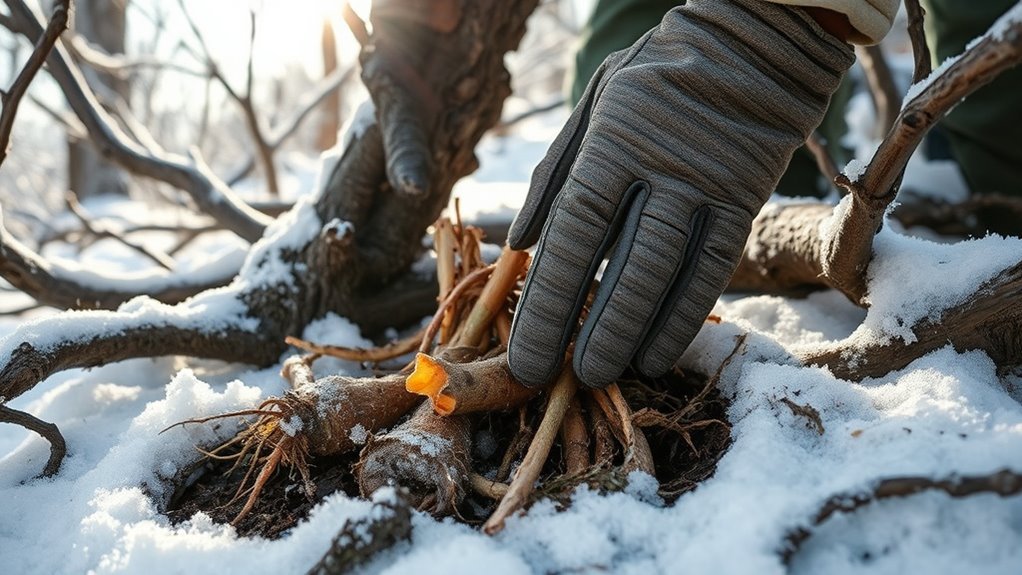
Roots are a major component of winter foraging. Taproots, such as carrots, parsnips, and wild radishes, store nutrients underground, making them accessible even when the surface is buried in snow. You must be able to identify these edible roots correctly—mistaking a toxic lookalike can have serious consequences. Typically, wild roots are found near the base of the plant, often with a similar shape to cultivated varieties but smaller and more fibrous. Use a digging tool carefully to avoid damaging the plant’s root system if you plan to harvest sustainably. When harvesting roots, remember to leave enough behind so the plant can regrow next year, ensuring your foraging remains sustainable.
Bark is another valuable resource during winter, especially when other food sources are scarce. Certain trees, like birch, maple, and pine, have bark that can be safely stripped in small amounts. Birch bark, in particular, is rich in nutrients and can be used to make tea or even eaten raw in survival situations. Always strip bark with care, making sure not to damage the tree’s health. Pine bark can be peeled in strips and is edible, providing a source of vitamin C. Learning to identify the correct trees and understanding how much bark you can safely harvest is essential for both winter survival and maintaining healthy forests.
In winter, your ability to find edible plants, roots, and bark depends on keen observation and proper identification. The cold months may limit some options, but they also reveal resilient plants that are often overlooked in other seasons. With patience and knowledge, you can turn winter into an opportunity to gather nourishing wild foods that sustain you through the toughest months. Always prioritize safety and sustainability in your foraging efforts, and you’ll discover a surprisingly rich bounty even when the landscape is blanketed in snow.
Frequently Asked Questions
Are Winter Foraging Tips Different for Urban Areas?
Yes, winter urban foraging differs because you should focus on winter city plants that thrive in city environments. Look for hardy plants in parks, along sidewalks, and in gardens. Be cautious of pollution and avoid plants near busy roads or contaminated areas. Use a guide to identify safe, edible urban foraging options like tree bark, roots, and winter greens. Always confirm plant safety before harvesting in an urban setting.
How Do I Identify Edible Bark Safely?
Did you know that many trees, like birch and willow, have edible bark? To identify edible bark safely, look for distinct textures—birch bark is papery and smooth, while willow bark is rough and fibrous. Always examine the bark’s texture carefully and avoid trees with signs of disease or damage. Stick to well-known species, and when in doubt, consult a field guide to guarantee proper edible bark identification.
What Tools Are Best for Winter Root Foraging?
For winter root foraging, you’ll want a sturdy, sharp trowel or digging knife to cut through frozen soil effectively. A small hand axe or pruning shears can help clear roots or branches obstructing your path. Choose tools with non-slip handles for safety in cold conditions. Proper tool selection guarantees efficient seasonal foraging, making digging easier and safer, so you can focus on finding those hidden roots beneath the snow.
Can Foraging Harm Winter Plant Survival?
Foraging can harm winter plant survival if you’re not careful, but when you respect plant adaptation and practice foraging sustainability, you minimize damage. Avoid overharvesting roots or bark, which are crucial for plant health, and only take what you need. By following sustainable foraging methods, you help guarantee plants can survive winter and thrive in the future, maintaining the ecosystem’s delicate balance.
Are There Seasonal Risks Like Frostbite When Foraging?
You might stumble upon frostbite risk when foraging in winter, especially if you’re unprepared. To prevent frostbite, wear winter clothing essentials like insulated gloves and layered clothing. Keep your hands and face protected, and limit exposure during cold snaps. Stay aware of signs like numbness or discoloration, and take breaks indoors if you feel too cold. Proper winter gear helps you enjoy foraging safely without risking frostbite.
Conclusion
As winter’s icy grip tightens, remember that beneath the snow’s silent blanket lies a hidden world waiting to be discovered. Your foraging journey is like unearthing buried treasures, symbolizing resilience and hope in the coldest months. Each root and bark you find is a reminder that life persists beneath the surface, quietly thriving. Embrace this season’s challenge, for in winter’s stillness, you uncover nature’s quiet strength and your own enduring spirit.