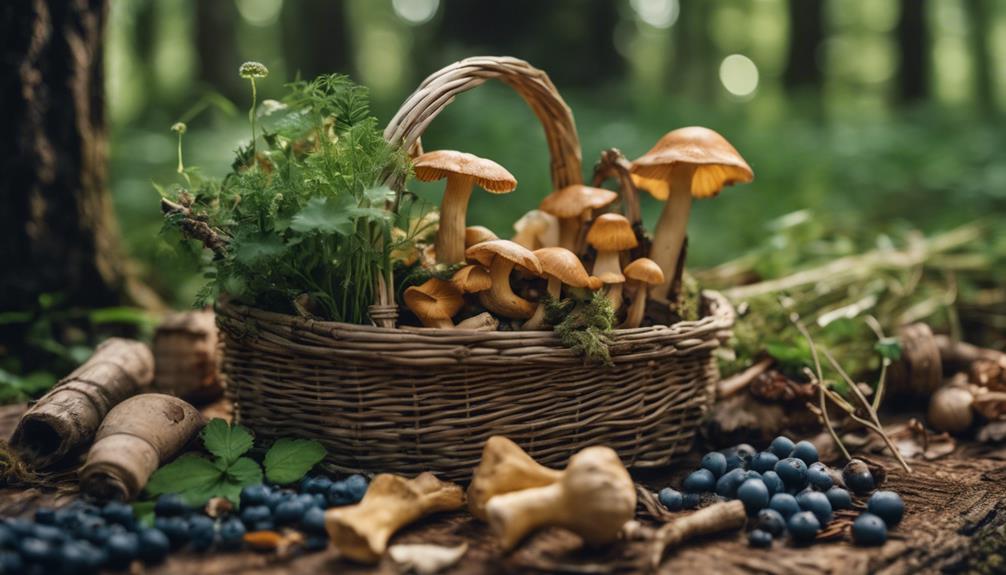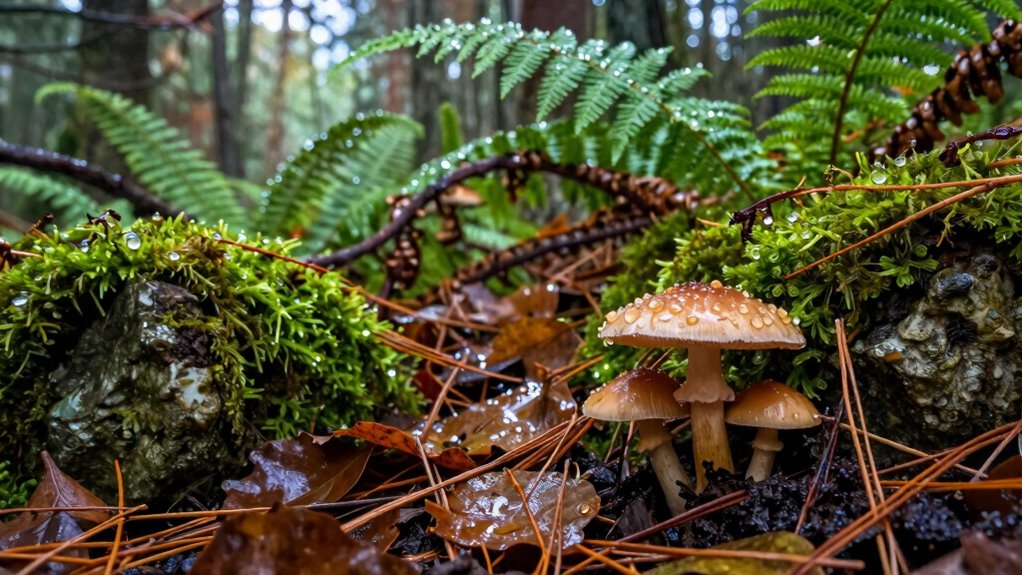
After a rain, the environment transforms into a fungi-filled wonderland, making foraging feel almost magical. Moist soil and damp, shaded spots trigger mushroom growth, often appearing overnight when conditions are just right. The rain enhances the landscape’s vibrancy, revealing hidden treasures and supporting lush fungi and plant life. You’ll find it easier to spot mushrooms; just remember to handle them carefully. If you keep exploring, you’ll uncover even more fascinating science behind this natural event.
Key Takeaways
- Moisture from rain awakens hidden fungi and makes mushrooms easier to spot.
- Wet soil triggers rapid mushroom fruiting by signaling fungi to produce spores.
- Rain creates optimal conditions for mushroom growth, encouraging underground mycelium expansion.
- Post-rain environments are more vibrant and lush, supporting diverse plant and fungi life.
- Wet weather enhances foraging experiences by making wild fungi more accessible and plentiful.
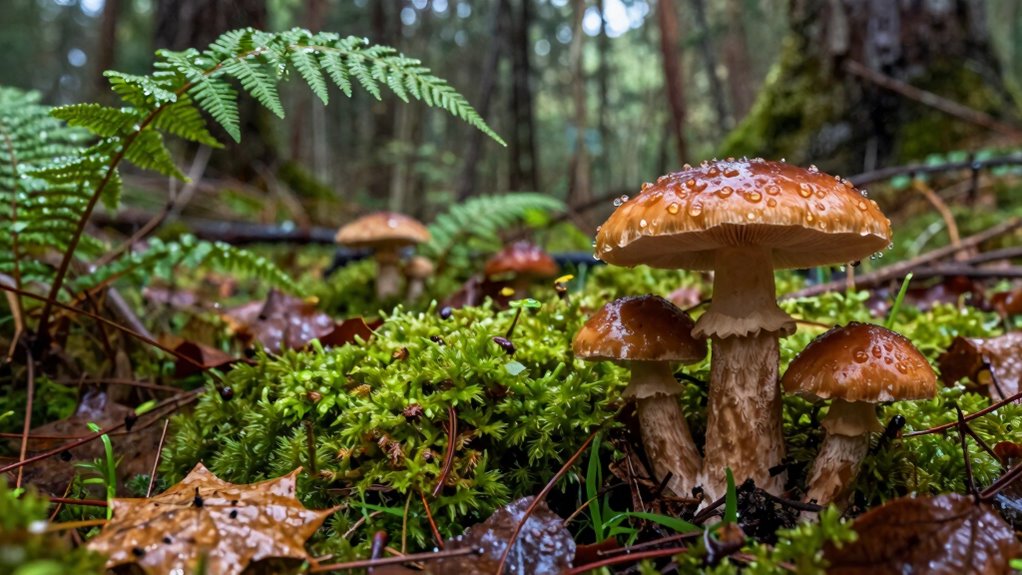
After a rainstorm, foraging becomes especially rewarding because the moisture awakens hidden treasures in nature. One of the most exciting discoveries after a wet spell is spotting mushrooms popping up in the damp, shaded areas. Soil moisture plays a fundamental role here; it creates the perfect environment for mushroom growth. When the ground soaks up rain, it becomes rich and fertile, providing the ideal conditions for fungi to thrive. You’ll notice that after heavy rainfall, mushroom clusters often appear overnight, sprouting from the soil or decaying wood. This rapid growth is no coincidence—it’s nature’s response to the moisture boost that the rain provides. **Understanding the importance of Soil moisture helps explain why fungi flourish after rainstorms.** Mushrooms are highly sensitive to changes in soil moisture. When the earth is wet, it signals to fungi that it’s time to fruit, or produce mushrooms. You’ll see them emerging in places you might not have noticed before, especially in shaded, mossy spots or near decaying logs. The moisture infiltrates the soil deeply, encouraging mycelium—the underground network of fungi—to expand and produce fruiting bodies. This process can happen quickly, sometimes within hours of a rainstorm, turning a dull landscape into a treasure trove of edible or interesting fungi. As you venture out to forage, pay attention to the soil’s dampness and the surrounding environment. Mushrooms prefer moist, shaded areas where sunlight doesn’t dry out the soil too fast. The increased soil moisture doesn’t just support mushroom growth; it also boosts the overall health of the ecosystem, encouraging other plants and fungi to flourish. You’ll find that after a rain, the landscape looks more vibrant, with lush greenery and a richer diversity of fungi popping up in unexpected places. It’s essential to approach foraging with care after rain. While the moisture makes mushrooms easier to find, it also means they can be more fragile and prone to rot if improperly handled. Use a knife to carefully harvest mushrooms, leaving the base attached to prevent damaging the mycelium underground. Remember that not all mushrooms are safe to eat, so proper identification is imperative. But if you know what to look for, the increased soil moisture after rain gives you a fantastic opportunity to discover fresh, wild fungi and deepen your connection to nature’s seasonal changes.
Frequently Asked Questions
How Does Rain Influence Mushroom Growth Specifically?
Rain boosts mushroom growth by creating ideal conditions for fungal mycelium to thrive. It also aids mushroom spore dispersal, helping spores spread more effectively. When rain hits, it provides the moisture needed for mycelium to expand underground, fueling the development of new mushrooms. As a result, wet weather triggers a surge in mushroom activity, making foraging after rain especially rewarding because you see more mushrooms popping up quickly.
Are Certain Plants Easier to Forage After Rain?
Ever notice how some plants seem to pop up more easily after rain? You’ll find certain plants are definitely easier to forage after rain because increased soil moisture boosts their growth and signals plant recovery. This creates a lush, vibrant environment where edible plants and herbs become more visible and accessible. The rain awakens nature’s bounty, making foraging more rewarding and exciting—don’t you love the thrill of discovering fresh, thriving plants after a downpour?
Does Weather Impact the Nutritional Value of Foraged Foods?
Weather definitely impacts the nutritional value of foraged foods. After rain, soil nutrients become more available, boosting microbial activity that enriches plant nutrition. You’ll notice that plants foraged right after rain often have higher vitamin and mineral content because the moist conditions foster healthier growth. So, by foraging when the soil is moist, you’re more likely to find foods that are nutrient-dense and better for your health.
What Safety Precautions Should Be Taken When Foraging Post-Rain?
Ever thought about the dangers lurking after rain? You should check for wildfire risk and insect contamination before foraging. Wear gloves, use a clean knife, and avoid picking near fire-prone areas. Be cautious of slippery, muddy terrain to prevent falls. Always wash your harvest thoroughly, and avoid foraging if there’s recent heavy rain or flooding, which can increase contamination risks. Staying alert keeps your foraging safe and enjoyable.
Can Foraging After Rain Help With Sustainable Harvesting Practices?
Yes, foraging after rain supports sustainable harvesting by encouraging responsible gathering. You can incorporate rainwater harvesting techniques to water plants without overusing local resources, and guarantee you don’t disturb soil erosion control efforts. By harvesting only what you need and respecting the environment, you promote healthy ecosystems. This approach helps maintain plant populations, prevents habitat damage, and fosters a balanced relationship between foragers and nature.
Conclusion
So, next time rain clears, don’t hesitate to head out. Sure, wet weather might seem less appealing, but scientifically, it boosts your chances of finding morel mushrooms, fresh herbs, or even worms. Even if you’re worried about muddy clothes or damp gear, the rewarding finds make it worth it. Embrace the rain’s magic—your foraging adventures become more fruitful and fun when the weather’s just a little wetter.