
Washing your foraged foods helps remove dirt and surface bacteria, making them safer to eat. Use clean, running water and rinse gently to avoid pushing contaminants deeper into porous items like berries and greens. However, if you soak or wash in unclean water sources, you risk spreading germs and introducing new contaminants. Knowing when and how to wash properly is key—if you keep exploring, you’ll learn more tips to keep your harvest safe and healthy.
Key Takeaways
- Rinse with clean, running water to effectively remove dirt and surface bacteria without risking contamination.
- Avoid soaking or submerging porous foods like mushrooms and greens to prevent bacterial infiltration.
- Using contaminated or stagnant water can introduce harmful microbes, increasing food safety risks.
- Pat foods dry after rinsing to reduce moisture that promotes mold growth and bacterial proliferation.
- Proper hygiene of hands and utensils prevents cross-contamination during the washing process.
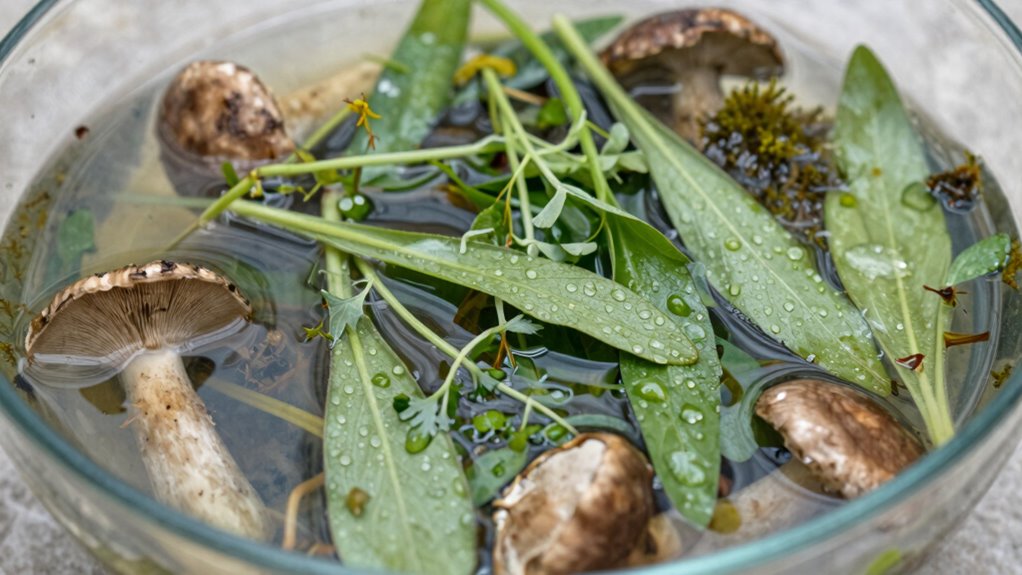
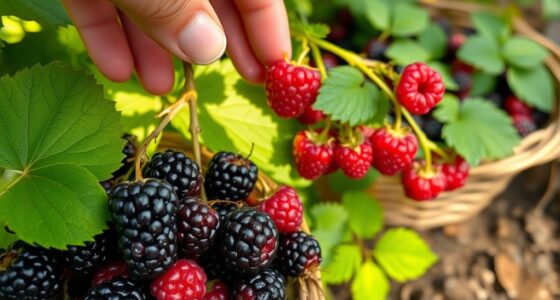
Foraged foods can be a delicious and sustainable addition to your diet, but before you enjoy them, it’s essential to wash them thoroughly. When you pick wild berries, mushrooms, or greens, they often carry soil bacteria that cling to their surfaces. These bacteria, naturally present in the environment, can sometimes cause illness if ingested. Washing helps remove dirt and reduces the risk of consuming harmful microorganisms. However, it’s not just about rinsing; understanding when water helps and when it spreads contamination is vital.
Water is effective at removing dirt and some bacteria, but it can also be a double-edged sword. If you submerge your foraged foods in water, especially in unclean or stagnant water sources, you risk introducing waterborne pathogens. These pathogens—germs that thrive in contaminated water—can attach to the surface of your food and lead to foodborne illnesses. Mushrooms, leafy greens, and berries can absorb water or have surface cracks that trap contaminants, making thorough washing even more important. When waterborne pathogens are present, rinsing in contaminated water can unintentionally spread bacteria from one piece of food to another or even into your sink or utensils.
Submerging foraged foods in unclean water risks spreading waterborne pathogens and contamination.
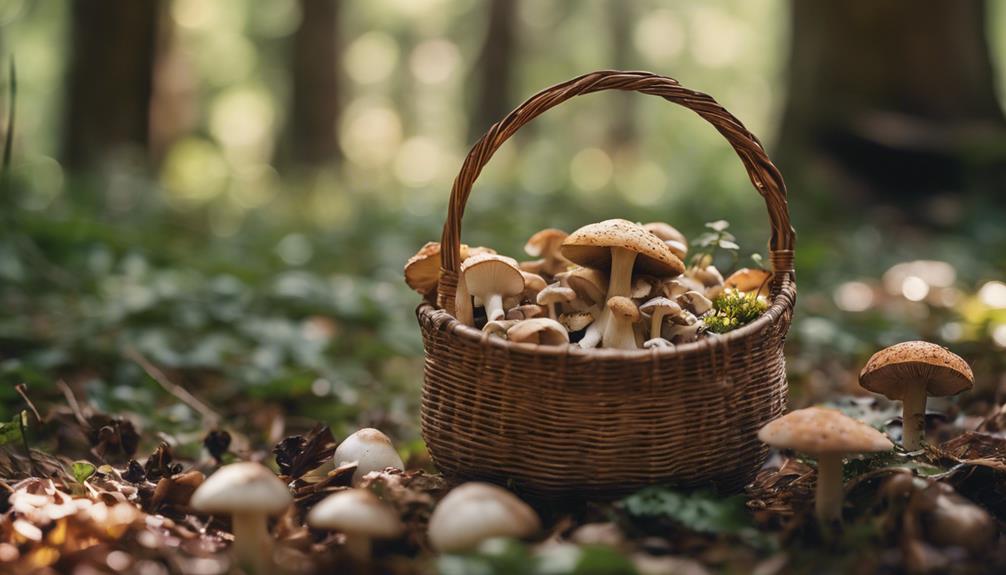
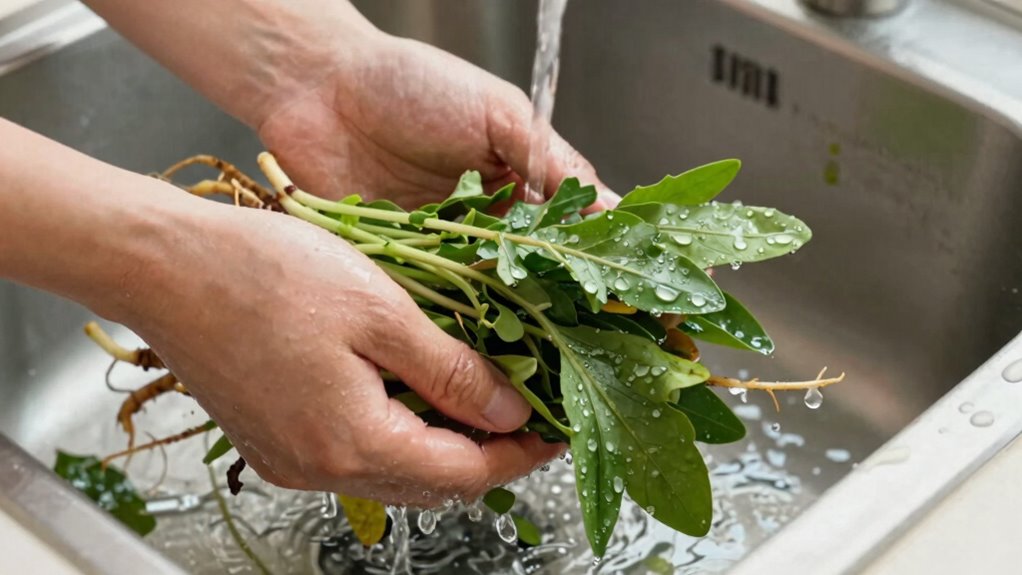
To minimize risks, avoid washing your foraged foods in questionable water sources. Instead, use clean, running water and gently rinse them. For delicate items like berries or leafy greens, pat them dry with a clean paper towel after rinsing to remove excess moisture, which can promote mold growth. For mushrooms and tougher greens, a quick rinse under cold water usually suffices, but never soak them for long periods. Soaking can cause soil bacteria and any lurking waterborne pathogens to penetrate deeper into porous surfaces, making thorough cleaning more difficult. Additionally, understanding how nanotechnology can improve cleaning methods may offer safer alternatives for removing contaminants effectively.
It’s imperative to handle foraged foods carefully because soil bacteria naturally reside on their surfaces. While most soil bacteria are harmless, some can cause infections if ingested, especially if you have a compromised immune system. Proper washing reduces the number of these bacteria, decreasing health risks. Remember, water can help wash away dirt and reduce microbial load, but if contaminated, it can also spread pathogens. Always use fresh, clean water and avoid cross-contamination by washing your hands and utensils beforehand. By understanding the balance of water’s role, you protect yourself from potential illnesses while enjoying the bounty of the wild.
Frequently Asked Questions
Can Washing Eliminate All Bacteria From Foraged Foods?
Washing foraged foods can’t eliminate all bacteria because surface residue can harbor microbes that are hard to remove fully. Water can help reduce microbial transfer, but it may also spread bacteria if not done properly. You should scrub surfaces gently and use clean, running water. Keep in mind that some bacteria might still remain, so cooking is the safest way to ensure pathogens are destroyed.
Is Soap Safe to Use When Washing Wild Edibles?
You shouldn’t use soap when washing wild edibles because it can leave chemical residues and potentially introduce harmful chemicals into your food. Instead, rinse thoroughly with clean water to remove natural contaminants like dirt and bacteria. Using soap may seem effective, but it’s unnecessary and unsafe for foraged foods. Focus on gentle rinsing, and avoid chemicals to keep your wild edibles safe and natural.
How Does Water Temperature Affect Cleaning Effectiveness?
Higher water temperature generally enhances cleaning effectiveness because it helps loosen dirt, bacteria, and other contaminants from wild edibles. Warm water is more effective than cold for removing residues, but avoid very hot water that could damage delicate plants or cause spoilage. Always use a temperature you can comfortably handle, and combine it with gentle scrubbing and rinsing to ensure thorough cleaning without harming the food.
Are There Alternative Cleaning Methods Besides Water?
You might wonder if there’s a safer way to clean foraged food, and the answer is yes. Chemical alternatives like food-safe disinfectants can reduce contamination without spreading bacteria, especially when water isn’t ideal. Dry cleaning methods, such as brushing or using a damp cloth, also help preserve delicate produce while removing dirt. These options keep your food safe and fresh, even when water isn’t enough or could cause harm.
How Do I Identify Contaminated Foraged Foods Before Washing?
You can identify contaminated foraged foods by inspecting for visible dirt, mold, or discoloration, which indicate dirt removal is needed. Check for any unusual odors or slimy textures that may signal toxins or spoilage. Avoid eating anything with signs of contamination. While visual cues help, toxin detection often requires specialized testing. Focus on safe identification techniques to prevent spreading contaminants during washing, and always err on the side of caution.
Conclusion
So, when you wash your foraged finds, remember: water can cleanse or spread contamination. Use it wisely—rinse thoroughly, and dry carefully. Know when to wash and when to skip it, trusting your senses and judgment. Protect your health, respect nature, and enjoy your foraging adventures. Because, whether you’re cleaning or conserving, your choices matter—your actions matter. Keep learning, stay cautious, and savor the bounty of the wild safely and responsibly.