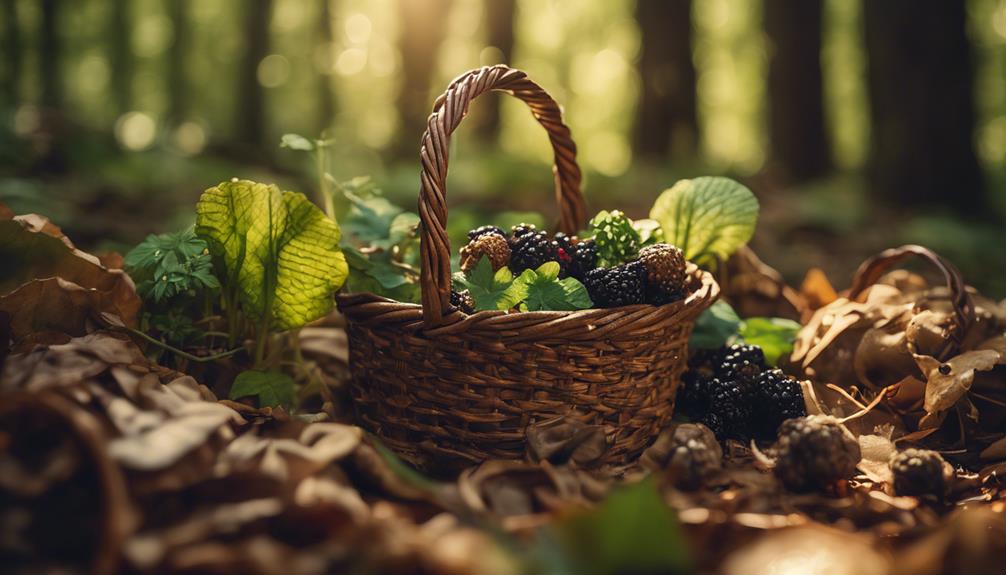
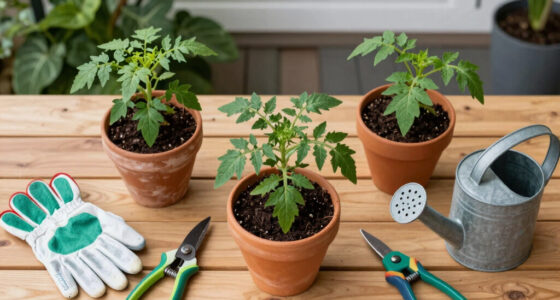
To avoid overharvesting and promote healthy spread, practice sustainable methods like selectively gathering mature plants and leaving younger ones untouched for regeneration. Use cultivation techniques such as nurseries or agroforestry to reduce pressure on wild populations. Employ rotation systems and avoid taking more than nature can replenish. Educate yourself on species-specific needs and signs of overharvesting. Staying responsible in your harvesting helps protect ecosystems; explore further to learn effective ways to maintain resource balance.

Get garden gear delivered free with Prime
- Fast, free delivery on millions of items
- Prime Video, Amazon Music and more included
- Member-only deals all year
Key Takeaways
- Harvest only mature plants or fruits to prevent disrupting growth and reproduction.
- Leave some plants unharvested to allow natural regeneration and spread.
- Use rotational harvesting from different areas to avoid overexploiting any single site.
- Cultivate resources in nurseries or controlled environments to reduce wild harvesting pressure.
- Educate yourself on species-specific needs and signs of overharvesting to adjust practices responsibly.

Overharvesting can quickly deplete natural resources and disrupt ecosystems, so it’s essential to adopt sustainable practices. When you prioritize sustainable harvesting, you guarantee that wild populations remain healthy and resilient for future generations. This involves understanding the reproductive cycles and growth patterns of plants and animals, so you can harvest only what’s needed without causing long-term harm. Avoid taking more than the environment can naturally replenish. Instead, implement cultivation techniques that support the regeneration of resources. For example, rather than collecting from wild populations, you can grow certain plants or fungi in controlled settings, which helps reduce pressure on wild stocks and maintains ecosystem balance.
Sustainable harvesting preserves ecosystems by understanding growth cycles and cultivating resources responsibly.
Using cultivation techniques allows you to produce a consistent supply without overexploiting natural habitats. These methods include developing nurseries for seedlings, creating agroforestry systems, or practicing controlled harvesting from cultivated sources. By growing your own resources or sourcing from cultivated patches, you lessen the impact on wild populations and help preserve biodiversity. This approach also guarantees you have more reliable access to the materials you need, without risking local extinctions or damaging ecosystems.
Sustainable harvesting doesn’t mean just collecting less; it means collecting smarter. For instance, when harvesting herbs or medicinal plants, you can leave some plants unharvested to allow for natural reproduction. Similarly, when gathering wild fruits or nuts, selectively pick mature specimens and leave younger or damaged ones. This practice supports ongoing regeneration and prevents the depletion of resources. Incorporating rotation systems, where you harvest from different areas on a schedule, also helps prevent overharvesting in any one spot. This way, ecosystems can recover naturally, maintaining their health and productivity over time.
In addition to using cultivation techniques and practicing sustainable harvesting, education plays an indispensable role. Learning about the specific needs and vulnerabilities of the species you’re working with allows you to make informed decisions. Recognize the signs of overharvesting and adapt your practices accordingly. By doing so, you contribute to the conservation of biodiversity and help sustain the natural resources you rely on. Adopting these strategies isn’t just good for the environment — it also guarantees your access to these resources remains stable and secure for years to come. Remember, every small effort you make in practicing sustainable harvesting and employing cultivation techniques adds up to a larger positive impact on ecosystems and future availability.
Frequently Asked Questions
What Are the Signs of Overharvesting in a Plant Population?
You’ll notice signs of overharvesting in a plant population when plant health declines, such as stunted growth or increased disease. If harvesting frequency is too high, new shoots may not develop properly, leading to fewer mature plants over time. Additionally, a decrease in the overall plant density and visible damage or stress signs indicate overharvesting. These signs warn you to reduce harvesting to protect the sustainability of the population.
How Can I Identify Invasive Species Before Spreading Them?
To identify invasive species before spreading them, use invasive species identification and early detection techniques. Look for plants with unusual growth patterns, distinct leaf shapes, or unfamiliar flowers. Check local flora guides and report any suspicious plants to authorities. Regularly monitor new areas, especially disturbed sites, for early signs of invasives. Quick action guarantees you prevent their spread and protect native ecosystems effectively.
Are There Legal Restrictions on Harvesting Certain Plants?
Like steering through a maze, you must stay aware of legal restrictions on harvesting plants. You can’t just pick freely; laws act as guardrails to protect ecosystems. Always check local regulations before harvesting, as some plants require special permits or are outright protected. Compliance ensures you’re doing the right thing, and obtaining harvesting permits when needed keeps you within legal bounds, helping preserve natural resources for future generations.
What Tools Are Best for Sustainable Harvesting Practices?
You should use harvesting tools that minimize damage, like scissors or pruning shears, to guarantee sustainable equipment. Avoid heavy or sharp tools that can harm plants or roots. Consider tools with gentle blades and ergonomic handles for precision and ease. Using sustainable equipment helps you harvest responsibly, preserving plant populations. Always choose the right tools for the specific plant, and handle them carefully to promote healthy regrowth and prevent overharvesting.
How Does Climate Change Influence Overharvesting Risks?
Climate change subtly shifts the balance, increasing overharvesting risks by challenging ecosystem resilience. As temperatures rise and weather patterns become unpredictable, you might find that species become scarce or harder to access. Embracing climate adaptation strategies helps protect these crucial resources, ensuring sustainable harvests. By fostering resilient ecosystems, you support long-term health and availability, allowing you to continue harvesting responsibly without disrupting nature’s delicate harmony.
Conclusion
To prevent overharvesting and spreading, always follow sustainable practices and respect harvesting limits. For example, imagine a community that harvests berries responsibly, ensuring enough remain for future seasons. This approach preserves the plant population and local ecosystem. By being mindful and practicing moderation, you help protect natural resources for others to enjoy. Remember, your actions make a difference—take care of the environment today so it can thrive tomorrow.
Fall yard work Picks
leaf blowers
As an affiliate, we earn on qualifying purchases.