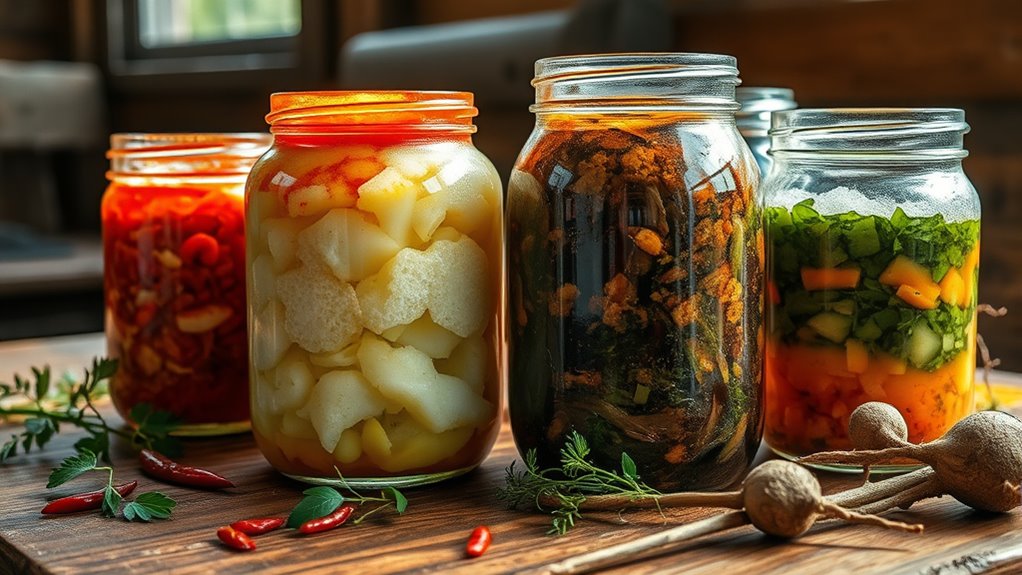

When fermenting foraged foods, safety starts with correct identification and thorough cleaning to remove dirt, insects, and damaged parts. Use clean, non-reactive containers like glass jars and keep everything sterile to prevent harmful bacteria. Control fermentation conditions by using salt or vinegar, and monitor regularly for signs of spoilage such as foul odors, mold, or slime. Staying vigilant and following trusted guidelines will help you ferment safely—keep exploring to learn more about safe wild food fermentation methods.
Key Takeaways
- Properly identify and thoroughly clean wild foraged foods to remove dirt, insects, and damaged parts before fermentation.
- Use clean, non-reactive containers like glass jars and maintain sterile conditions throughout the process.
- Control fermentation conditions with salt, vinegar, or wild bacteria, and follow trusted recipes for safety.
- Regularly monitor for spoilage signs such as foul odors, mold, or slime, and discard suspicious batches immediately.
- Maintain cleanliness, proper storage, and awareness of fermentation signs to ensure safe and successful wild food fermentations.

Foraging for wild foods is an exciting way to connect with nature and expand your culinary horizons, but did you know that fermenting these foraged ingredients can enhance their flavor and preserve them longer? When you gather wild edibles, you’re tapping into a treasure trove of natural flavors and nutrients. However, diving into fermentation requires careful attention to fermentation safety to avoid health risks. Wild edibles often carry bacteria, fungi, or other microorganisms that, if not handled correctly, can turn your fermentation project into a safety hazard. Before you start, make sure you’re confident in correctly identifying edible plants and fungi, as misidentification can lead to poisoning. Once you’re sure about your wild edibles, the next step is to prepare them properly for fermentation. Clean your foraged ingredients thoroughly, removing dirt, insects, or damaged parts, since contaminants can interfere with safe fermentation.
Fermentation safety hinges on controlling the environment in which fermentation occurs. Using clean, non-reactive containers like glass jars is essential. Avoid metal containers, as they can react with acids produced during fermentation, potentially leaching harmful substances. Salt, vinegar, or naturally occurring wild bacteria help create an inhospitable environment for harmful pathogens while encouraging beneficial microbes. It’s imperative to keep everything sterile—wash your hands, utensils, and containers thoroughly before starting. During fermentation, regularly check for signs of spoilage, such as foul odors, mold, or slimy textures. If you spot anything suspicious, discard the batch immediately. Proper storage conditions are also indispensable; keep fermented wild edibles in a cool, dark place to slow microbial activity and prevent spoilage.
Another aspect of fermentation safety involves understanding the fermentation process itself. Not all wild edibles ferment the same way, so research specific plants and fungi beforehand. Some wild ingredients may require pre-treatment, like blanching or salting, to guarantee safety. When in doubt, follow trusted recipes and guidelines from reputable sources. Remember, fermentation is a natural process, but it isn’t foolproof—your vigilance makes all the difference. If you notice any abnormalities during or after fermentation, such as excessive bubbling, off-smells, or unusual colors, it’s better to err on the side of caution and discard the product. By respecting fermentation safety principles and being meticulous about cleanliness and process, you can enjoy the rich flavors of wild edibles safely while preserving their qualities for future meals.
Frequently Asked Questions
Can I Ferment Wild Mushrooms Safely?
You shouldn’t ferment wild mushrooms safely because of wild mushroom toxicity risks. Many wild mushrooms are toxic, and fermentation doesn’t neutralize these dangers. Using proper fermentation containers is essential for safety, but it won’t eliminate toxicity from unsafe species. If you’re interested in fermented foods, focus on safe, edible fungi like cultivated mushrooms. Always identify mushrooms correctly and consult experts before foraging or fermenting wild varieties.
How Do I Identify Edible Foraged Plants for Fermentation?
Identifying edible foraged plants is like finding treasures in a sea of green. You need to focus on plant identification and foraging safety first. Learn to recognize key features such as leaf shape, flowers, and growth patterns. Use reliable guides or apps, and always cross-check your finds. When unsure, avoid eating wild plants to prevent poisoning. Staying cautious guarantees your fermentation adventures remain safe and enjoyable.
Are There Specific Safety Tips for Fermenting Seaweed?
When fermenting seaweed, you should always prioritize safe handling to prevent contamination. Rinse it thoroughly to remove dirt and salt, and avoid using seaweed from polluted waters. Keep your workspace clean, and use sterilized jars to prevent contamination. Be aware of signs of spoilage, like foul odors or sliminess. Properly prepared and handled seaweed reduces risks, ensuring a safe and delicious fermentation process.
What Are the Signs of Spoilage in Fermented Foraged Foods?
You’ll know your fermented foraged foods have spoiled if you see mold development or notice a sour smell that’s off-putting. Mold can appear as fuzzy spots or unusual colors, signaling spoilage. A strong, sour odor that’s different from the normal tang indicates fermentation has gone bad. Trust your senses—if anything looks or smells strange, it’s safest to discard the food to avoid health risks.
How Long Is the Typical Fermentation Period for Wild Foods?
The fermentation timeline for wild foods varies, but typically, it takes about one to four weeks for wild food maturation. During this period, you’ll notice bubbling and sour aromas, indicating active fermentation. Keep an eye on the process and taste test to determine readiness. Factors like temperature and food type influence the timeline, so stay attentive and trust your senses to judge when your wild ferments are perfectly aged and safe to enjoy.
Conclusion
Fermenting foraged foods can be safe and rewarding if you follow proper guidelines. For example, imagine discovering wild garlic and fermenting it into a flavorful condiment—just like Sarah, who safely fermented her foraged herbs and enjoyed a delicious, probiotic-rich addition to her meals. Always research your ingredients, keep everything clean, and monitor your fermentation process. With care, you can enjoy the unique flavors and health benefits of your foraged ferments safely and confidently.