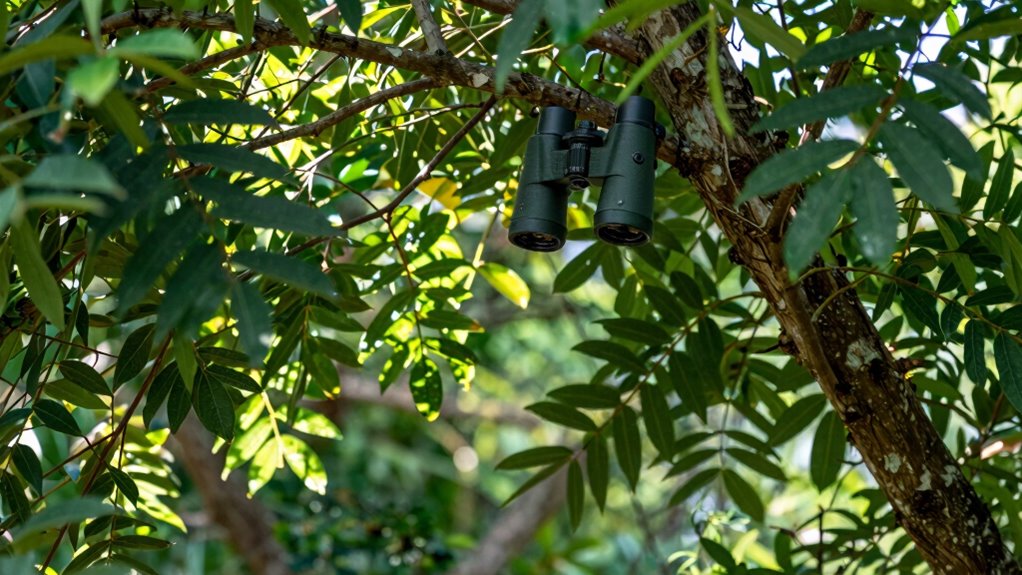

To focus effectively on tree canopies and edge habitats, start by setting your binoculars to a distant focus and adjusting the diopter for each eye for a sharp image. Use small, controlled turns of the focus wheel to respond quickly to moving wildlife, avoiding quick, jerky adjustments that cause eye strain. Familiarize yourself with habitat types and animal behaviors to anticipate movement, which helps refine your focus. Keep practicing these techniques to improve your skills and uncover more tips along the way.

Get garden gear delivered free with Prime
- Fast, free delivery on millions of items
- Prime Video, Amazon Music and more included
- Member-only deals all year
Key Takeaways
- Start with broad focus on distant canopy or edge habitat using the central focusing wheel for initial clarity.
- Adjust diopter settings for each eye to ensure a sharp, crisp image before fine-tuning focus.
- Use slow, controlled focus adjustments to quickly adapt to varying distances of tree branches or wildlife.
- Leverage habitat knowledge to anticipate wildlife movement and focus points at specific canopy or edge locations.
- Practice smooth focus shifts between foreground and distant elements to enhance responsiveness in dynamic edge habitats.
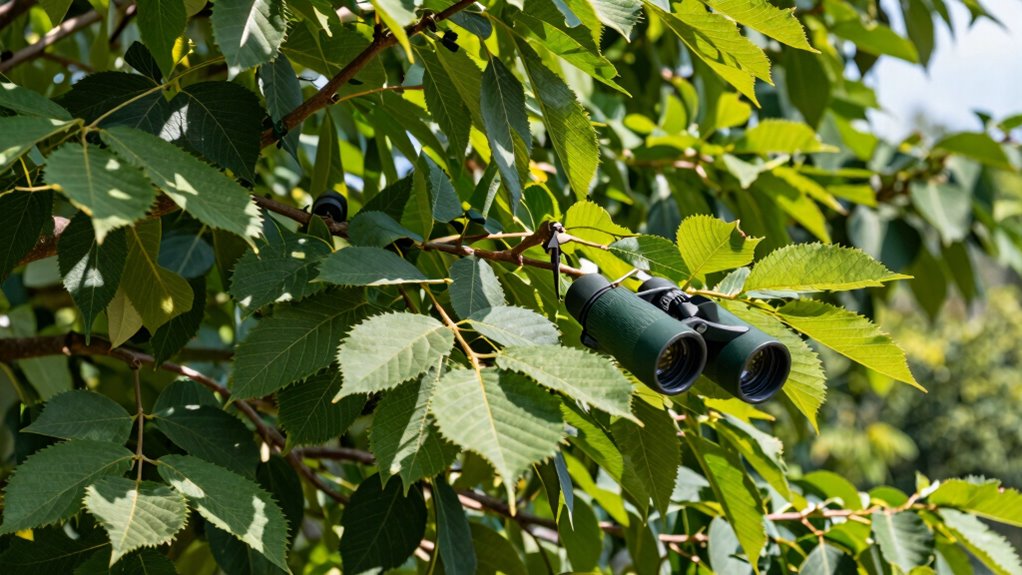
Mastering binocular focus techniques is essential for achieving a clear and comfortable viewing experience. When you’re exploring tree canopies or edge habitats, sharp focus makes all the difference between missing a fleeting moment and capturing a stunning glimpse of wildlife activity. Your goal is to fine-tune your binoculars quickly and accurately, so you can keep your eyes on the action without unnecessary delay or eye strain. Focus adjustment is your primary tool here. It’s not just about turning a knob; it’s about developing a smooth, intuitive technique that allows you to adapt swiftly to varying distances and subjects.
As you scan through complex landscapes, your first step is to set your binoculars to the proper initial focus. Look at a distant object, like the top of a tree or a distant branch, and use the central focusing wheel to bring it into sharp view. Once you’ve got a rough focus, switch to binoculars with a diopter adjustment. This feature fine-tunes the focus for each eye, compensating for any eyesight differences. Adjust the diopter until you see a crisp image with both eyes, then lock it in place. From here, your focus adjustment becomes quicker and more precise, especially when shifting between foreground and background elements like birds in the bushes and animals in the treetops. Developing this skill can significantly enhance your ability to respond quickly to changing wildlife activity.
While wildlife observation, particularly in edge habitats, often involves rapid changes in distance, practicing a smooth, controlled focus adjustment process helps you react swiftly. When you spot movement or notice a particular detail, don’t rush blindly; instead, gently turn the focus wheel until the subject snaps into clear view. Use small, deliberate movements rather than quick jabs, which can cause overshooting or eye strain. Developing an understanding of biodiversity and habitat complexity can also enhance your anticipation of movement and improve your focusing skills. Additionally, familiarity with different habitat types can help you predict where wildlife might appear, streamlining your focus adjustments. With experience, you’ll develop a sense of how much to turn the focus wheel for different distances, reducing the time spent fumbling and increasing your overall efficiency. Furthermore, understanding habitat structure can help you better anticipate where wildlife activity is likely to occur, making your focusing efforts more effective. Recognizing the typical movement patterns of animals in various environments can also give you an edge in quickly refocusing on your subjects. Incorporating knowledge of animal behavior can further refine your timing and accuracy in shifting focus swiftly.
binoculars with diopter adjustment
As an affiliate, we earn on qualifying purchases.
As an affiliate, we earn on qualifying purchases.
Frequently Asked Questions
How Do Weather Conditions Affect Binocular Focusing Accuracy?
Weather conditions considerably impact your binocular focusing accuracy. Rain, fog, or humidity can cause focus instability by creating moisture on lenses, making it harder to see details clearly. Wind or vibrations may also shake your binoculars, disrupting focus. To maintain focus stability, guarantee your binoculars are dry, use a steady stance, and adjust focus carefully in changing weather. Being aware of weather impact helps you get sharper, more accurate views.
What Are Common Mistakes When Focusing on Tree Canopies?
Many mistake focusing on tree canopies by rushing, which ruins depth perception and reduces clarity. You might neglect adjusting the focusing speed, causing blurry views or missed details. Avoid assuming your initial focus is perfect; instead, fine-tune gradually for crisp, clear results. Remember, patience improves precision, helping you better interpret the intricate images through your binoculars. Slow, steady focusing enhances your experience and sharpens your understanding of the towering treetops.
How Often Should I Calibrate My Binoculars for Optimal Focus?
You should calibrate your binoculars for ideal focus every few months or after heavy use. Regular binocular maintenance, including focus adjustment, ensures clear, sharp images when observing tree canopies or edge habitats. If you notice blurred images or difficulty focusing, it’s a sign to re-calibrate. Keep the focus adjustment smooth and precise, and store your binoculars properly to maintain their alignment and overall performance over time.
Can Focusing Techniques Vary for Different Types of Binoculars?
Yes, focusing techniques can vary based on your binoculars. You should check optical alignment and adjust the focus differently depending on the model and lens design. For instance, roof prisms require precise focus adjustments, while porro prisms might need less fine-tuning. Always start with the focus adjustment, guaranteeing the eyepieces are aligned, then fine-tune for clarity. Adapting your technique ensures clearer views across different binocular types.
What Accessories Can Enhance Focusing on Distant Habitats?
To enhance focusing on distant habitats, consider accessories like a tripod or binocular harness to improve magnification stability, reducing shake for clearer views. Additionally, choose binoculars with high-quality lens coatings that improve light transmission and contrast, making focusing easier at long distances. These tools help you maintain sharp focus, especially when observing tree canopies or edge habitats, ensuring a more detailed and comfortable viewing experience.
As an affiliate, we earn on qualifying purchases.
Conclusion
Mastering binocular focus techniques transforms your ability to explore tree canopies and edge habitats. With these skills, you’ll access secret worlds hiding just beyond your sight, revealing vibrant ecosystems that seem to breathe with life. Every glance becomes an adventure, a chance to witness nature’s masterpiece unfold before your eyes. Embrace these methods, and you’ll find yourself more connected than ever—your passion ignited and your perspective forever changed by the astonishing beauty waiting just overhead.
compact binoculars for wildlife viewing
As an affiliate, we earn on qualifying purchases.
As an affiliate, we earn on qualifying purchases.
high magnification binoculars for trees
As an affiliate, we earn on qualifying purchases.
As an affiliate, we earn on qualifying purchases.
Halloween Picks
halloween
As an affiliate, we earn on qualifying purchases.