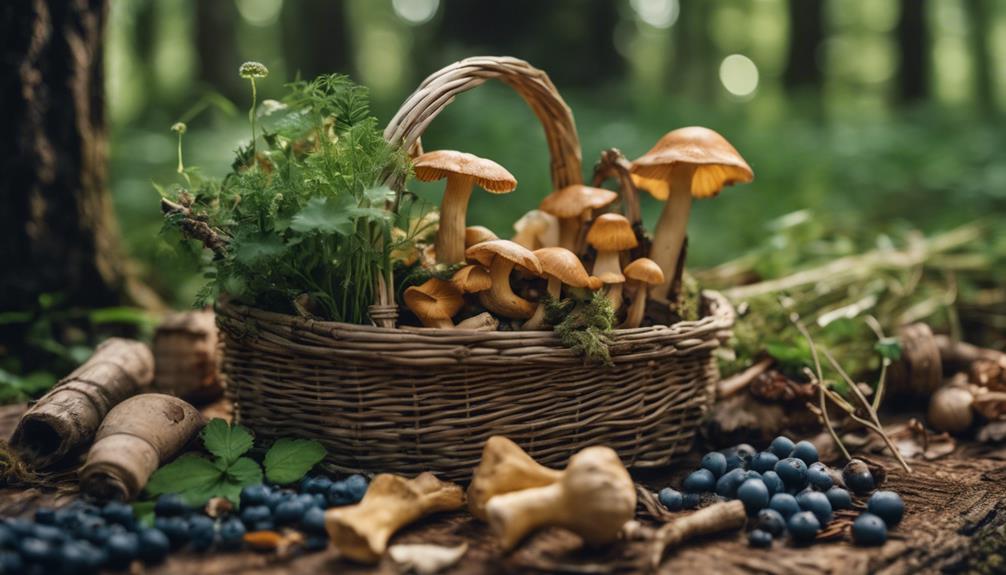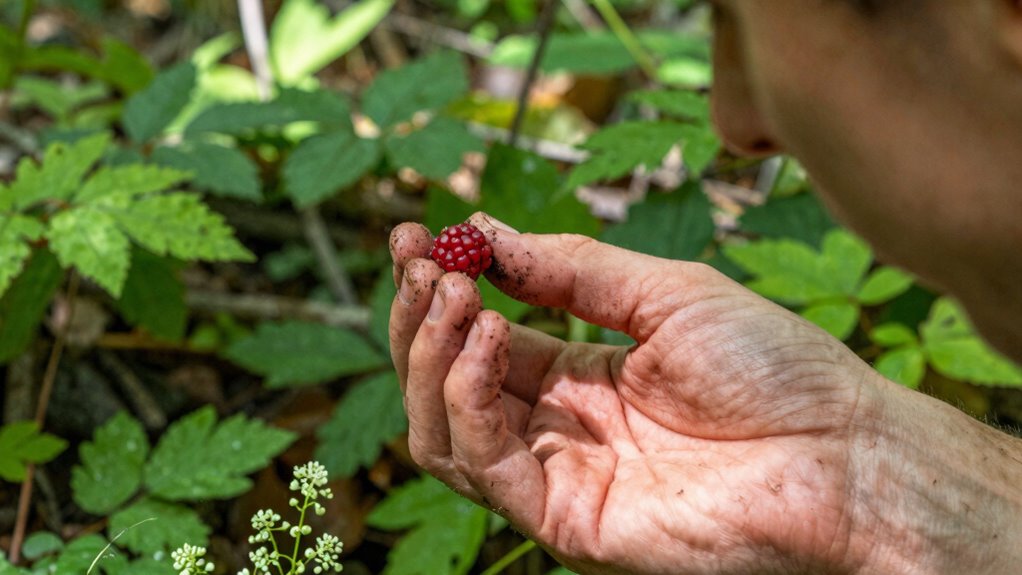
Before tasting anything new, you carefully identify the plant, checking key features like leaf shape and flower structure with reliable guides or experienced foragers. You verify it’s not a look-alike that could be toxic. You also follow ethical harvesting practices, taking only what you need and avoiding contaminated areas. Thoroughly cleaning and preparing the plant is essential, and starting with small amounts helps spot any allergies. If you keep these steps in mind, you’ll learn even more about safe foraging techniques.

Get garden gear delivered free with Prime
- Fast, free delivery on millions of items
- Prime Video, Amazon Music and more included
- Member-only deals all year
Key Takeaways
- Thoroughly identify the plant using reliable guides, apps, or expert consultation to ensure correct species recognition.
- Confirm the plant’s safety by researching potential toxins and look-alikes before any tasting.
- Harvest only a small amount to test for allergies or adverse reactions.
- Clean and prepare the plant properly to remove contaminants and toxins before tasting.
- Avoid tasting unfamiliar plants near potential pollution sources, such as roads or industrial areas.
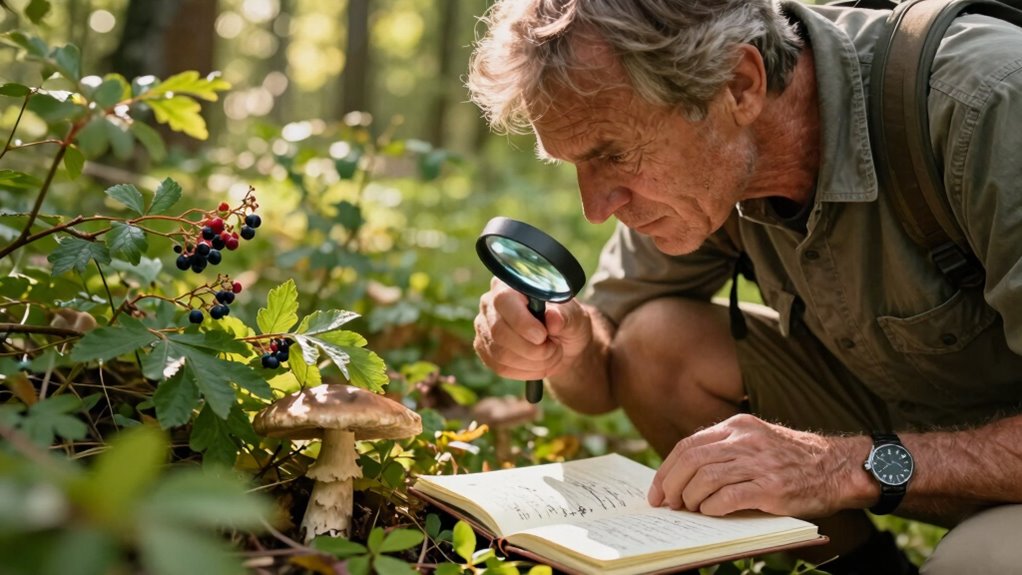
Before you plunge into tasting unfamiliar foods, it’s vital to do some quick research and take safety precautions. The first step in safe foraging is mastering wild plant identification. You need to be absolutely certain about what you’re picking. Many edible plants have look-alikes that can be toxic or even deadly. Take the time to learn key features—leaf shape, flower structure, and growing habits—so you can distinguish a safe find from a dangerous impostor. Using reliable field guides, apps, or consulting experienced foragers can make all the difference. Never rely solely on memory or vague descriptions, especially when dealing with plants that could pose health risks. Developing strong plant identification skills is essential for safe foraging. Alongside wild plant identification, practicing ethical foraging is vital. Ethical foraging practices ensure that your harvesting doesn’t harm ecosystems or deplete local resources. This means only taking what you need, avoiding overharvesting, and respecting protected areas or private land. It also involves leaving enough behind so the plant can continue to thrive and supporting sustainable populations. Remember, foraging isn’t just about finding food—it’s about preserving the environment for future foragers and the local wildlife that depends on these plants. By following these principles, you help maintain balance and avoid contributing to ecological damage. Once you’ve identified a plant correctly and are confident in its safety, consider the harvesting method. Use scissors or a knife to cut plants cleanly, avoiding damage to the roots or surrounding vegetation. This promotes regrowth and keeps the plant healthy. Also, be aware of potential contaminants—avoid plants near roads, industrial areas, or areas with heavy pesticide use. Contaminants can pose health risks, so thorough cleaning is essential. Clean all foraged items thoroughly before consumption, and when in doubt, err on the side of caution. It’s better to leave a plant behind than risk ingesting something harmful. Doing your homework before tasting new foods also includes understanding any preparation techniques needed. Some plants require specific techniques to remove toxins or improve digestibility. For example, certain greens may need to be soaked or cooked thoroughly. Learning these methods beforehand helps prevent accidental poisoning and enhances your overall experience. Proper food safety practices are crucial for a successful foraging experience. Always start with small quantities to test for allergies or sensitivities. Remember, just because something is edible doesn’t mean it’s safe for everyone.
wild plant identification guidebook
As an affiliate, we earn on qualifying purchases.
As an affiliate, we earn on qualifying purchases.
Frequently Asked Questions
How Do I Identify Edible Versus Poisonous Plants Safely?
To identify edible versus poisonous plants safely, focus on accurate plant identification by studying reputable guides or consulting experts. Look for distinctive features such as leaf shape, flowers, and growth patterns. Always verify toxicity prevention by cross-referencing multiple sources and avoiding plants with unknown or ambiguous traits. Remember, if you’re unsure about a plant’s safety, it’s best to err on the side of caution and avoid consuming it altogether.
What Tools Are Essential for Foraging Beginners?
As a beginner, you’ll want essential tools like a sharp knife, a woven basket, and a field guide for wildcrafting techniques. Always follow foraging safety tips by carrying a magnifying glass to examine plants closely and a small notebook to record findings. A sturdy pair of gloves can protect your hands, and a map or GPS helps navigate. These tools guarantee safe, effective foraging while boosting your confidence and knowledge.
How Do Seasonal Changes Affect Foraging Options?
Think of the seasons as a changing map guiding your foraging journey. In spring, wild berries bloom, while summer offers abundant fungi. Fall signals a shift, with fewer options but richer finds. Seasonal changes influence what you can harvest, requiring keen fungal identification skills and an eye for ripe wild berries. By understanding these patterns, you’ll navigate the forest’s bounty more confidently, always ready for what’s in season.
Can Foraging Be Done in Urban Areas Safely?
Yes, you can forage safely in urban areas if you follow city foraging regulations and prioritize urban plant safety. Always identify plants carefully, avoiding polluted or sprayed areas, and stick to permitted zones. Use reliable guides and tools to guarantee accurate identification. By respecting local laws and being cautious about potential toxins, you can enjoy urban foraging responsibly and safely, discovering wild edibles right in your city.
How Do I Store Foraged Foods to Maximize Freshness?
Think of your foraged foods as treasures waiting to be preserved. To maximize freshness, store them in airtight storage containers that shield them from air and moisture. For delicate items, like berries or greens, keep them in the fridge’s crisper drawer, lined with paper towels to absorb excess moisture. Proper harvest preservation guarantees your wild finds stay vibrant and delicious, ready to be enjoyed long after the foraging adventure.
As an affiliate, we earn on qualifying purchases.
Conclusion
Before tasting something new, you listen carefully, observe quietly, and research thoroughly. You ask questions, take notes, and trust your instincts. You prepare yourself mentally, respect nature’s gifts, and approach with patience. By doing these things, you honor the wild, protect yourself, and deepen your connection. In the end, it’s about being curious, cautious, and respectful—embracing each step with intention, and savoring each discovery with gratitude. That’s the true essence of good foraging.
As an affiliate, we earn on qualifying purchases.
As an affiliate, we earn on qualifying purchases.
Fall yard work Picks
leaf blowers
As an affiliate, we earn on qualifying purchases.