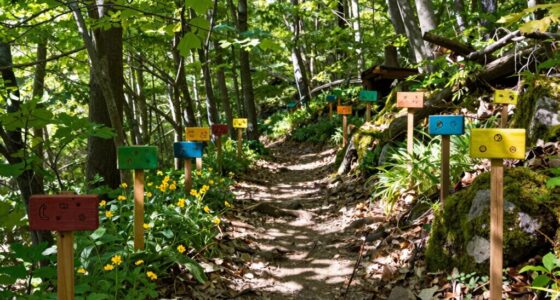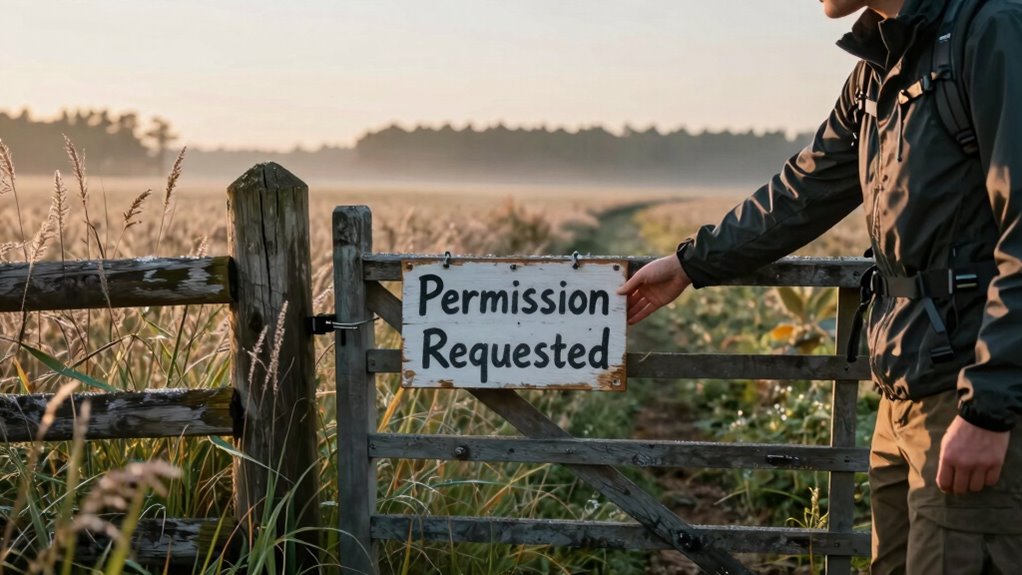

When approaching land access, always ask for permission with respect and honesty, recognizing the landowner’s rights and cultural values. Be aware of legal boundaries and local regulations to avoid issues. Show cultural sensitivity by understanding different traditions and histories associated with the land. Building trust through open communication fosters good relationships and future opportunities. If you want to learn how to navigate these principles ethically, you’ll find valuable guidance on respectful land access practices.

Get garden gear delivered free — and shop member deals
- Fast, free delivery on millions of items
- Access to Prime Big Deal Days deals on October 6–7
- Prime Video, Amazon Music and more included
Key Takeaways
- Respect landowners’ rights and cultural values by always seeking permission before accessing private land.
- Understand and adhere to local laws, regulations, and property boundaries to avoid legal issues.
- Approach landowners politely, explaining your intentions and showing appreciation for their consideration.
- Recognize cultural sensitivities and tailor your approach to respect community traditions and beliefs.
- Build trust and foster positive relationships through open communication and responsible land use practices.
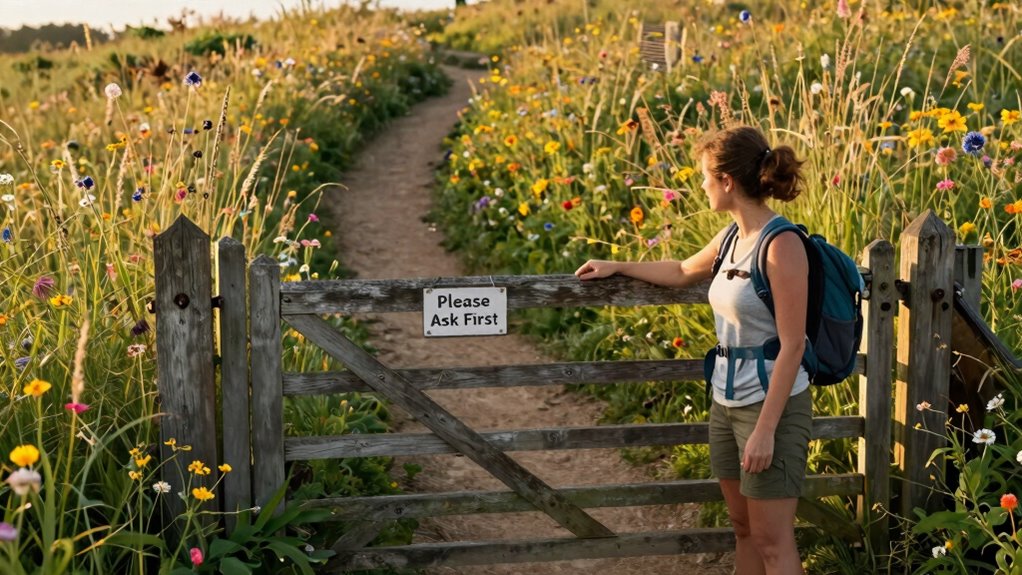
Asking for permission might seem straightforward, but it raises important ethical questions about respect, autonomy, and trust. When you seek access to land, you’re not just obeying rules; you’re engaging in a practice that reflects your respect for the landowner’s rights and the community’s cultural values. Cultural sensitivity plays a vital role in this process. You need to understand that different communities may have diverse traditions, beliefs, and histories associated with their land. Approaching landowners with awareness and respect for these cultural nuances shows you value their heritage and are committed to ethical interaction. This sensitivity can help foster trust and open dialogue, making it more likely that your request will be considered positively. Ignoring these cultural factors can lead to misunderstandings, resentment, or even conflicts, which can damage relationships and harm the reputation of outdoor enthusiasts or land users.
Alongside cultural sensitivity, you must also consider legal considerations. Land access isn’t just about good manners; it’s governed by laws that vary from place to place. You need to be aware of property boundaries, trespassing laws, and any restrictions or permits required for access. Failing to adhere to these legal considerations can result in fines, penalties, or even criminal charges. Respecting legal boundaries demonstrates your commitment to acting ethically and responsibly. When in doubt, consult local regulations or seek permission from landowners beforehand. This proactive approach helps prevent legal issues and shows your respect for the rules that protect landowners’ rights and natural resources. Being informed about legal considerations can also help you navigate the complexities of land use and avoid unintentional violations. Developing an understanding of landowner rights can further enhance your ability to approach access requests responsibly. Additionally, understanding the potential consequences of unauthorized access can motivate more respectful and cautious behavior. Gaining knowledge about cultural norms relevant to different communities can also significantly improve your interactions and reduce the likelihood of missteps. Ignoring legal considerations not only risks legal repercussions but also undermines your credibility and the trust others place in you.
Combining cultural sensitivity with a firm understanding of legal considerations creates a respectful, responsible approach to land access. Asking permission is more than a formality; it’s a way to demonstrate integrity and respect for those who own or steward the land. When you approach landowners with honesty and an awareness of their cultural context, you’re more likely to receive a positive response. This approach also encourages open communication, which can lead to better relationships and future access opportunities. Recognizing the importance of cultural awareness can significantly improve cooperation and mutual understanding. Ultimately, asking permission the right way isn’t just about following rules—it’s about embodying respect, understanding, and responsibility in all your outdoor pursuits. By doing so, you help preserve the trust and mutual respect necessary for sustainable and ethical land use.
As an affiliate, we earn on qualifying purchases.
Frequently Asked Questions
What Are Common Cultural Sensitivities When Seeking Land Access?
When seeking land access, you should be aware of cultural sensitivities like respecting local customs and avoiding cultural taboos. Use respectful communication, listen carefully, and show genuine appreciation for the land and its traditions. Avoid making assumptions or demanding access. By honoring cultural practices and engaging with humility, you foster trust and demonstrate respect, which can help you gain permission and build positive relationships with landholders and communities.
How Do Legal Rights Influence Permission Requests?
Legal rights greatly influence your permission requests because understanding legal implications helps you approach land access correctly. You need to follow permission protocols to guarantee your actions are lawful, respecting landowners’ rights and avoiding potential legal issues. By clarifying land ownership and securing proper authorization, you minimize risks and demonstrate respect. This responsible approach fosters trust and maintains good relationships, making future access smoother and more respectful of legal boundaries.
What Should I Do if Permission Is Denied?
When permission is denied, respect the landowner’s decision and avoid trespassing. Instead, explore permission alternatives like asking if you can access the land at different times or for specific activities. Use negotiation strategies to build trust, such as offering help or sharing your plans. If access remains unavailable, consider seeking public or private land that permits similar activities, ensuring you stay within legal and ethical boundaries.
Are There Situations Where Permission Isn’t Necessary?
In some cases, permission isn’t necessary if you’re respecting unwritten norms and personal boundaries. For example, if land is publicly accessible or clearly designated for public use, you can often enter without asking. However, you should always observe signs and local customs. Even when permission isn’t required, being considerate and aware of personal boundaries helps maintain good relationships and avoids misunderstandings or conflicts.
How Can I Build Trust With Landowners Over Time?
Building trust with landowners is like tending a garden—you nurture it with patience and care. You can do this by consistently demonstrating respect for their property and being transparent about your intentions. Building rapport takes time, so stay honest, follow through on your promises, and show appreciation for their willingness to collaborate. Over time, your respectful approach will cultivate a strong, mutually beneficial relationship.
outdoor privacy signs for land access
As an affiliate, we earn on qualifying purchases.
As an affiliate, we earn on qualifying purchases.
Conclusion
So, next time you’re eyeing that private land, remember—it’s not just a simple ask, it’s a moral masterpiece in the making! Asking permission isn’t just polite; it’s a giant leap for respectful humanity, a superhero move in the world of land access! By respecting boundaries, you’re not just crossing a fence—you’re building trust, forging connections, and transforming a simple request into a monumental act of integrity. Now go, conquer that land—with kindness leading the way!
cultural sensitivity guide for land access
As an affiliate, we earn on qualifying purchases.
As an affiliate, we earn on qualifying purchases.
As an affiliate, we earn on qualifying purchases.
Fall yard work Picks
leaf blowers
As an affiliate, we earn on qualifying purchases.