TL;DR

Get garden gear delivered free with Prime
- Fast, free delivery on millions of items
- Prime Video, Amazon Music and more included
- Member-only deals all year
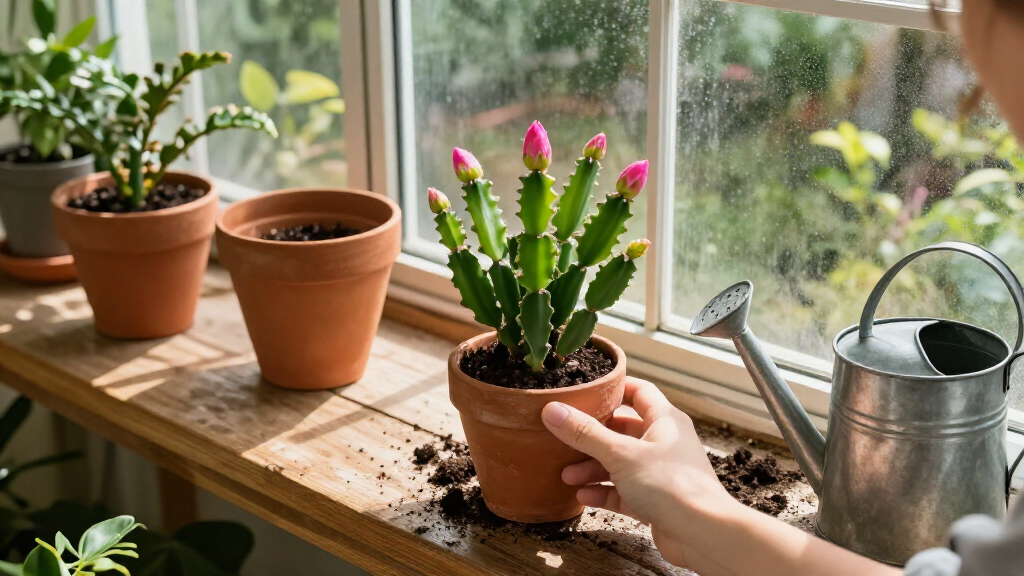
Homes & Gardens recommends using October to set up Christmas cacti for flowering with long, uninterrupted nights, cooler stable temperatures, careful watering and bright indirect daytime light. The advice may support bud formation, but bloom timing and results depend on the plant and its growing conditions.
Homes & Gardens has published five October care steps for Christmas cactus owners hoping to encourage holiday blooms: provide 12–14 hours of uninterrupted darkness, keep temperatures stable and relatively cool, adjust watering, offer bright indirect daytime light, and avoid moving the plant once buds appear. The advice describes conditions that can support flowering; it does not guarantee blooms by Christmas, as explained in this guide to getting a Christmas cactus to flower.
The report says to give the plant long, dark nights for four to six weeks, while providing bright, indirect light during the day—conditions also covered in this guide to preparing a Christmas cactus for holiday flowers. Evening household lighting can interrupt the dark period, so the article suggests placing the plant in a naturally dark room overnight or using a lightproof cover that is removed in the morning. If a grow light is used to supplement daytime light, it should be switched off before the nighttime darkness period.
For temperature, Homes & Gardens recommends nights around 55–65°F and days around 65–70°F. It advises avoiding heating vents, fireplaces and drafty windows because sudden changes and dry air may stress the plant and contribute to bud drop. The report also cautions that Christmas cacti should be brought indoors before temperatures fall too low and should not be exposed to frost.
Water when the top inch of potting mix feels dry, then water thoroughly and let excess drain away. Empty the saucer so roots are not left standing in water, and use a pot with drainage holes. The report’s final two steps are to give the plant bright indirect light—an east-facing window is one suggested location—and keep it as undisturbed as possible after buds form.
Five Conditions That Support Buds
October care matters because the report links long nights and cooler temperatures with the conditions that prompt Christmas cactus bud formation. Maintaining those conditions may help a plant prepare to flower when indoor days shorten, while steady light and watering support its health as buds develop.
The advice also addresses a common practical risk: buds can drop after stress. Abrupt temperature changes, overly wet or very dry soil, and moving a plant after buds appear can disrupt its conditions. The recommendations offer a routine for reducing those disruptions, not a promise of a particular number of flowers or a fixed bloom date.
Christmas cactus care differs from care for desert cacti. The report identifies Schlumbergera as a tropical plant from Brazilian rainforests that prefers bright, indirect light and consistent moisture. Treating it like a desert cactus by allowing its potting mix to stay completely dry for long periods may cause stress rather than help it flower.
Christmas cactus pot with drainage holes
As an affiliate, we earn on qualifying purchases.
As an affiliate, we earn on qualifying purchases.
How October Fits the Bloom Cycle
The Homes & Gardens report frames October as a time to prepare the plant for a holiday display. It says flowering is encouraged by a combination of shorter daylight, uninterrupted darkness and cooler conditions, with four to six weeks of long nights suggested for bud formation. This is seasonal care guidance rather than a report of a new horticultural study or a guarantee that every plant will bloom on schedule.
During the day, the plant still needs light. The article suggests an east-facing window for gentle morning sun, or another bright spot where intense afternoon light is filtered. If the cactus spent summer outdoors, the report advises bringing it inside before cold weather and checking it for pests before placing it near other houseplants. It does not recommend leaving the plant outside in frost.
““For the best results, give your plant 12–14 hours of uninterrupted darkness each night for around four to six weeks.””
— Homes & Gardens report
As an affiliate, we earn on qualifying purchases.
Bloom Timing Is Not Guaranteed
The report does not establish that following these steps will make every Christmas cactus flower by Christmas. Bloom timing and success can vary, and the article does not quantify how often the recommendations produce blooms or compare outcomes between plants. Its temperature and darkness ranges are guidance, not a guarantee.
Water needs also vary with room temperature, humidity, pot size and potting mix. The source advises checking the soil rather than following a rigid calendar, but it does not specify one watering frequency that suits every home. It also does not provide a detailed diagnosis for plants that fail to form buds or lose them.
As an affiliate, we earn on qualifying purchases.
Maintain Conditions as Buds Form
Over the next four to six weeks, owners following the report’s advice can maintain a consistent nighttime dark period and keep the plant in a bright, indirect daytime location. Check the top inch of soil before watering, allow water to drain fully, and monitor the plant’s position for drafts or heat sources. These steps follow the article’s seasonal guidance; the source names no formal follow-up date.
Once buds appear, avoid unnecessary moves or sudden changes in light, temperature and watering. Watch the plant’s condition rather than assuming every home will require the same routine. The report does not give a specific expected bloom date, so whether flowers open in time for a holiday display remains dependent on the individual plant and its environment.
lightproof plant cover for Christmas cactus
As an affiliate, we earn on qualifying purchases.
As an affiliate, we earn on qualifying purchases.
Key Questions
How many hours of darkness does a Christmas cactus need in October?
The Homes & Gardens report recommends 12–14 hours of uninterrupted darkness each night for around four to six weeks to encourage bud formation.
What temperatures does the report recommend?
It suggests nighttime temperatures of about 55–65°F and daytime temperatures of about 65–70°F, while avoiding sudden temperature changes and frost.
How should I water a Christmas cactus before it blooms?
Check the top inch of soil. If it feels dry, water thoroughly, let excess drain through the pot, and empty the saucer. Do not leave the roots sitting in water.
Should I move my Christmas cactus after buds appear?
The report advises keeping changes to a minimum once buds are visible. Maintaining stable light, temperature and watering conditions may help reduce stress and bud drop.
Source: rss
Columbus Day / Indigenous Peoples' Day Picks
long weekend sales
As an affiliate, we earn on qualifying purchases.