
TL;DR

Get garden gear delivered free — and shop member deals
- Fast, free delivery on millions of items
- Access to Prime Big Deal Days deals on October 6–7
- Prime Video, Amazon Music and more included
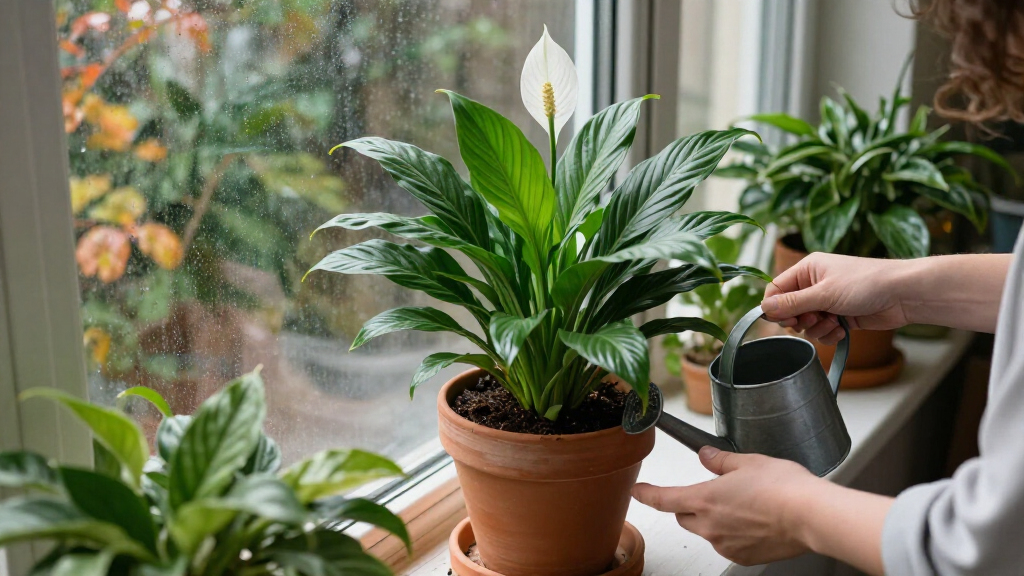
A Gardening Know How report outlines five October checks for peace lilies: move them toward brighter light, keep leaves away from cold glass, flush mineral salts, watch for fungus gnats and add a grow light if needed. The guidance focuses on adapting care as daylight decreases and potting mix dries more slowly; it does not promise more blooms.
Gardening Know How has published five October checks for peace lilies, advising owners to adjust light, protect leaves from cold windows, flush mineral salts, monitor fungus gnats and consider supplemental lighting. The seasonal guidance matters because shorter days and cooler rooms can slow growth and keep potting mix wet longer, changing the plant’s needs compared with summer.
The report’s first recommendation is to move a peace lily closer to a brighter window as autumn daylight declines. It says low light is tolerated but is not ideal for growth, and plants kept too dark may develop smaller leaves and long, floppy stems. A spot about three feet (roughly one metre) from a bright south-facing window is suggested, with the pot turned every week or two to limit leaning. The report says a lack of flowers in October is not, by itself, a reason for concern; it gives the usual flowering period as winter through late summer.
Cold exposure is another check. The article says growth can slow at 50°F (10°C) or below and recommends keeping foliage from touching cold window glass, as well as moving plants away from drafty exterior doors and heating vents. It also advises inspecting the pot for a white crust, which it identifies as likely mineral salts from fertilizer or hard water. Its suggested response is to remove no more than about a quarter-inch of the crusted surface mix, then slowly run water through the pot until roughly twice the pot’s volume drains out.
After flushing, the report advises withholding fertilizer until new growth appears in spring and watering only when the mix feels dry. It also recommends checking for fungus gnats, whose larvae can live in damp potting mix, and allowing the top inch to dry between waterings. For rooms without suitable natural light, the article suggests a grow light and gives 12 to 16 hours a day as a range that foliage plants may do well with through darker months. It recommends starting the light farther from leaves and adjusting based on how new growth and leaf color respond.
Adjusting Care as Daylight Falls
The advice addresses a common seasonal mismatch: a location that was bright enough in summer may receive much less useful light in October. At the same time, slower growth and longer drying times can make a summer watering routine unsuitable. Checking conditions rather than following a fixed schedule may help owners avoid persistently wet soil, which the report links to fungus gnat problems.
The recommendations are practical household checks rather than a claim that any one intervention will produce flowers. Peace lilies may not bloom in October, according to the report, and supplemental light is presented as a way to address darker rooms—not as a guarantee of flowering. The guidance gives owners a seasonal checklist while leaving outcomes dependent on each plant’s conditions.
As an affiliate, we earn on qualifying purchases.
From Summer Growth to Winter Rest
The report frames October as a follow-up to September care. It says September is generally a time to ease back on watering and give the last feeding of the year; October then brings changes to placement, pot conditions and pest monitoring. The central shift is that shorter days and a lower sun angle can make familiar spots dimmer than they were in summer.
Gardening Know How says peace lilies, members of the genus Spathiphyllum, can tolerate low light, but that tolerance should not be mistaken for ideal growing conditions. It also says plants generally need less frequent watering when the potting mix remains wet longer in cooler, dimmer conditions. Its suggested outlook is to keep checks light through November, with fresh growth often returning in late winter.
““Low light is something they survive – it is not a desirable growing situation.””
— Gardening Know How
As an affiliate, we earn on qualifying purchases.
Plant Conditions Vary by Home
The article provides general seasonal recommendations, not measurements for every home or plant. Actual light, window temperatures and pot-drying times vary with room layout, window direction, climate, pot size and potting mix. The report does not establish that every peace lily needs a grow light, a particular watering interval or a pot flush in October.
It also does not provide trial data showing that these steps will cause additional blooms. Flowering depends on conditions beyond the checklist, and the report describes flowers as a possibility rather than a guaranteed result. Readers should judge changes by their own plant’s growth and the moisture of its mix.
As an affiliate, we earn on qualifying purchases.
Monitor the Plant Through Winter
For the coming weeks, the report recommends watching how quickly the potting mix dries, keeping leaves clear of cold glass and checking for small flies around the soil. If using a grow light, owners can observe new growth over several weeks and adjust its distance: the article says small growth may warrant moving the light closer, while pale, washed-out leaves may indicate it is too close.
Once the pot has been flushed, the guidance is to pause feeding until new growth appears in spring and to water when the mix feels dry. The report expects that a plant prepared this way will need only occasional checks in November, with a stronger period of new leaf growth often arriving in late winter. The timing and amount of any flowering remain uncertain.
As an affiliate, we earn on qualifying purchases.
Key Questions
Should I move my peace lily in October?
Possibly. Gardening Know How recommends checking whether the plant’s summer location has become too dim as days shorten. A brighter position may help, while keeping the leaves away from cold glass and drafts.
How often should I water a peace lily in October?
The report does not give a fixed schedule. It advises watering when the potting mix feels dry, since cooler, darker conditions can make it dry more slowly than in summer.
Is it a problem if my peace lily does not flower in October?
Not necessarily. The report says October flowers are not expected for every plant and gives the usual flowering period as winter through late summer.
When should I fertilize again?
After the suggested fall flush, Gardening Know How advises waiting until new growth appears in spring before feeding again.
How can I tell if fungus gnats are present?
Look for tiny dark flies rising from the potting mix. The report says sticky traps can help monitor adult flies and recommends letting the top inch of mix dry between waterings to disrupt the conditions they favor.
Source: rss
Fall yard work Picks
leaf blowers
As an affiliate, we earn on qualifying purchases.