
TL;DR

Get garden gear delivered free with Prime
- Fast, free delivery on millions of items
- Prime Video, Amazon Music and more included
- Member-only deals all year
A Country Living report describes three clues for distinguishing male and female hummingbirds: plumage, relative size and behavior. Males are often brighter and perform courtship displays, while females commonly handle nesting and chick-rearing; young males can resemble females, and the patterns vary by species.
A Country Living report describes three clues that may help people tell male and female hummingbirds apart: their coloring, relative size and behavior. The distinctions are useful for watching birds in gardens, but they are not definitive in every case, particularly for young males whose adult plumage has not yet developed.
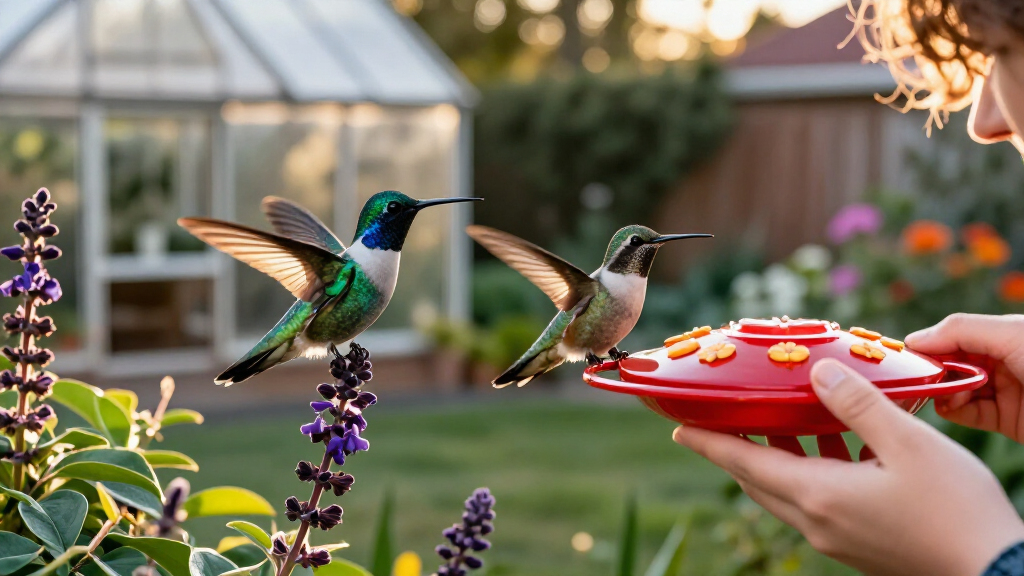
Color is the most visible clue, according to the report. Males are usually more brightly colored, especially on the head and the gorget, the patch of feathers on the throat. Depending on the species, those feathers may show red, pink, purple or green iridescence. Females more often have subtler coloring, with white or lightly speckled throats, though they may also have iridescent feathers on their backs.
Size can offer another clue: females are often slightly larger than males, and some species’ females have somewhat longer bills. The report links female body size to the demands of nesting and raising young. These are general patterns rather than measurements that establish a bird’s sex on their own; the report does not give species-by-species size ranges.
Behavior may help when birds are courting or nesting. Males perform aerial displays, showing their feathers and flying in patterns, while females build nests, incubate eggs and raise chicks, the report says. Both sexes can defend food sources. The report also cautions that juvenile males may resemble females during their first month or two, before brighter adult feathers grow in.
Clues for Garden Bird-Watchers
For people watching hummingbirds at feeders or among flowers, these clues can make brief visits easier to interpret. Looking at throat and head feathers, comparing apparent size and noticing whether a bird is displaying or attending a nest can provide useful indications without handling or disturbing it.
The distinctions also help set expectations: a bird sitting on a nest is likely female, according to the report, because females undertake the described nesting and parental work. Still, an observation should be treated as a likely identification, not certainty. Plumage changes with age, and the source describes tendencies across hummingbirds rather than a universal test for every species.
hummingbird feeder with bright colors
As an affiliate, we earn on qualifying purchases.
As an affiliate, we earn on qualifying purchases.
Plumage, Age and Nesting Roles
The report describes a common pattern in which males have showier feathers that can be used in courtship, while females’ more subdued coloring may help them blend into their surroundings near nests. It presents that explanation as context for the color difference, not as a way to identify every individual bird.
Age matters when using plumage. Young males may look female-like for their first month or two, the report says, until their brighter feathers develop. The source also notes that female size and bill length can differ from males in some species, making species-specific variation relevant to identification.
“One of the easiest ways to tell male and female hummingbirds apart is by looking at their color.”
— Country Living report
As an affiliate, we earn on qualifying purchases.
Limits of Visual Identification
The report does not provide a field guide for individual species, exact size measurements or a method for confirming sex when a bird is seen only briefly. Its wording describes what is usually or often true, not rules that apply without exception. Juvenile plumage can also make males difficult to distinguish from females.
It is not clear from the supplied report how its generalizations apply across all hummingbird species or how seasonal changes affect identification. Color, size and behavior should therefore be considered together, and a single clue should not be treated as conclusive.
As an affiliate, we earn on qualifying purchases.
What to Watch on Future Visits
When a hummingbird visits, observers can note its throat and head color, compare its size with other birds of the same apparent species and watch for courtship or nesting behavior. Repeated observations may provide more clues than a single fast pass through the garden.
Anyone seeking a firmer identification can compare the bird with a reliable guide for the species in their area. The source material does not announce a new study or a forthcoming update; its practical takeaway is to use several clues while allowing for age and species differences.
hummingbird identification guidebook
As an affiliate, we earn on qualifying purchases.
As an affiliate, we earn on qualifying purchases.
Key Questions
What is the easiest clue for telling male and female hummingbirds apart?
Color is often the easiest clue, according to the report. Males commonly have brighter head and throat feathers, while females tend to have more subdued coloring. The pattern can vary by species and age.
Are female hummingbirds larger than males?
Females are often slightly larger, and females of some species may have longer bills. These are general tendencies; the report does not provide measurements that would identify every bird.
How can behavior help identify a hummingbird’s sex?
Males may perform courtship flight displays. Females build nests, incubate eggs and raise chicks, according to the report. Both sexes can defend feeding areas.
Can a young male hummingbird look like a female?
Yes. The report says juvenile males can resemble females during their first month or two, before their brighter adult feathers grow in.
Does one clue confirm whether a hummingbird is male or female?
No. The report gives general clues, not a definitive test. Consider color, size, behavior, age and species together, and treat an identification based on a brief sighting as uncertain.
Source: rss
Fall Picks
fall essentials
As an affiliate, we earn on qualifying purchases.