
TL;DR

Get garden gear delivered free with Prime
- Fast, free delivery on millions of items
- Prime Video, Amazon Music and more included
- Member-only deals all year
A Gardener’s Path report describes three ways to overwinter banana plants outside their preferred warm climates: move container plants indoors, protect in-ground plants with mulch, or dig up and store the rhizomes. Most bananas are vulnerable to cold, so the method depends on the plant, available space and winter conditions. The report says protection should be removed and watering resumed after frost danger passes and growth returns.
Gardener’s Path has outlined three ways to overwinter banana plants in climates where they cannot safely remain outdoors: bring a potted plant inside, mulch and shelter an in-ground plant, or dig up its rhizome for cool storage. The advice matters because most banana plants are cold-sensitive, and the right approach can help gardeners preserve a plant for the next growing season.
The report explains that a banana is an herb, not a tree. Its apparent trunk is a pseudostem made from tightly layered leaves, while the plant’s underground rhizome is the part gardeners need to protect for regrowth. According to Gardener’s Path, leaf growth stops at about 55°F; leaves can be damaged at 32°F, and sustained temperatures of 22°F or lower can kill underground rhizomes. These figures describe the source’s general guidance, not a guarantee for every cultivar or growing condition.
For container-grown plants, the report recommends moving the pot indoors as outdoor temperatures fall. A sunny room suits a plant kept growing, with soil kept moist but not soggy and leaves misted to add humidity. For a dormant-storage option, gardeners can gradually reduce watering, cut the stem to about six inches and keep the pot in a cool, dark place at roughly 40 to 50°F. Water only enough to keep the soil from pulling away from the container.
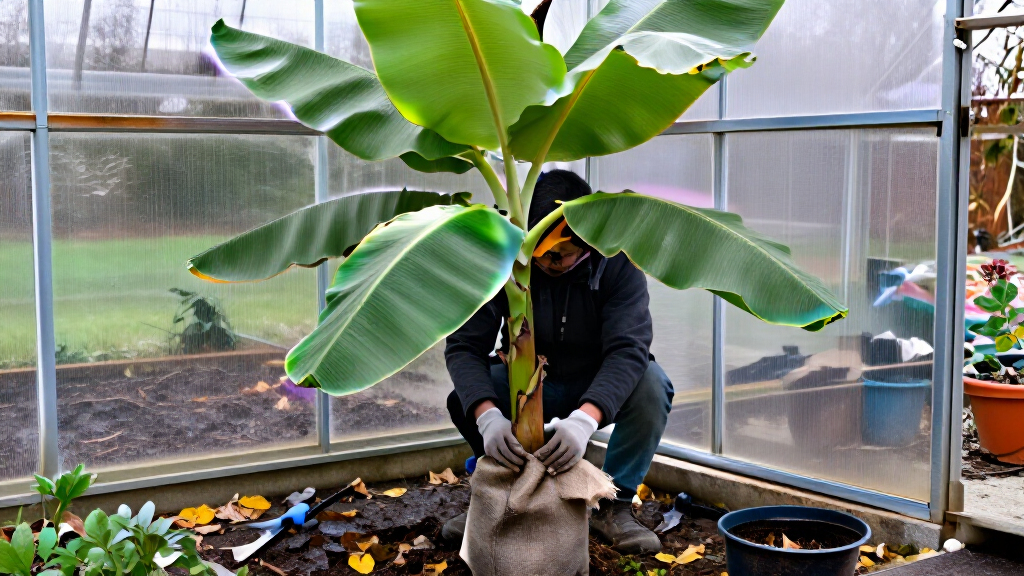
For plants growing in the ground, one option is to cut the plant back to about four to six inches above ground and cover the base with at least a foot of leaves, straw or another mulch. A cage around an uncut pseudostem is another approach described: fill it with packed leaves or straw, while recognizing that exposed portions may be lost. The third method is to dig up the rhizome and roots before frost and store them in slightly moist sand at about 45 to 50°F. The source advises replanting or moving plants back outdoors once frost danger has passed.
Choosing Protection for Your Climate
The guidance gives gardeners three different storage options rather than a single wintering rule. Container plants can be moved without disturbing their roots, while in-ground plants require either substantial insulation or excavation. Choosing among them affects how much space, labor and winter monitoring are needed, as well as whether the plant remains actively growing or goes dormant.
The temperature thresholds also show why simply leaving a tropical banana exposed can put it at risk. The report says most varieties are cold-intolerant, but notes that some, such as Musa basjoo, are more cold-hardy. That distinction matters: variety and local winter conditions can change the protection needed, so the general methods should not be treated as a guarantee of survival in every garden.
As an affiliate, we earn on qualifying purchases.
Bananas and Winter Cold
Banana plants belong to the genus Musa and are native to tropical parts of India, Southeast Asia and northern Australia, according to Gardener’s Path. They are grown in many countries, both for fruit and as ornamental plants. Their large leaves and height can make them prominent garden features, but their tropical origins limit cold tolerance for many commonly grown varieties.
The source identifies USDA Hardiness Zone 9 and warmer as a general setting where many banana plants may be grown outdoors, while emphasizing that cold-tolerant cultivars exist. It gives Japanese fiber banana, M. basjoo, as an example that can tolerate sub-zero temperatures and may be overwintered in colder areas with cutback and protective mulch. Cultivar hardiness does not remove the need to account for local conditions or the plant’s specific requirements.
As an affiliate, we earn on qualifying purchases.
Limits of the Wintering Advice
The source does not provide a publication date, nor does it compare the survival rates of the three methods. It also does not give a single recommendation for every banana cultivar, growing zone or winter pattern. Its temperature figures and storage instructions are general guidance; the outcome for an individual plant may depend on factors not detailed in the report, including its variety and local exposure.
It is also not specified how long a plant can remain in dormant storage or what to do if the storage area fluctuates beyond the suggested temperature range. Gardeners should not assume that a hardy variety needs no protection, or that the stated thresholds apply identically to every plant.
As an affiliate, we earn on qualifying purchases.
Spring Replanting and Regrowth
For plants kept dormant or dug up, the next step described by Gardener’s Path is to wait until all danger of frost has passed before returning them outdoors or replanting them. Remove the cage and protective mulch when warmer weather returns and the plant shows signs of regrowth; trim dead material and resume watering. Container plants stored indoors can also go back outside when frost risk has passed, with watering increased as growth resumes.
The report does not specify a calendar date for that work, since the timing depends on local weather. Gardeners will need to monitor conditions in their area and check the plant for new growth before removing winter protection.
As an affiliate, we earn on qualifying purchases.
Key Questions
Can banana plants survive winter outdoors?
Some varieties can tolerate more cold than others. Gardener’s Path says most banana plants are cold-sensitive, while identifying Musa basjoo as a hardier example. In-ground plants may need substantial mulch or other protection, depending on variety and local conditions.
When should I bring a potted banana plant indoors?
The report advises moving a container plant indoors as outdoor temperatures begin to drop. For dormant storage, it describes cutting the stem to about six inches and keeping the pot in a cool, dark place at roughly 40 to 50°F.
How much mulch should I use for an in-ground plant?
Gardener’s Path recommends piling at least a foot of leaves, straw or other mulch over a plant cut back to about four to six inches above ground. A cage or covering can help hold the material in place and add protection.
When can I uncover or replant a banana plant?
Wait until the risk of frost has passed. For a mulched plant, the report says to remove the protection when warm weather returns and the plant shows signs of regrowth; dug-up plants can then be replanted.
Does a dormant banana plant need watering?
For a potted plant in cool, dark storage, the source advises watering only enough to keep the soil from separating from the pot. For a dug-up rhizome stored in slightly moist sand, it says not to water during dormancy.
Source: rss
Fall yard work Picks
leaf blowers
As an affiliate, we earn on qualifying purchases.