TL;DR

Get garden gear delivered free with Prime
- Fast, free delivery on millions of items
- Prime Video, Amazon Music and more included
- Member-only deals all year
Costa Farms horticulturist Justin Hancock says dry air and direct heat from indoor heating can stress houseplants, with thin-leaved species such as ferns and calatheas particularly vulnerable. He recommends moving plants out of the path of heating vents and fireplaces, while monitoring watering, temperature and humidity.
Ferns, calatheas and other thin-leaved houseplants may be more vulnerable to the dry air and temperature swings caused by indoor heating, Costa Farms horticulturist Justin Hancock told Homes & Gardens. He advises moving plants out of the direct path of heating vents and fireplaces to reduce stress during winter.
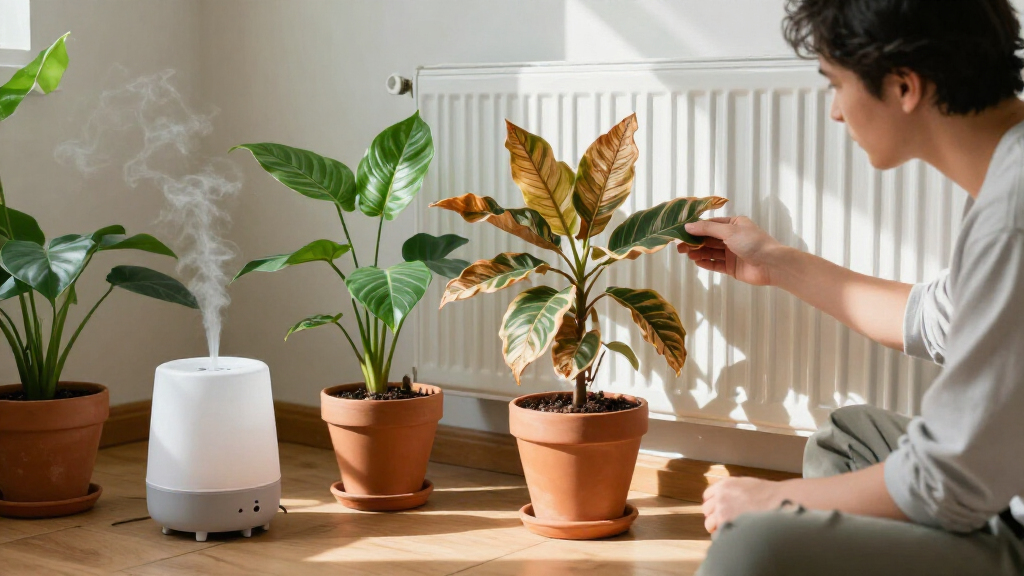
Hancock said heating can create conditions that differ sharply from the steady environment many people expect indoors. Plants placed beside vents or fireplaces may encounter direct bursts of warmer, drier air, which can contribute to dehydration, yellowing or crisping leaves. Those symptoms can also have other causes; the report does not say that heating is the only explanation.
According to Hancock, thin leaves generally retain less water than fleshy or waxy leaves. The report names ferns, calatheas, peace lilies, prayer plants, ivy, polka dot plants and nerve plants among those to watch. Succulents, ZZ plants and snake plants are described as better able to withstand dry periods because their foliage stores more water. That does not mean they are immune to unsuitable conditions.
Hancock also warned that dry indoor conditions can coincide with faster spider mite reproduction. He said an egg can hatch, mature and lay more eggs in as little as seven days. The source offers this as his explanation for why pest numbers may rise quickly when plants are not checked; it does not provide a study or specify how often this occurs across homes.
His main recommendation is to inspect where warm air enters a room and shift plants so they are not directly exposed. A fireplace mantel may be a poor location despite its visual appeal, he said. The report also suggests checking room temperatures, watering based on soil conditions rather than a fixed schedule, and raising humidity by grouping plants, using a pebble tray or running a portable humidifier.
Dry Air Can Stress Indoor Plants
Indoor heating helps keep homes comfortable in winter, but the air immediately around vents and fireplaces may be warmer and drier than the rest of a room. For houseplants with delicate foliage, that difference can increase moisture loss and make existing care problems harder to spot. Yellowing or crispy leaves are reasons to check a plant’s location and conditions, not proof by themselves that heating is responsible.
The warning matters most for people who keep plants near heat sources or have species Hancock identifies as more sensitive. Moving a pot a short distance may reduce direct exposure without requiring residents to turn off their heating. Regular checks may also help people notice pest activity before it spreads across a collection, though the report does not quantify the risk or promise that these steps will prevent infestations.
Popular right now

Sony WH-1000XM4 Wireless Noise-Canceling Headphones, Silver

Vitamix 5-Speed Immersion Blender, 625-Watt Motor, Stainless Steel and Black

Ninja Luxe Café Mini Espresso and Drip Coffee Machine, Stainless Steel, ES301
As an affiliate, we earn on qualifying purchases.
Which Plants Hancock Flags
The Homes & Gardens report frames indoor heating as one of several seasonal challenges for houseplants, alongside reduced winter daylight and watering changes. Hancock’s advice focuses on the plant’s placement and leaf type rather than treating all houseplants as equally sensitive. He said thinner leaves are generally more delicate during environmental changes, while fleshy, waxy foliage tends to hold more water.
Hancock is identified by the report as a Costa Farms horticulturist with more than 25 years in the industry and a background in horticultural science. The article also says he is the author of The New Complete Guide to Houseplants, listed there as due for release on December 1, 2026. The source does not provide a year for the report’s publication, so its timing relative to that release cannot be established from the supplied material.
““The thinner the leaf, the more delicate a plant tends to be.””
— Justin Hancock, Costa Farms horticulturist, speaking to Homes & Gardens
How Much Risk Depends on Conditions
The report does not specify the amount of heat exposure or humidity at which damage becomes likely, and it provides no controlled test comparing plant species. The list should be read as Hancock’s practical guidance, not a ranking of measured risk. Individual results may depend on factors such as distance from a heat source, room conditions, watering and plant health.
It is also not clear how widespread heating-related spider mite outbreaks are, or whether the seven-day reproduction description applies in every indoor setting. The source does not give a publication date, and its listed book release date cannot establish when the advice was first published.
Check Plant Placement This Winter
For now, the report’s advice is to check whether plants sit in the direct stream of air from a vent or close to a fireplace, then move them if needed. Owners can monitor room temperature and soil moisture and watch leaves for changes, while inspecting plants for pests. The article gives 60–75°F as a general temperature range for many houseplants, not a universal target for every species.
Readers should use plant-specific care guidance when adjusting watering or humidity, since the source does not provide tailored instructions for each species. No follow-up inspection, study or additional expert response is announced in the supplied material; the effect of these steps on any particular plant remains dependent on its home conditions.
Key Questions
Which houseplants does the report identify as most vulnerable to heating?
Hancock highlights ferns and calatheas as examples of thin-leaved plants that may be more sensitive. The report’s broader list also includes peace lilies, prayer plants, ivy, polka dot plants and nerve plants.
Why can indoor heating affect houseplants?
Air coming directly from a vent or near a fireplace may be warmer and drier than the surrounding room. Hancock says exposure can contribute to dehydration and yellowing or crisping leaves.
What is the simplest way to protect plants?
Check whether a plant is in the direct path of a heating vent or too close to a fireplace, then move it out of that airflow if possible. Hancock says even a small change in position may help reduce exposure.
Are succulents and snake plants safe near heaters?
The report says succulents, ZZ plants and snake plants may cope better with dry periods because their foliage stores more water. It does not say they are immune to heat stress, so their placement and condition still matter.
Can indoor heating increase spider mite problems?
Hancock says spider mites may reproduce faster as heaters are used and warns that populations can grow quickly. The report does not quantify how often this happens, so owners should check plants regularly rather than assume an infestation will occur.
Source: homesandgardens.com