
When gathering wild nuts, timing is everything because you need to follow natural signals rather than leave it to luck. Knowing the fruiting cycles and observing when nuts naturally fall helps you pick them at their peak ripeness. Weather patterns and seasonal changes also influence the best harvest time. Rushing too early or waiting too long can mean tough shells, mold, or missed opportunities. Want to discover how to spot those perfect moments? Keep going to find out more.

Get garden gear delivered free with Prime
- Fast, free delivery on millions of items
- Prime Video, Amazon Music and more included
- Member-only deals all year
Key Takeaways
- Proper timing ensures nuts are fully ripened, enhancing flavor, nutrition, and ease of collection.
- Natural indicators like nut fall and shell color guide optimal harvest timing.
- Weather patterns and seasonal cues influence nut ripening, requiring careful planning.
- Harvesting too early or late reduces nut quality and increases spoilage risks.
- Observation of environmental signals and fruiting cycles is essential for successful foraging.
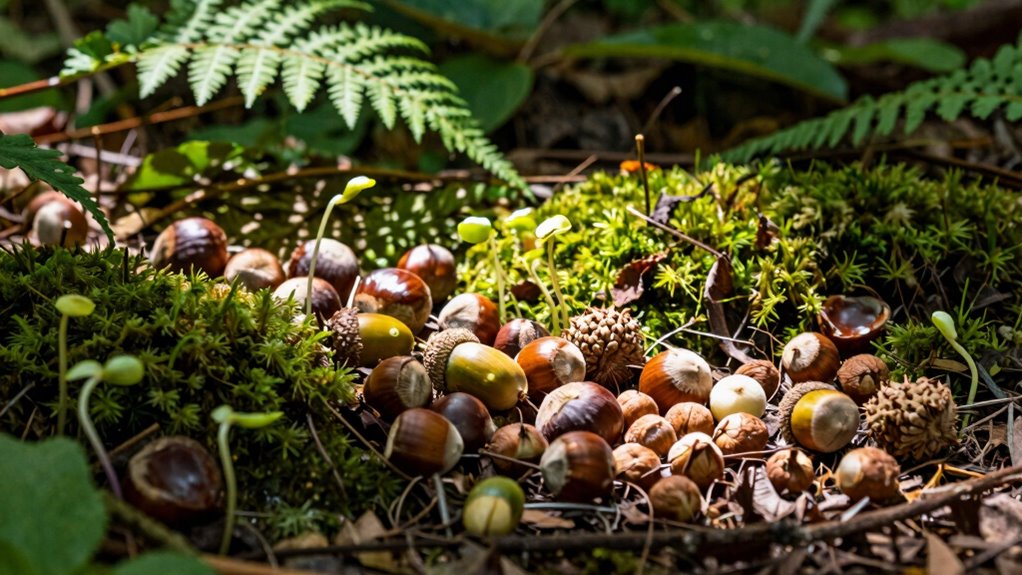
Wild nuts, unlike cultivated varieties, demand careful planning to harvest effectively. If you’re venturing into foraging strategies, you’ll quickly realize that timing plays a vital role in successful nut harvesting. Unlike farm-grown nuts, which are often ready at predictable intervals, wild nuts require you to observe nature’s subtle cues and plan your visits accordingly. Rushing in too early or waiting too long can mean missing out on prime harvests or gathering nuts that have fallen to the ground and become overripe or moldy.
Your success with foraging strategies hinges on understanding the specific fruiting cycles of the trees and shrubs in your area. For example, some nuts, like black walnuts or hickories, ripen late in the season, often in late summer or early fall. You need to be familiar with the local climate and plant species to pinpoint the right window for nut harvesting. Monitoring the nuts’ natural fall is a reliable indicator; when they start dropping naturally, it’s usually a sign that they’re ripe and ready to be collected. If you wait too long, you risk losing your harvest to animals or weather, which can lead to spoilage.
Monitoring natural nut fall signals peak harvest time and helps prevent spoilage from weather or wildlife
Timing also influences the quality of your nuts. Harvesting at the right moment guarantees maximum flavor, nutrition, and storage life. Nuts picked too early may be underdeveloped and difficult to crack, while those gathered too late can be overripe, with shells that are brittle or nuts that are moldy. To refine your foraging strategies, you should learn to identify the best ripeness stages for each nut type, often by observing changes in shell color, nut size, and the ease of nuts falling from their shells. Additionally, understanding local weather patterns** can give you an advantage in planning your harvests effectively. Recognizing the significance of nut maturity indicators** can further enhance your timing precision and ensure optimal harvests.
Furthermore, understanding local weather patterns can give you an advantage. Dry, sunny days shortly after the nuts have fallen are ideal for collecting, as moisture can lead to mold or decay. You’ll want to plan your foraging trips during these periods, which means paying attention to weather forecasts and seasonal shifts. Keeping track of seasonal changes in your area can help you anticipate the best times to gather nuts and avoid unpredictable weather disruptions.
In the end, nut harvesting is less about luck and more about observation and timing. Your ability to read nature’s signals and adjust your foraging strategies accordingly will determine your success. With patience and careful planning, you can gather a bounty of wild nuts that are ripe, flavorful, and ready to be enjoyed long after your harvest.
As an affiliate, we earn on qualifying purchases.
Frequently Asked Questions
How Do Wild Nuts Know When to Mature?
Wild nuts know when to mature through a combination of genetic cues and sensory signals. You might notice that they respond to environmental changes like temperature, moisture, or daylight, which trigger internal processes. These cues help the nut’s development reach its peak, ensuring it’s ripe for dispersal. By sensing these signals, the nut’s natural timing aligns with ideal conditions, increasing chances for successful germination and growth.
What Environmental Factors Influence Wild Nut Harvesting?
You should consider soil composition and predator impact when harvesting wild nuts. Rich, well-drained soil encourages healthy nut development, helping you predict the right harvest time. Keep an eye on predator activity, as increased predation can signal that nuts are nearing maturity or being predated upon, affecting your harvest timing. By monitoring these environmental factors, you can plan your harvest more effectively and guarantee better yields.
Are Some Wild Nuts More Seasonal Than Others?
Some wild nuts are definitely more seasonal than others, and understanding this is key to successful foraging. You need to keep an eye on their foraging habits and consider nutrient variations throughout the year. Think of it as catching the tide—timing is everything. By aligning your foraging with peak seasons, you’ll gather the best nuts when they’re ripe and ready, making your efforts more fruitful and satisfying.
How Does Climate Change Affect Wild Nut Availability?
Climate variability directly impacts wild nut availability by altering flowering and harvesting seasons. You might notice fewer nuts or irregular yields, as changing temperatures and rainfall disrupt ecosystems. Reduced ecosystem resilience makes wild nut populations more vulnerable to disturbances, further decreasing their availability. To adapt, you need to stay informed about climate trends, as these shifts influence nut growth cycles, highlighting how essential timing is over luck in harvesting wild nuts.
Can Wild Nuts Be Cultivated Commercially?
You can definitely cultivate wild nuts commercially. By focusing on wild nut harvesting and nut orchard management, you can turn these natural treasures into a profitable venture. While it takes effort and patience, establishing a sustainable orchard allows you to harvest high-quality nuts consistently. Imagine the satisfaction of contributing to local food sources and reducing reliance on wild harvesting, all while protecting ecosystems and ensuring future nut availability.
As an affiliate, we earn on qualifying purchases.
Conclusion
As you stand beneath the sprawling canopy, the sun filters through leaves, casting dappled shadows on the forest floor where wild nuts lie hidden. With careful planning and patience, you recognize that success isn’t about luck but about understanding the rhythm of nature. Each nut you gather becomes a small victory, a proof to your mindful approach. Remember, in the dance of seasons, timing turns the chance into certainty, turning wild treasures into your own harvest.
As an affiliate, we earn on qualifying purchases.
As an affiliate, we earn on qualifying purchases.
Halloween Picks
halloween
As an affiliate, we earn on qualifying purchases.