Seasonal swap-ins using wild plants are a great way to save money and add fresh, flavorful herbs to your meals. By foraging sustainably in safe, uncontaminated areas, you can gather greens, herbs, and edible flowers that suit each season. Dry, freeze, or ferment these plants to enjoy their benefits year-round. Exploring these natural alternatives not only refreshes your routine but also supports eco-friendly, cost-effective living—stay tuned to discover more practical tips on incorporating wild plants into your lifestyle.

Get garden gear delivered free with Prime
- Fast, free delivery on millions of items
- Prime Video, Amazon Music and more included
- Member-only deals all year
Key Takeaways
- Forage local, seasonal wild herbs as cost-effective, fresh alternatives to store-bought herbs.
- Identify and harvest edible wild plants safely from clean areas to enhance your cooking.
- Preserve wild herbs through drying, freezing, or fermenting for year-round use.
- Incorporate wild greens and herbs into meals like soups, salads, and teas for seasonal flavor.
- Practice sustainable foraging to ensure healthy plant populations and environmental balance.
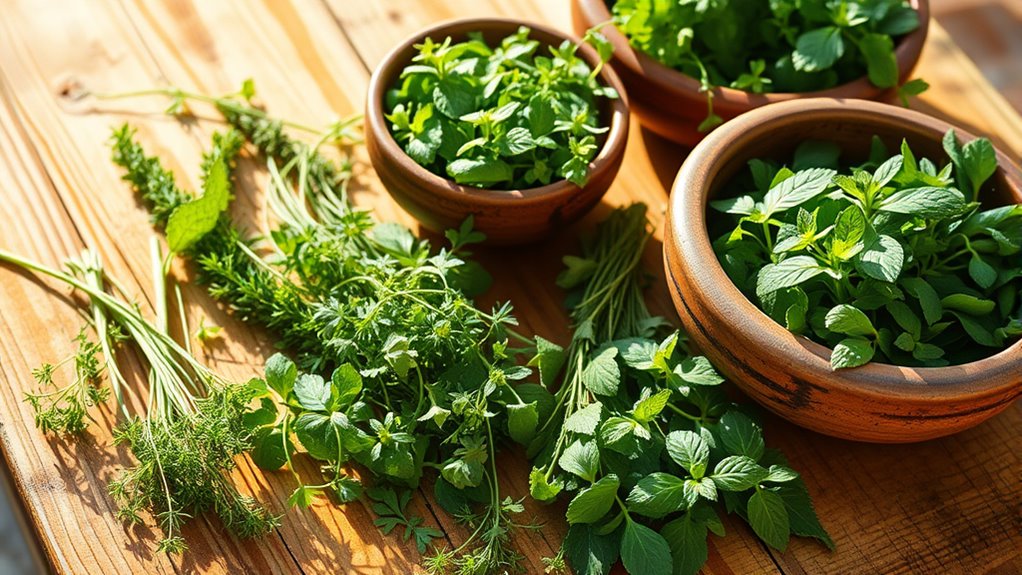
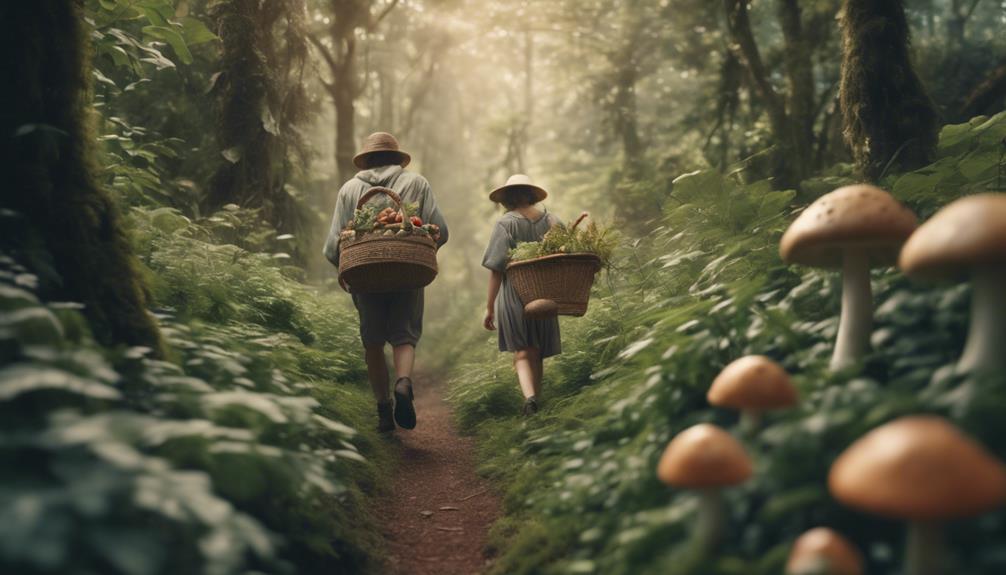
As the seasons change, it’s the perfect time to refresh your wardrobe or routines with seasonal swap-ins. One of the best ways to do this is by turning to the wild plants around you. Instead of relying solely on store-bought herbs, you can incorporate fresh, flavorful wild greens, herbs, and flowers that are often free and abundant. But before you start foraging, it’s crucial to learn some foraging tips to identify edible plants safely. Make sure you accurately distinguish between edible and poisonous varieties. Use reliable guides, join local foraging groups, or take a class to build your confidence. Always forage from clean, uncontaminated areas—avoid places near busy roads or industrial sites. When collecting, choose healthy, vibrant plants, and harvest only what you need, leaving enough behind to allow the plants to regenerate. This sustainable approach ensures that wild plants remain available for future foragers. Additionally, understanding foraging safety is essential to prevent accidental poisoning or environmental harm.
Once you’ve gathered your bounty, knowing preservation techniques helps you make the most of your finds. Wild herbs and greens are often seasonal and may wilt quickly, so drying, freezing, or fermenting are excellent options. Drying herbs in a well-ventilated space preserves their flavor and aroma, making them perfect for teas, seasoning blends, or garnishes. Freezing greens and herbs in airtight containers or ice cube trays locks in their freshness and makes them easy to add to soups, stews, or sautés all year round. Fermentation, like making wild herb kimchi or herbal vinegar, not only preserves the plants but also enhances their medicinal qualities and flavor profiles. These preservation techniques allow you to enjoy the benefits of wild plants long after the growing season ends, saving money and adding unique flavors to your meals.
Frequently Asked Questions
How Do I Identify Wild Plants Safely?
When it comes to foraging safety and plant identification, always start by learning from reliable sources like field guides or local experts. Pay close attention to detail—look at leaf shape, smell, and habitat. Never consume a plant unless you’re 100% sure of its identity, as many wild plants have look-alikes that are toxic. Practice cautious foraging and consider taking a course to build your confidence and safety.
Are Wild Plant Swaps Legal in All Areas?
The legal landscape surrounding wild plant swaps is a patchwork quilt, stitched together by regional plant laws and foraging regulations. You must navigate carefully, as what’s permitted in one area could be forbidden in another. Always research local laws and respect protected species. Ignoring these rules risks fines or environmental harm. So, before you swap, verify with local authorities to ensure your foraging adventures stay within the boundaries of legality.
What Are Common Toxic Look-Alikes?
You should always be cautious about poisonous plants that resemble edible look-alikes. Common toxic look-alikes include water hemlock, which looks like wild parsley, and deadly nightshade, often mistaken for edible berries. Recognizing these poisonous plants is vital to avoid dangerous poisoning. Never consume wild plants unless you’re absolutely sure they’re safe, as many poisonous plants mimic edible ones closely, and misidentification can have serious health consequences.
How Do I Harvest Wild Plants Sustainably?
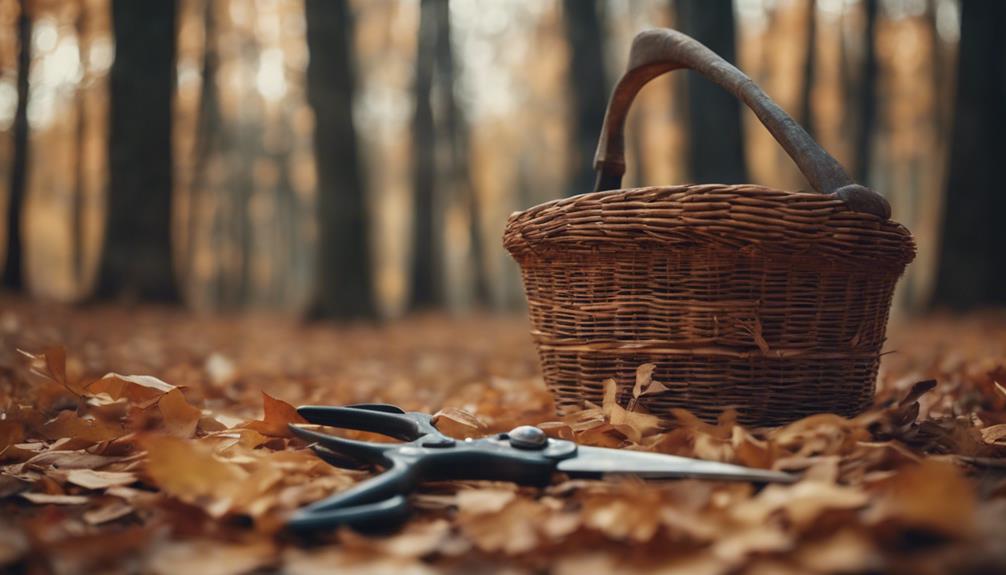
Harvesting wild plants is like gently gathering treasure from nature’s pantry. You should use proper harvesting tools to minimize damage and practice sustainable conservation methods, such as only taking what you need and leaving enough for the plant to thrive. Always identify plants correctly, avoid overharvesting, and harvest from healthy populations. Respect local regulations and consider leaving some plants untouched to ensure future growth and ecological balance.
Can Wild Plants Substitute Herbs in All Recipes?
You can often substitute wild plants for herbs in recipes, but it depends on the plant and dish. Use proper foraging techniques to identify safe, edible plants, and consider their flavor profiles. Keep plant preservation in mind—freshness matters. While wild plants can enhance many recipes, they might not match all herbs perfectly. Experiment carefully, and always confirm you’re harvesting sustainably to protect the environment.
Conclusion
Just like nature’s own secret garden, seasonal swap-ins reveal fresh, affordable herbs when you need them most. By embracing wild plants, you’re channeling the spirit of ancient foragers who thrived on what the land offered. So next time your pantry’s empty, remember: the wild is whispering, inviting you to taste the power of the earth’s hidden treasures. Let these wild herbs be your culinary compass, guiding you back to simplicity and flavor.
Fall yard work Picks
leaf blowers
As an affiliate, we earn on qualifying purchases.