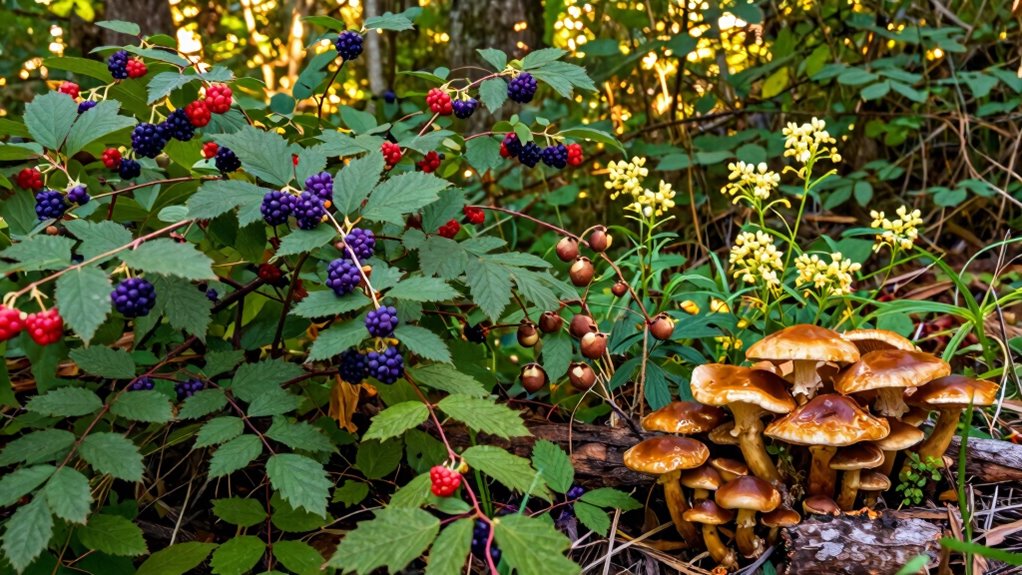

You experience explosive wild food years when seasonal weather—like abundant spring rains or warm spells—triggers quick, abundant growth of plants. Favorable conditions lead to synchronized flowering, fruiting, and seed dispersal, creating bumper crops. Drought or cooler seasons delay or suppress growth, making abundant years feel rare. By observing environmental cues over time, you can better anticipate these cycles and increase your foraging success. Keep exploring to discover how understanding these patterns helps you plan your harvests more effectively.

Get garden gear delivered free — and shop member deals
- Fast, free delivery on millions of items
- Access to Prime Big Deal Days deals on October 6–7
- Prime Video, Amazon Music and more included
Key Takeaways
- Favorable weather conditions like ample rainfall and optimal temperatures trigger synchronized plant blooms and fruiting, leading to explosive wild food availability.
- Early seasonal cues such as warm spells can accelerate plant growth, causing sudden abundance peaks.
- Years with consistent favorable conditions result in multiple, concentrated harvest windows, creating a sense of abundance.
- Variations in climate, such as droughts or cold springs, suppress growth, reducing wild food yields and preventing explosive cycles.
- Long-term environmental patterns and observation help predict and understand these abundant, “explosive” wild food years.

Seasonal variations, including shifts in temperature, rainfall, and sunlight, directly impact the timing and abundance of wild edibles. For example, a year with abundant spring rains often leads to a bumper crop of greens, shoots, and early berries. Conversely, drought conditions may suppress these early growths and delay their appearance. As a forager, you need to be flexible and observant, noting how the landscape responds each year. This awareness allows you to adapt your foraging techniques—perhaps focusing on different species or harvesting at different times—to maximize your harvest.
The timing of plant blooms, fruit ripening, and seed dispersal are all tightly linked to seasonal variations. When conditions are just right, plants produce a flush of edible parts that seem to appear suddenly, creating an “explosive” abundance. These years often feel like a gift, with multiple harvests coming in a short window. Recognizing these patterns requires experience and keen observation. For example, if you notice an early warm spell, you might anticipate an early berry season, while a cooler spring might shift everything back. By tracking these cues over years, you develop a mental map of when wild foods will peak, allowing you to plan your foraging trips more effectively.
Your foraging techniques should evolve with these seasonal cues. Use methods like careful plant identification, sustainable harvesting, and timing your collection to when foods are at their peak ripeness. Seasonal variations can also mean that some species are more accessible or abundant in certain years, so staying adaptable is key. Instead of sticking rigidly to a fixed schedule, observe the environment and adjust your approach accordingly. This flexibility not only increases your success rate but also helps preserve the health of wild populations. Additionally, understanding the biodiversity of your local landscape can reveal which species are most resilient and reliable during different cycles, guiding sustainable harvesting practices. Recognizing the environmental cues that signal upcoming abundance can further enhance your foraging success and sustainability. Furthermore, tracking these environmental signals over time can help you predict future cycles more accurately, improving your foraging efficiency. Incorporating knowledge of climate patterns can also deepen your understanding of how these cycles are likely to shift with changing global conditions. Being aware of how climatic variability influences these cycles enables you to better adapt your foraging strategies to a changing environment.
As an affiliate, we earn on qualifying purchases.
Frequently Asked Questions
How Do Climate Change Impacts Affect Wild Food Cycles?
Climate change impacts affect wild food cycles by altering climate variability and weather patterns, which you might notice as irregular or unpredictable food abundance years. Changing temperatures and rainfall disrupt plant growth and animal behaviors, making harvests less reliable. You could see longer droughts or unexpected frosts, causing wild food sources to become scarce or overly abundant. These shifts challenge traditional harvesting practices and require adapting to new environmental conditions.
Can Human Activity Disrupt Natural Wild Food Abundance Cycles?
Yes, your human activity can disrupt wild food abundance cycles. By altering foraging patterns and changing land use, you may deplete plant and animal populations, causing imbalances. Cultural practices like deforestation or intensive harvesting can disturb natural growth cycles, leading to less reliable food sources. These disruptions can suppress the explosive years when wild food abundance naturally peaks, affecting ecosystems and local communities dependent on wild resources.
Are Certain Regions More Prone to Explosive Wild Food Years?
Yes, certain regions are more prone to explosive wild food years due to regional variations and soil fertility. Areas with nutrient-rich soils and favorable climate conditions experience more abundant wild food cycles. You’ll notice these regions often have a burst of plant growth and food sources, making them hotspots during peak years. Understanding these regional differences helps you predict when wild food abundance will be at its most explosive.
How Do Wild Food Cycles Influence Local Ecosystems?
You might notice that wild food cycles, coincidentally, boost local ecosystems by supporting foraging traditions and increasing biodiversity impacts. When food abundance peaks, animals and insects thrive, which in turn sustains plant diversity and ecosystem health. This natural rhythm encourages a balanced environment, fostering rich habitats and resilient communities. Your foraging experiences become more fruitful, highlighting how these cycles shape and sustain the intricate web of life around you.
What Signs Indicate an Upcoming Wild Food Abundance Year?
You can spot an upcoming wild food abundance year by paying attention to seasonal indicators like early blossoming plants or increased insect activity. Foraging traditions often note these signs, such as abundant berries or wild greens appearing earlier than usual. These cues suggest a good year ahead, encouraging you to gather and prepare for a plentiful season. Trusting these natural signals helps you stay in tune with nature’s cycles.
As an affiliate, we earn on qualifying purchases.
Conclusion
As you’ve seen, wild food abundance follows nature’s unpredictable rhythm, turning some years into a feast while others leave you empty-handed. Understanding these cycles helps you better anticipate when to gather and prepare. Remember, nature’s bounty is a rollercoaster—sometimes it’s a gold mine, other times a dry spell. So, stay alert and adaptable; after all, you never know when luck will turn in your favor and everything falls into place.
sustainable wild food harvesting tools
As an affiliate, we earn on qualifying purchases.
As an affiliate, we earn on qualifying purchases.
As an affiliate, we earn on qualifying purchases.
Fall Picks
fall essentials
As an affiliate, we earn on qualifying purchases.