
When moist air hits a mountain range, it rises, cools, and releases rain on the windward side, creating lush, green landscapes. On the leeward side, the air warms and dries, leaving dry, barren areas behind. This process forms stark contrasts within close proximity—verdant valleys versus arid plains. Understanding how wind, topography, and atmospheric processes shape these environments reveals the fascinating ways landscapes develop. Keep exploring to uncover more about these dramatic environmental differences.

Get garden gear delivered free with Prime
- Fast, free delivery on millions of items
- Prime Video, Amazon Music and more included
- Member-only deals all year
Key Takeaways
- Rain shadows form when moist air rises over mountains, causing precipitation on windward sides and dry, arid conditions on leeward sides.
- Landscape varies dramatically, with lush valleys on windward sides and barren, rocky plains on leeward slopes.
- Cloud formation and rainfall are concentrated on the windward side, creating distinct ecological zones.
- Descending, warming air on leeward sides prevents cloud formation, resulting in moisture-poor environments.
- Topography and atmospheric processes create contrasting climates and ecosystems within close proximity.

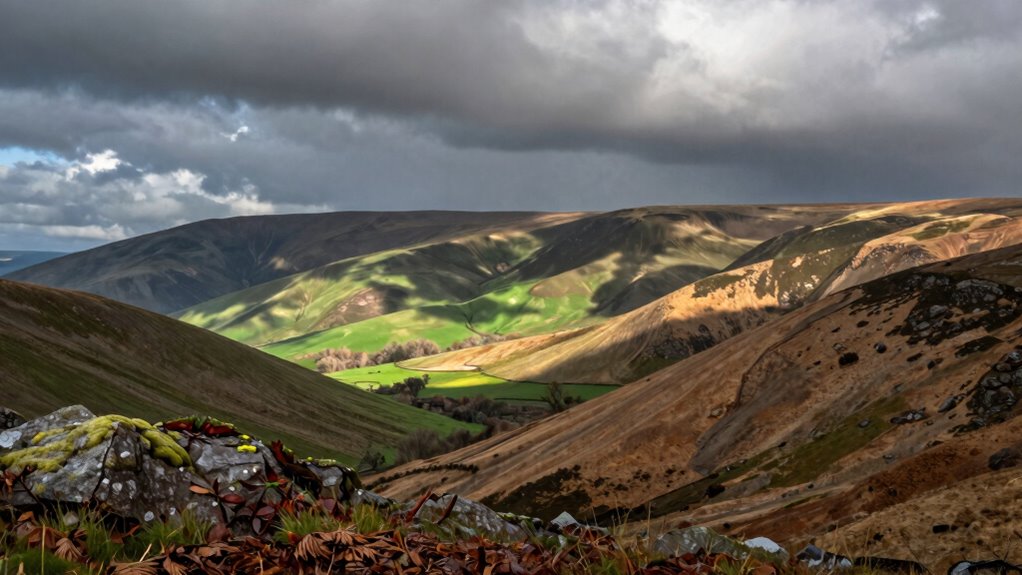
When moist air encounters a mountain range, it often results in the formation of rain shadows and moist pockets that markedly influence local climates. As the air rises over the mountains, it cools and causes cloud formation, leading to precipitation on the windward side. This process leaves the leeward side drier, creating arid zones where rainfall is scarce. You might notice these contrasting landscapes within close proximity—lush, green valleys on one side and stark, dry terrain on the other. The difference stems from how moisture is deposited during cloud formation and rain, leaving the leeward side deprived of rain and often barren.
In these arid zones, the lack of rainfall fosters a landscape that appears almost desolate, yet it’s a direct consequence of the mountain’s influence on weather patterns. The clouds that form as moist air ascends lose their moisture through condensation, releasing rain that nourishes the lush side of the mountain. Once the air descends on the other side, it warms and dries out, preventing cloud formation and rainfall. This process is a natural barrier that separates contrasting environments, shaping ecosystems and human livelihoods alike.
As you explore such areas, you’ll notice how the landscape vividly illustrates the effect of cloud formation and rainfall patterns. The lush zones are teeming with vegetation, thriving thanks to the steady supply of moisture, while the arid zones struggle with droughts and sparse plant life. You may also see how the terrain varies dramatically—from fertile valleys to rocky, barren plains—highlighting the profound impact of the rain shadow effect. The difference isn’t just visual; it influences agriculture, water availability, and even local weather conditions.
Understanding this contrast helps you appreciate the delicate balance of nature. The formation of clouds and the subsequent rainfall on one side of the mountain shape the environment in a way that’s both beautiful and functional. Meanwhile, the dry zones illustrate the power of atmospheric processes in shaping climates, creating regions where water is a limited resource. These features remind you that climate and landscape are interconnected, each influencing the other in a dynamic dance driven by the movement of moist air and the topography of the land.
Additionally, topography plays a crucial role in directing how moisture is distributed across different regions, further emphasizing the landscape’s diversity. Recognizing the role of climate zones helps explain the diversity of plant and animal life adapted to these contrasting environments. This interconnectedness underscores the importance of understanding atmospheric processes in predicting climate patterns and ecological shifts.
In essence, rain shadows and moist pockets demonstrate how geography determines climate zones. You see firsthand how cloud formation and precipitation patterns carve out distinct environments—some lush and thriving, others arid and stark—highlighting the incredible diversity of our planet’s landscapes.
As an affiliate, we earn on qualifying purchases.
Frequently Asked Questions
How Do Rain Shadows Affect Local Agriculture?
Rain shadows considerably impact local agriculture by creating microclimate variations and soil moisture differences. You’ll notice that on the windward side, crops thrive with ample moisture, while the leeward side faces drought conditions, limiting plant growth. These contrasting conditions require farmers to adapt their practices, choosing drought-resistant crops or irrigation methods. Understanding these effects helps you optimize land use and improve crop yields despite the challenging microclimate differences caused by rain shadows.
Can Rain Shadows Influence Urban Climate Conditions?
Yes, rain shadows can influence urban climate conditions. You’ll notice urban cooling occurs because rain shadows reduce humidity and cloud cover nearby, leading to hotter daytime temperatures. Additionally, pollution dispersion improves as dry, stable air in rain shadow areas prevents pollutants from lingering, resulting in cleaner air. This contrast can considerably impact city planning, air quality, and overall comfort, especially in regions directly affected by the rain shadow’s influence.
Are Rain Shadows Present in All Mountain Ranges Worldwide?
Like Atlas holding the sky, rain shadows are common but not universal across all mountain ranges. You see, mountain formation influences climate variation, creating these dry zones on the leeward side. While many ranges, from the Rockies to the Himalayas, have rain shadows, some smaller or differently oriented ranges don’t produce noticeable shadows. So, whether a mountain range has a rain shadow depends on its specific formation and climate conditions.
How Do Moist Pockets Form in Dry Landscapes?
Moist pockets form in dry landscapes through microclimate variations caused by factors like terrain, vegetation, and water sources. You’ll notice these areas retain more humidity and support lush vegetation, thanks to vegetation adaptations that help conserve moisture. These microclimates create localized zones of moisture, making the landscape appear greener and more vibrant despite the surrounding dryness. Recognizing these moist pockets reveals how natural features influence local climate conditions.
What Role Do Wind Patterns Play in Creating Rain Shadows?
Wind patterns play a vital role in creating rain shadows through windward effects and orographic lifting. When moist air approaches mountain ranges, the windward side experiences lifting, causing clouds to form and rain to fall. As the air moves over the peak, it descends on the leeward side, drying out and creating dry conditions. This process results in distinct moisture differences, forming rain shadows and contrasting landscapes.
As an affiliate, we earn on qualifying purchases.
Conclusion
As you explore the landscape’s rain shadows and moist pockets, you realize each spot tells a different story of climate and terrain. These contrasts shape the plants, animals, and even your experience of the environment. Just like a puzzle piece fits perfectly into the bigger picture, understanding these features helps you see the land’s true character. In the end, it’s clear that nature’s diversity is what makes the landscape truly come alive, adding color and depth to every step you take.
As an affiliate, we earn on qualifying purchases.
As an affiliate, we earn on qualifying purchases.
Fall yard work Picks
leaf blowers
As an affiliate, we earn on qualifying purchases.