To keep meat cold in your portable fridge or freezer, pack it with plenty of ice packs and use airtight containers to prevent leaks and contamination. Always pre-chill the unit and monitor the temperature daily, aiming for 40°F or below. Store raw meat on the bottom shelf to avoid drips. Proper packing, insulation, and temperature checks make certain of safety and freshness, so you can confidently manage your food’s temperature during travel or outdoor activities. Continue to learn more tips for safe storage.
Key Takeaways
- Use a digital thermometer to regularly monitor the fridge/freezer temperature, ensuring it stays below 40°F (4°C).
- Pack meat tightly with ample frozen gel packs or ice to maintain consistent, cold temperatures during transport.
- Store raw meat on the bottom shelf to prevent drips and cross-contamination, especially in portable units.
- Pre-chill the fridge/freezer before loading meat to help maintain proper storage temperatures.
- Insulate the unit well and avoid frequent openings to prevent temperature fluctuations and spoilage risks.
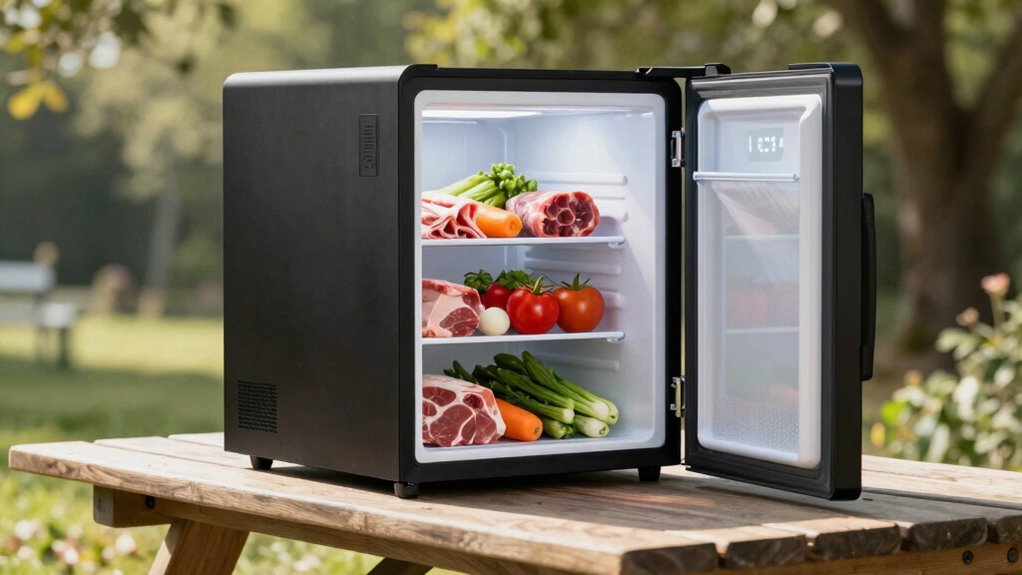
Have you ever wondered how to keep your food safe while using a portable fridge or freezer? When you’re out camping or on the go, making sure your perishable items stay cool is essential, especially if you’re juggling meal prep or trying to keep your meat fresh. A portable fridge or freezer can be a game-changer, but only if you understand how to use it properly to prevent spoilage and foodborne illnesses.
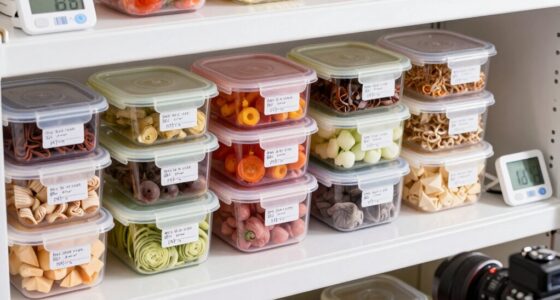
First, think about how you pack your food. Always start with cold items, and if possible, pre-chill your fridge or freezer before loading it up. Use proper storage containers and seal your meat tightly to prevent leaks and cross-contamination. For meal prep, portion out your meat into smaller, airtight packages, which makes it easier to grab what you need without exposing the entire supply to temperature fluctuations. When packing, keep raw meats on the bottom of the fridge or freezer to avoid any drips contaminating cooked or ready-to-eat foods. This simple step is a vital camping essential that helps maintain food safety and reduces cleanup.
Start with cold items, pre-chill your unit, and store raw meats on the bottom to prevent cross-contamination.
Next, monitor your fridge or freezer’s temperature regularly. The goal is to keep the fridge at or below 40°F (4°C) and the freezer at 0°F (-18°C). Many portable units come with built-in thermometers, but if yours doesn’t, it’s worth investing in a digital thermometer. Check the temperature at least once a day, especially during extended trips or hot weather, since heat can cause temperatures to rise quickly. If the temperature climbs above safe levels, take immediate action—either by adjusting the unit, adding ice packs, or relocating perishables to a cooler with ice.
Ice packs are your best friends when it comes to maintaining proper cold temperatures. Use them generously, especially when the fridge is opened frequently. For longer trips, consider packing extra ice or frozen gel packs around your meat and other perishables. This extra insulation helps keep everything colder for longer and acts as a buffer during power outages or if your fridge’s compressor stops working temporarily.
Finally, practice the “first in, first out” rule. Use your most perishable items first to prevent waste. Regularly check your stored food for signs of spoilage—off odors, sliminess, or discoloration mean it’s time to toss it. Staying vigilant with your storage, temperature control, and packing techniques guarantees your meat stays safe and fresh, giving you peace of mind whether you’re meal prepping at home or enjoying a camping adventure. Additionally, understanding the importance of energy-efficient cloud servers can help promote sustainable practices in managing your food storage and other technology needs.
Frequently Asked Questions
How Long Can Meat Stay Safely in a Portable Fridge Without Power?
You can keep meat safely in a portable fridge without power for about 4 hours, but it depends on how cold the fridge stays and the quality of insulation. To prevent meat thawing, make certain your fridge is well-maintained and pre-chilled. Keep the door closed as much as possible to retain cold. After 4 hours, check the meat’s temperature and discard if it’s above 40°F to avoid foodborne illnesses.
What Temperature Should a Portable Fridge Maintain for Safe Meat Storage?
You should keep your portable fridge at or below 40°F (4°C) for safe meat storage. Confirm proper temperature calibration to avoid guesswork, and check that the fridge insulation maintains consistent cold temperatures. Regularly verify the temperature with a reliable thermometer, especially if the fridge is full or ambient temperatures fluctuate. Maintaining this temperature prevents bacterial growth and keeps your meat fresh and safe during your trip.
Can Portable Fridge/Freezers Prevent Bacterial Growth in Meat?
Yes, portable fridge/freezers can prevent bacterial growth in meat if you keep them at the right temperature, ideally below 40°F (4°C). By maintaining this temperature, you substantially reduce the risk of meat spoilage and bacterial proliferation. Regularly check the fridge’s thermometer to guarantee it stays consistent, and avoid leaving meat in unsafe temperatures. Properly chilled meat stays fresh longer and remains safe to eat.
Are Portable Fridge/Freezers Energy-Efficient for Long Trips?
Yes, portable fridge/freezers are generally energy-efficient for long trips, especially models designed with low energy consumption in mind. They help conserve battery life by using advanced insulation and efficient compressors, allowing you to keep food cold longer without draining your power source. To maximize efficiency, choose a unit that matches your trip duration and power options, ensuring you don’t run out of battery before reaching your destination.
How Often Should I Check the Temperature of My Portable Fridge?
You should check the temperature of your portable fridge at least twice daily—morning and evening—because, clearly, it’s not a magic box. Follow temperature monitoring and frequency guidelines to guarantee your meat stays safe. Use a reliable thermometer and adjust as needed. Remember, neglecting this task could turn your trip into a science experiment gone wrong. Stay vigilant, because food safety depends on your constant attention!
Conclusion
Think of your portable fridge/freezer as a guardian, standing watch over your food like a shield of ice. When you keep it cold, you’re safeguarding your meals, ensuring they stay fresh and safe, just as a fortress protects its treasures. Trust in this symbol of security to prevent spoilage and illness. With consistent temperature control, you’re the captain steering your food safely through any adventure, always arriving at your destination with freshness intact.