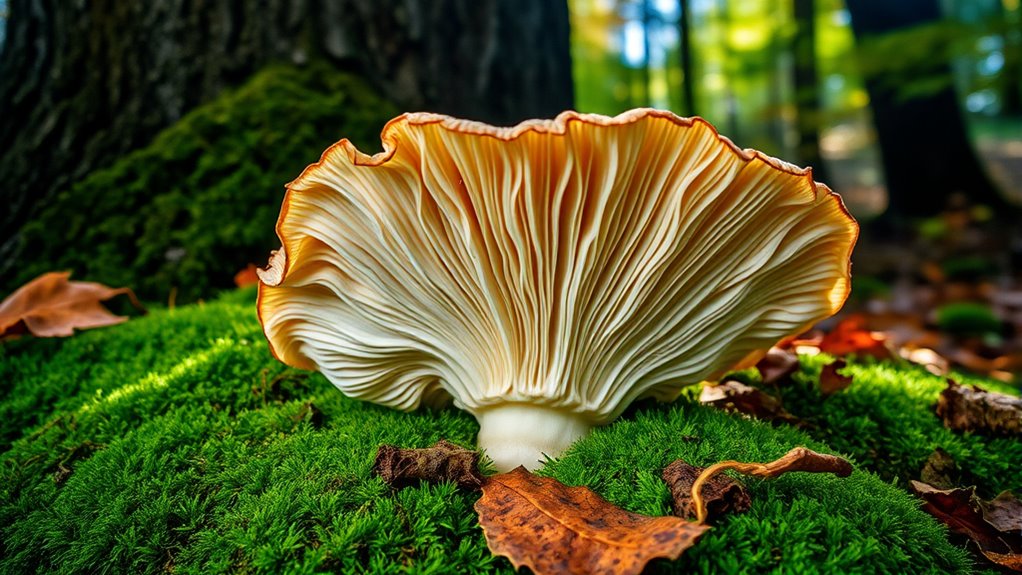

You can find Hen of the Woods (Maitake) mushrooms growing at the base of mature oak, maple, or sweetgum trees, mainly in late summer through fall. Look for dense, frilly clusters with layered, feather-like caps and a strong aroma. They prefer forested areas with suitable climate conditions. If you keep exploring, you’ll discover more tips on how to identify and harvest this prized mushroom safely.
Key Takeaways
- Grows at the base of mature oak, maple, or sweetgum trees in forests.
- Typically appears from late summer to late fall, especially September and October.
- Found in regions with suitable climate conditions and established tree roots.
- Harvest in pollution-free areas, usually in clusters around tree bases.
- Best foraging times vary by region, depending on local weather and environmental factors.
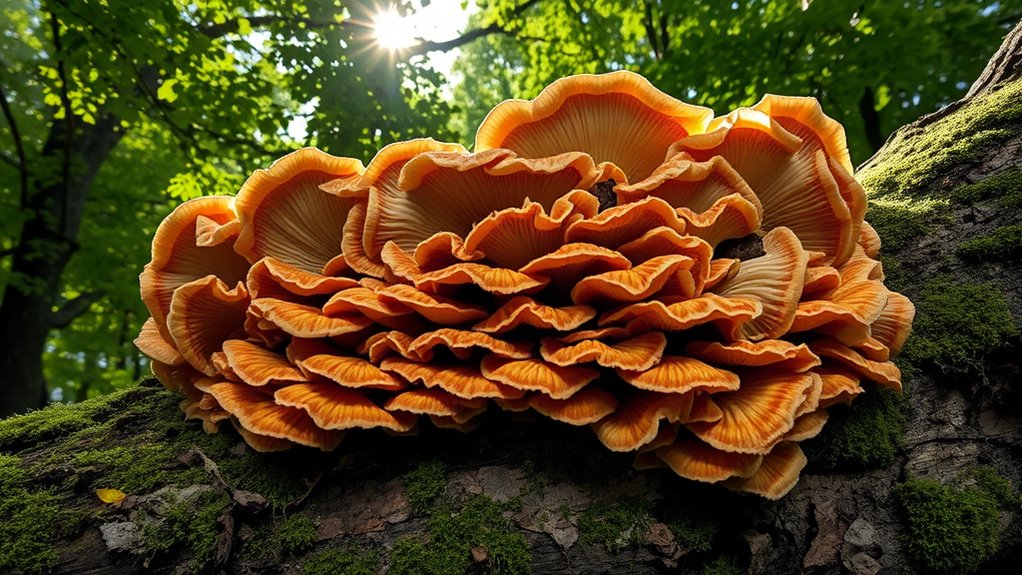
Hen of the Woods, also known as Maitake, is a highly prized mushroom renowned for its impressive clusters and rich, earthy flavor. If you’re interested in foraging, knowing where and when to find Maitake is crucial. These mushrooms typically grow at the base of oak, maple, or sweetgum trees, especially in mature forests. Look for their distinctive frilly, overlapping caps that form large, dense clusters. They often appear in late summer through late fall, depending on your region’s climate. In cooler areas, your best chances are in September and October, while in milder climates, they might show up as early as August or as late as November.
When it comes to foraging tips, always ensure you’re correctly identifying Maitake. It’s vital to distinguish them from look-alikes, such as the poisonous Jack-o’-lantern mushroom. Maitake’s texture is firm, with a layered, feather-like appearance, and it has a strong, pleasant aroma. Harvest them by gently twisting or cutting the clusters at the base, leaving some behind to allow for future growth. It’s best to pick only what you’ll use immediately, as Maitake can deteriorate quickly once harvested. Always forage in areas free from pollution or pesticides, and if you’re new to mushroom identification, consider joining a local mycological society or taking a guided foraging tour to build your confidence.
Once you’ve gathered your Maitake, you’ll find numerous culinary uses for this versatile mushroom. Its meaty texture makes it perfect for stir-fries, sautés, soups, and stews. You can also use it in roasted vegetable dishes or slice it thinly for adding to salads. Maitake’s flavor pairs well with garlic, ginger, soy sauce, and sesame oil, enhancing a variety of recipes. Many chefs and home cooks love to sauté Maitake with butter or olive oil until golden, then serve it as a side or incorporate it into pasta or rice dishes. Its robust flavor also holds up well when dried, allowing you to enjoy its taste long after the harvesting season ends.
Frequently Asked Questions
Are Maitake Mushrooms Safe to Eat Raw?
You shouldn’t eat maitake mushrooms raw because they can cause stomach upset and are tougher to digest. Cooking enhances their culinary uses and releases their full nutritional benefits, like antioxidants and vitamins. When prepared properly, maitake becomes tender and flavorful, making it safer and more enjoyable to enjoy in soups, sautés, or stir-fries. Always cook maitake thoroughly to maximize their health benefits and guarantee safety.
How Long Do Hen of the Woods Mushrooms Stay Fresh?
Hen of the Woods mushrooms stay fresh for about 1 to 2 days if stored properly. Did you know that mushrooms are mostly water, losing freshness quickly? To keep them at their best, use mushroom storage tips like wrapping in a paper towel and placing in a paper bag in the fridge. This helps maintain their texture and flavor, ensuring they stay delicious longer.
Can Maitake Mushrooms Be Cultivated Indoors?
Yes, you can cultivate maitake mushrooms indoors. For successful indoor cultivation, you’ll need a controlled environment, proper mushroom farming techniques, and a quality substrate. Maintain ideal humidity, temperature, and fresh air flow to promote healthy growth. With patience and attention, you can enjoy fresh maitake right from your home, making it an excellent addition to your mushroom farming endeavors.
Do Maitake Mushrooms Have Any Known Health Risks?
Maitake mushrooms are generally safe, but like a double-edged sword, they can pose health risks. You might experience allergic reactions or, in rare cases, mushroom poisoning if consumed improperly or if mistaken for toxic varieties. Always verify correct identification and moderation. If you notice symptoms like nausea, dizziness, or difficulty breathing, seek medical help immediately. Staying cautious helps you enjoy the benefits without risking your health.
What Are the Best Preservation Methods for Maitake Mushrooms?
You should use dehydration techniques like slicing maitake mushrooms thin and drying them in a food dehydrator or oven to preserve their flavor. Freezing methods work well too; simply clean, slice, and blanch the mushrooms before packing them into airtight containers or freezer bags. Both methods help retain nutrients and flavor, making your maitake mushrooms last longer and ready for future use in soups, stews, or stir-fries.
Conclusion
Just like the wise old oak sheltering countless secrets, the hen of the woods waits patiently for you to discover its hidden treasures. When you find it, you’re revealing a gift from nature—rich in flavor and health benefits. Seek these mushrooms with curiosity and respect, and you’ll join those who’ve cherished this ancient delicacy for generations. Embrace the journey, for in the pursuit of the maitake, you connect with the timeless dance between nature and nourishment.