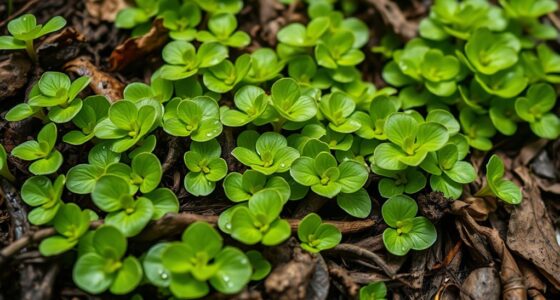
Garlic mustard is an invasive plant easily recognized by its heart-shaped, serrated leaves, tall stems, and a strong garlic scent when crushed. You can harvest its edible leaves, stems, and flowers, which add a garlicky flavor to salads, sautés, and pestos. To help control its spread, remove plants before they seed and dispose of them responsibly. Want to discover more about identifying and responsibly using garlic mustard? Keep exploring to learn how to enjoy it sustainably.
Key Takeaways
- Garlic mustard has heart-shaped, serrated leaves, tall stems, and small white flowers, emitting a garlic scent when crushed.
- All parts—leaves, stems, and flowers—are edible and used in pestos, salads, and sautés for a garlicky flavor.
- It is an invasive species that outcompetes native plants, threatening local ecosystems and requiring removal before seeding.
- Harvest responsibly from uncontaminated areas, removing plants before they seed, and dispose of them to prevent further spread.
- Balancing edible use with invasive control supports native ecosystems and promotes sustainable foraging practices.
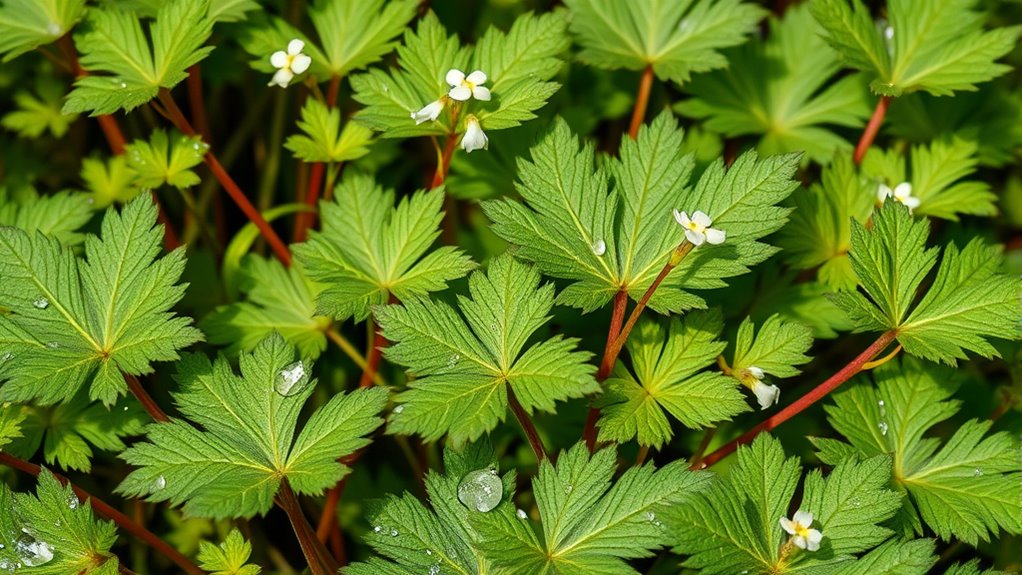
Garlic mustard is a foraging favorite for many due to its distinctive garlic scent and easily recognizable appearance. This plant, with its heart-shaped, serrated leaves and tall, slender stems topped with small white flowers, often catches the eye in spring and early summer. While it’s appreciated for its culinary versatility, it’s vital to remember that garlic mustard is an invasive species in many areas. Its aggressive growth can outcompete native plants, threatening local ecosystems. When exploring edible preparations, you’ll want to be cautious and make sure you’re harvesting from areas free of pollutants or pesticides. The leaves, stems, and flowers are all edible and can be used in a variety of dishes, from pestos and salads to sautés and dips. Their garlicky flavor adds a punch to any recipe, making it a popular ingredient among foragers and chefs alike. However, harvesting garlic mustard should be done responsibly, especially in regions where it’s invasive, to help with invasive management efforts. Removing plants before they seed prevents further spread and helps protect native flora. You might also consider composting the plants or disposing of them in a way that prevents reseeding. Incorporating garlic mustard into your culinary repertoire not only offers a tasty, wild ingredient but also contributes to efforts to control its invasive spread. Always double-check local guidelines on harvesting and removing invasive species, as some areas may have specific regulations. By gathering and using garlic mustard responsibly, you support both sustainable foraging and the preservation of native ecosystems. Remember, the key is to balance enjoying this wild delicacy with conscientious invasive management, making sure that your foraging doesn’t unintentionally contribute to ecological imbalance. So, next time you spot this plant, consider its edible potential and the importance of controlling its spread, making your foraging both enjoyable and environmentally responsible. Using high-quality projectors designed for outdoor or variable lighting conditions can enhance your experience when foraging in different environments, ensuring clear visuals even in challenging settings.
Frequently Asked Questions
Is Garlic Mustard Edible for Humans?
Yes, garlic mustard is edible for humans. You can enjoy its culinary versatility by using the leaves in salads, pestos, or as a cooked green. It also offers nutritional benefits, being rich in vitamins and antioxidants. When harvesting, make sure to identify it correctly to avoid confusion with look-alikes. Incorporate garlic mustard into your dishes for a flavorful, healthful addition that boosts your meals with its unique garlic-like taste.
Can Garlic Mustard Be Used Medicinally?
Surprisingly, garlic mustard can be used medicinally, despite being invasive. You might find it in herbal remedies, thanks to its medicinal properties like anti-inflammatory and antioxidant effects. While it’s often considered a pest, some herbalists appreciate its potential health benefits. Just remember, nature’s surprises can sometimes be a double-edged sword—so use garlic mustard cautiously in your medicinal practices.
How Does Garlic Mustard Affect Native Plant Species?
You should know that garlic mustard impacts native plant species through competition suppression and habitat displacement. It quickly outcompetes native plants for resources like nutrients, water, and light, reducing their populations. As it spreads, garlic mustard displaces native habitats, making it difficult for local plants and animals to thrive. This invasive species alters ecosystems, threatening biodiversity and disrupting the natural balance of native plant communities.
Are There Any Effective Natural Control Methods?
You can use biological control methods, like introducing specific insects that target garlic mustard, to manage its spread naturally. Additionally, habitat restoration techniques, such as planting native species and removing garlic mustard manually, help suppress its growth. Combining biological control with habitat restoration offers an effective, eco-friendly approach to controlling garlic mustard invasions without harming native plants. This integrated strategy encourages a balanced, resilient ecosystem.
What Are the Legal Regulations Regarding Garlic Mustard Removal?
Imagine a carefully managed garden where every plant’s role matters. You need to know that regulation enforcement varies by region, so check local laws before removal. Some areas require removal permits, ensuring proper handling of garlic mustard. Always stay informed about legal regulations to avoid penalties. By following these rules, you’ll contribute to ecological health while respecting local guidelines, turning your effort into a responsible act of environmental stewardship.
Conclusion
As you walk through the shaded woodland, garlic mustard’s delicate white flowers and pungent aroma catch your senses. While it may seem harmless, this invasive plant quietly spreads, overshadowing native species and disrupting ecosystems. By learning to identify and responsibly manage garlic mustard, you hold the power to protect your local environment’s delicate balance. Together, you can turn the tide, ensuring native plants flourish like a resilient forest, thriving beneath the canopy’s gentle embrace.