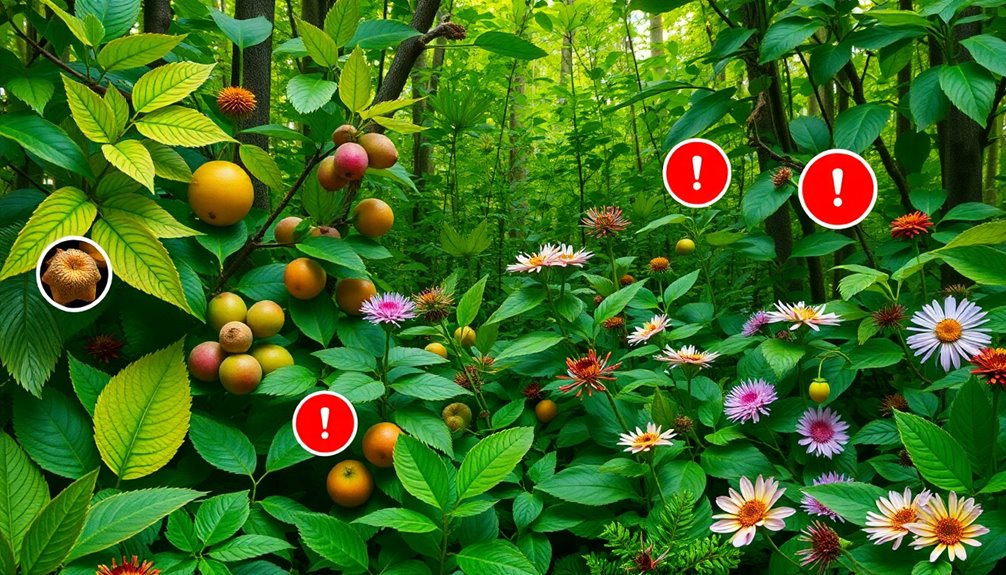
Many backyard weeds are actually nutritious and delicious edible “pests” you can safely harvest. Plants like dandelions, chickweed, and purslane are packed with vitamins, minerals, and healthy fats. They grow abundantly in most yards and are sustainable food sources when identified correctly. By learning to harvest these weeds responsibly, you can turn common yard invaders into tasty, health-boosting treats. Keep exploring to discover more about turning weeds into your next meal.
Key Takeaways
- Many common backyard weeds like dandelions, chickweed, and purslane are nutritious and safe to eat when properly identified.
- Always harvest edible weeds from pollution-free areas and avoid plants near roads or treated lawns.
- Proper identification is crucial to distinguish edible weeds from look-alikes and ensure safety.
- Incorporate these wild “pests” into your diet for added vitamins, minerals, and healthy omega-3s.
- Sustainable harvesting practices help maintain plant populations and promote a healthy, edible backyard ecosystem.
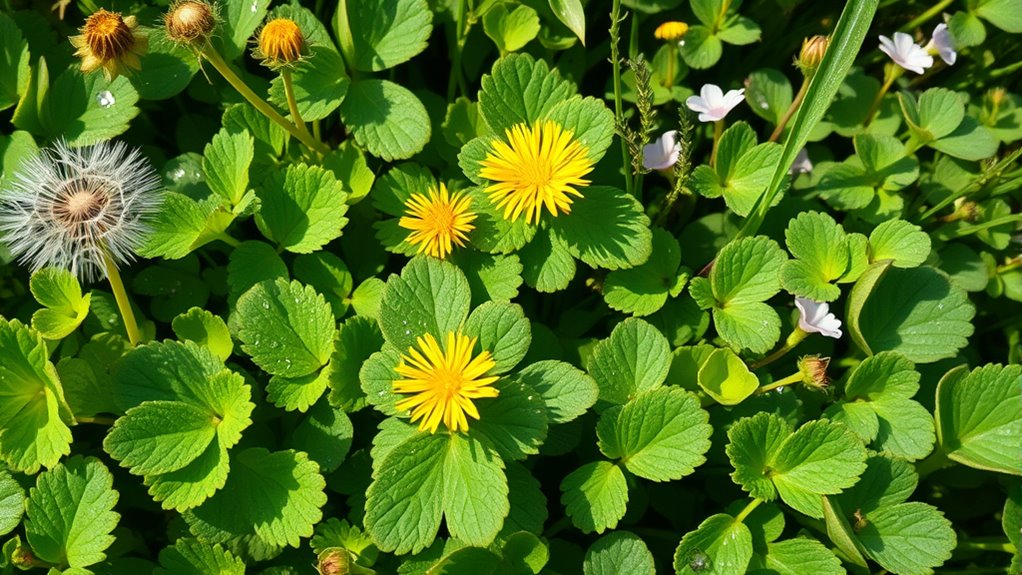
Have you ever considered that some weeds you usually pull out and discard are actually nutritious and delicious? Many common backyard weeds are more than just pesky nuisances—they’re edible treasures waiting to be harvested. With a little knowledge, you can turn these wild plants into flavorful additions to your meals. When foraging for these weeds, it’s important to follow basic foraging tips: always identify plants correctly, avoid areas near busy roads or chemically treated lawns, and harvest in moderation to ensure sustainable harvesting. Learning to recognize each plant’s look-alikes can keep you safe and confident as you explore your yard’s wild side.
One of the most accessible and nutritious weeds is dandelion. The entire plant is edible—leaves, flowers, and roots—and each part offers unique benefits. The young leaves are tender and slightly bitter, perfect for salads or pesto, while the flowers can be used to make wine or added as a garnish. Dandelions are packed with nutrients like vitamins A, C, and K, along with calcium and potassium, making them a powerhouse of nutritional benefits. Incorporating dandelions into your diet can boost your immune system, improve digestion, and support healthy skin. Additionally, they contain compounds that may aid in detoxification and support liver health.
Another common weed with impressive nutritional benefits is chickweed. This low-growing plant has small, green leaves and tiny white flowers. It’s often considered a weed, but it’s rich in vitamins C and A, along with iron and calcium. Chickweed has a mild flavor, making it ideal for salads, sandwiches, or smoothies. Its high antioxidant content can help fight inflammation and support overall health. When foraging for chickweed, look for fresh, vibrant leaves and avoid plants growing in contaminated areas.
Purslane is another edible weed that’s often mistaken for a garden pest. Its succulent, reddish stems and small green leaves make it stand out. Purslane is remarkably rich in omega-3 fatty acids, making it one of the few plant sources of these healthy fats. It also provides vitamins A, C, and magnesium. Its slightly lemony flavor can add brightness to salads and cooked dishes alike. When foraging for purslane, ensure it’s free from pesticides or pollutants, and pick young, tender plants for the best flavor and texture. Recognizing plant identification techniques can help ensure you harvest safe and nutritious weeds.
Frequently Asked Questions
Are All Weeds Safe to Eat?
Not all weeds are safe to eat, so you should approach wild foraging with caution. Some plants can be toxic or have harmful effects if misidentified. Always verify your plants before consuming them, and consider using them for herbal remedies or nutritional benefits. Educate yourself on safe foraging practices and consult expert sources to avoid risking your health while discovering edible weeds in your backyard or wild areas.
How Do I Identify Edible Versus Toxic Weeds?
To identify edible versus toxic weeds, focus on proper weed identification by studying reliable plant guides and local foraging resources. Pay attention to leaf shape, color, and growth patterns. Always practice toxic plant awareness; if you’re unsure, avoid eating it. Consult experts or join foraging groups to learn safe identification techniques. Remember, mistaking a toxic weed for an edible one can be dangerous, so double-check before tasting anything.
What Are the Best Ways to Prepare Edible Weeds?
You might think wild harvesting weeds is tricky, but with the right culinary techniques, it’s simple and rewarding. Start by thoroughly washing your greens to remove dirt and bugs. You can sauté, blanch, or add them raw to salads for a fresh flavor. Experiment with blending weeds into pesto or soups. The key is to respect their flavors, treat them gently, and enjoy their nutritional benefits in a variety of delicious ways.
Can Eating Weeds Replace Traditional Vegetables?
You might wonder if eating weeds can replace traditional vegetables. While weeds are nutritious and flavorful, they shouldn’t fully replace your staple veggies. Use foraging tips to identify the right plants and consider seasonal variations to harvest them at their peak. Incorporating weeds alongside your regular vegetables adds variety, but a balanced diet still depends on diverse, cultivated produce for essential nutrients and consistent availability.
Are There Any Health Risks Associated With Eating Weeds?
Eating weeds is like walking a tightrope—you need to be cautious. While many weeds are safe, some contain weed toxins that can cause illness, and allergy risks vary from person to person. Always identify plants correctly, and avoid those exposed to chemicals or pollution. If you’re unsure, consult a local expert. Being informed helps you enjoy wild greens safely, turning backyard pests into nutritious, edible treasures.
Conclusion
Now that you know these backyard pests are actually edible treasures, it’s time to change your tune. Don’t let these weeds go to waste—give them a second chance and add some wild flavor to your meals. Remember, sometimes the best things in life are hiding right under your nose, just waiting to be discovered. So go ahead, roll up your sleeves, and turn your yard into a free, flavorful foraging adventure—you might just find that the grass is greener on your side.