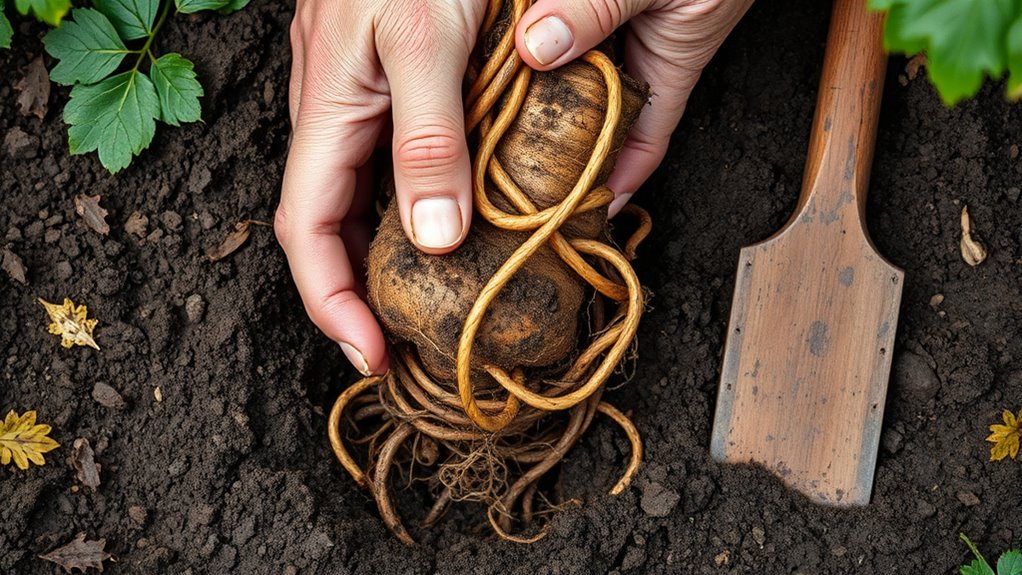
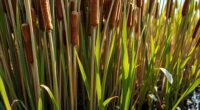
To harvest burdock root, you should carefully dig around the plant in fall or early spring using a sturdy spade or garden fork, starting 4-6 inches away from the base. Gently loosen the soil and pry out the root, making sure to keep it intact. After harvesting, peel off the tough outer layer with a vegetable peeler or knife, then wash and slice it for culinary or medicinal use. Continue exploring for more tips to maximize its benefits.
Key Takeaways
- Harvest burdock roots in fall or early spring using a spade or garden fork, starting 4-6 inches from the plant base.
- Carefully loosen soil and pry out roots to prevent breakage, including main and fibrous smaller roots.
- Brush off excess dirt after harvesting; avoid washing immediately to prevent spoilage.
- Peel the tough outer skin with a vegetable peeler or paring knife before cooking or medicinal use.
- Slice or julienne roots after peeling for culinary dishes or prepare sliced roots for teas and decoctions.

Burdock root is a versatile vegetable known for its earthy flavor and numerous health benefits. When you decide to incorporate it into your diet or natural remedies, understanding how to properly harvest and prepare it becomes essential. Burdock is often valued not just for its culinary appeal but also for its medicinal uses, which have been recognized for centuries in traditional medicine. Its roots are believed to support detoxification, improve digestion, and boost skin health, making it a popular choice for those seeking natural healing options. To access these benefits, you need to start with proper harvesting and preparation techniques.
Discover the health benefits of burdock root and learn proper harvesting and preparation methods.
When digging burdock root, timing is important. Ideally, you want to harvest it in the fall or early spring when the roots are mature but not overly woody. Use a sturdy garden fork or spade to loosen the soil around the plant carefully. Start digging about 4 to 6 inches away from the base to avoid damaging the root. Gently pry it loose, ensuring you get as much of the root as possible, including the thicker, main portion and some of the smaller fibrous roots. After harvesting, brush off excess dirt but avoid washing it immediately, as this can promote spoilage. Instead, store the unwashed roots in a cool, dark place if you’re not preparing them right away.
Preparation involves thorough cleaning and peeling. You’ll want to peel off the rough, brown outer layer, which can be somewhat tough and bitter. Use a sharp vegetable peeler or paring knife to remove the skin, exposing the pale, tender interior. This step is essential for culinary techniques, as it ensures a smoother texture and milder flavor. Once peeled, you can slice or julienne the root for cooking. Burdock root is incredibly versatile in the kitchen; you can stir-fry it with vegetables, add it to soups, or pickle it for later use. Its earthy, slightly sweet flavor pairs well with soy sauce, sesame oil, and ginger, making it a staple in many Asian dishes.
In terms of medicinal uses, you might prepare burdock root as a tea, decoction, or tincture to harness its detoxifying properties. Thinly sliced roots can be boiled in water to create a nourishing brew that supports your body’s natural cleansing processes. When using it in recipes or remedies, remember that proper harvesting and preparation are key to maximizing both flavor and health benefits. Whether you’re cooking a hearty meal or making a herbal infusion, taking the time to dig and prepare burdock root correctly ensures you get the most out of this earthy, health-promoting vegetable.
Frequently Asked Questions
How Do I Identify Burdock Roots in the Wild?
To identify burdock roots in the wild, focus on its large, broad leaves with jagged edges and rough texture. Look for the taproot, which is thick, dark brown, and resembles a carrot. Always prioritize foraging safety by double-checking plant features and consulting a reliable wild plant identification guide. Avoid any plants with thistle-like flowers or uncertain appearance to prevent harvesting toxic lookalikes.
What Tools Are Best for Harvesting Burdock Root?
You should use a sturdy garden fork or a hori-hori knife for harvesting burdock root. Traditional harvesting methods often involve a fork to loosen the soil and carefully extract the root, while modern gardening tools like a hori-hori knife make precise cuts and reduce damage. Make certain you dig around the root carefully to avoid breaking it, and always clean the tools afterward to keep them in good condition.
Can Burdock Root Be Grown in Containers?
Yes, you can grow burdock root in containers. For successful container gardening, choose a large, deep pot to accommodate its long taproot. Make sure to prepare the soil with well-draining, rich organic material, and keep it consistently moist. Proper soil preparation is key to healthy growth, so add compost or organic matter. Regular watering and ample sunlight will help your burdock thrive in your container garden.
How Should I Store Harvested Burdock Root?
You might think fresh burdock root lasts forever, but proper storage methods are essential for preservation. Wrap it in a damp cloth and keep it in the fridge’s crisper drawer, or store it in an airtight container in a cool, dark place. Avoid moisture and direct sunlight. Using these preservation techniques guarantees your burdock stays fresh longer, so you can enjoy its benefits without losing flavor or nutrients.
Are There Any Harmful Look-Alikes to Watch For?
Be cautious of toxic look-alikes when identifying burdock root. Always double-check plant identification, especially with similar plants like the deadly deadly nightshade or other wild roots. Focus on key features like leaf shape, root texture, and flower clusters to distinguish burdock. If you’re unsure, consult a reliable field guide or expert before harvesting. Proper identification guarantees you avoid harmful plants and safely enjoy your foraged burdock.
Conclusion
Now that you know how to dig and prepare burdock root, you’re ready to bring this treasure from the earth to your table. Think of it as revealing a hidden gem—rich in flavor and health benefits. With a little effort, you’ll harvest nature’s bounty and turn it into a nourishing meal. So get your tools ready, embrace the process, and let burdock root become a shining star in your culinary adventures.