Wind and chop subtly influence your balance on a stand-up paddleboard by creating unpredictable forces that push or tilt your board. These hydrodynamic effects can cause wobbling or bouncing, making control tricky if you’re unaware of them. Good paddle techniques, like steady, deliberate strokes and a low stance, help counteract these forces. Understanding how external elements impact your stability allows you to paddle more confidently—continue to explore these insights for a smoother journey.
Key Takeaways
- Wind exerts lateral forces that challenge paddle control and require deliberate strokes to counteract gusts.
- Chop causes unpredictable water movements, making maintaining balance more difficult with bouncing or tilting.
- Hydrodynamic effects from wind and chop influence how water and air forces act on the board, affecting stability.
- Proper paddle technique, including steady, controlled strokes, helps manage external hydrodynamic forces for better balance.
- A relaxed stance and water awareness allow for better absorption of shocks and improved control in windy, choppy conditions.
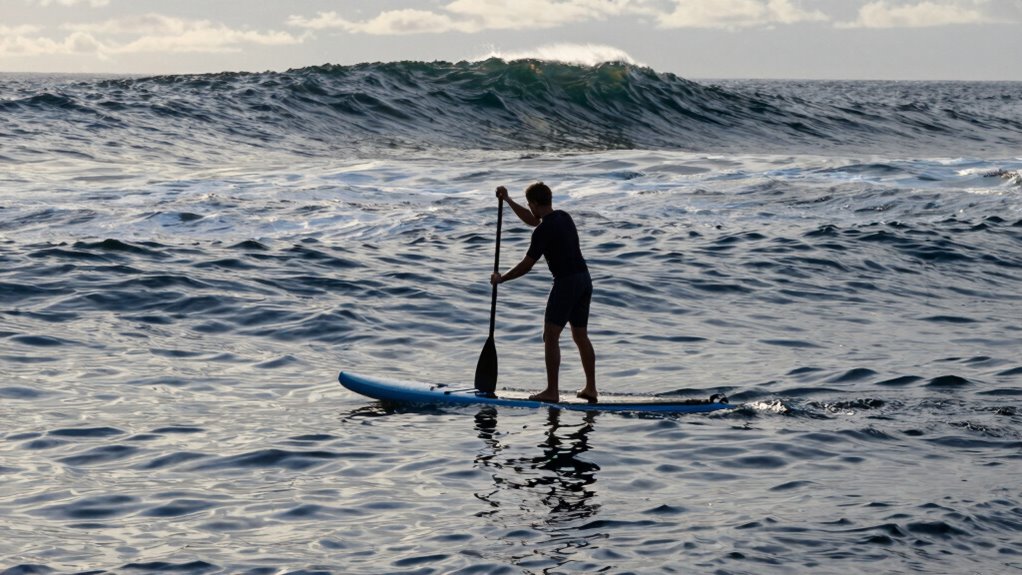
Are you wondering how to improve your stability on a stand-up paddleboard (SUP) during long tours? One of the key factors often overlooked is how wind and chop influence your balance, and understanding this can transform your paddling experience. These elements create hydrodynamic effects that can either challenge or support your stability, depending on how you respond. As you paddle into choppier waters or face gusts, you might notice your board tilting or wobbling unexpectedly. Recognizing how these hydrodynamic effects interact with your paddle skill is essential for maintaining control. Your paddle technique isn’t just about propulsion; it directly impacts how well you can counteract the forces acting on your board. Precise paddle strokes help you maintain a steady center of gravity, especially when wind or chop try to push you off balance.
Mastering paddle technique is key to maintaining balance amidst wind and chop.
When wind blows against your board, it creates lateral forces that can make paddling more difficult. If you’re unaware of how to adjust, you might find yourself fighting against the wind rather than working with it. Developing your paddle skill allows you to make subtle, controlled strokes that help stabilize your board. For instance, using longer, deliberate strokes on the windward side can counteract gusts, while shorter strokes on the leeward side help you regain control. The more refined your paddle technique, the better you’ll be at managing hydrodynamic effects caused by wind and chop. It’s important to stay relaxed and avoid overcompensating, which can lead to unnecessary fatigue and instability. Understanding hydrodynamics is a crucial aspect of improving your overall paddling stability.
Chop adds another layer of challenge as it creates unpredictable, jarring movements on the water surface. These hydrodynamic effects can cause your board to bounce or tilt, especially if your paddle skill isn’t sharp. To stay balanced, focus on engaging your core and maintaining a low, centered stance on your board. This stance helps absorb the shocks from chop and keeps your weight evenly distributed. When paddling through chop, gentle, controlled strokes are preferable to hurried, forceful ones—they help you stay connected to the water and prevent sudden shifts in balance. Over time, practicing steady paddle strokes and maintaining a relaxed grip will improve your ability to handle hydrodynamic effects, making long tours more enjoyable and less stressful.
In essence, mastering paddle skill and understanding the hydrodynamic effects of wind and chop are vital for improving your SUP touring stability. They’re interconnected; the better you become at controlling your paddle strokes, the more effectively you can counteract external forces. With practice, you’ll learn to read the water’s behavior and adapt your technique accordingly. This awareness allows you to stay centered, conserve energy, and enjoy longer, more comfortable paddling journeys—even when nature throws a few surprises your way.
Frequently Asked Questions
How Does Paddle Technique Influence Stability in Rough Conditions?
Your paddle technique greatly influences your stability in rough conditions. Using smooth, controlled paddle strokes helps maintain balance, preventing sudden shifts that can throw you off. Focus on proper body positioning—keeping your core engaged and knees slightly bent—to stay steady. When you paddle with deliberate, consistent strokes, you better absorb chop and wind, allowing you to stay balanced and confident even in challenging conditions.
Can Specific SUP Designs Improve Stability Against Wind and Chop?
While gentle whispers of design can enhance stability, choosing a board shape and fin configuration truly makes a difference against wind and chop. Wider, thicker boards with a rounded nose offer more stability, and a multiple fin setup provides better control and grip. These features help you stay balanced as gusts and waves challenge your stance, giving you confidence and steadiness on the water.
What Safety Gear Enhances Stability During Challenging Tours?
To stay stable during tough tours, you should wear a leash for safety and keep it secure, preventing falls. A helmet provides essential protection against head injuries if you fall or hit something. These safety gear pieces help you maintain confidence and control, especially in unpredictable conditions. Always double-check your leash and helmet before heading out, ensuring they’re properly fitted for maximum stability and safety on the water.
How Do Rider Weight and Stance Affect Balance on Turbulent Water?
Sure, your perfect stance can turn turbulent water into a smooth ride—if you ignore the chaos around you. By adjusting your rider posture and weight distribution, you help stabilize your board amid choppy waves. Lean forward or back to counterbalance gusts, and keep your feet shoulder-width apart for better control. Your conscious effort to maintain proper stance makes steering through rough waters feel almost effortless—until, of course, Mother Nature laughs.
Are There Training Exercises to Improve Stability in Windy Conditions?
Yes, you can improve stability in windy conditions by practicing exercises that simulate challenging wave patterns and wind resistance. Focus on balancing on your board while paddling through varied wave motions and resisting gusts. Try standing on one leg, shifting your weight, and practicing quick turns to enhance your core stability. Consistent practice helps you adapt to wind and chop, making it easier to stay balanced on turbulent water.
Conclusion
Understanding how wind and chop influence your SUP touring stability is key to mastering your ride. Did you know that even a gust of just 10 mph can reduce your balance by up to 15%? By paying attention to these subtle factors and adjusting your stance accordingly, you can stay steadier and enjoy longer, smoother trips. Embrace the challenges, and you’ll find yourself more confident on the water, no matter the conditions.