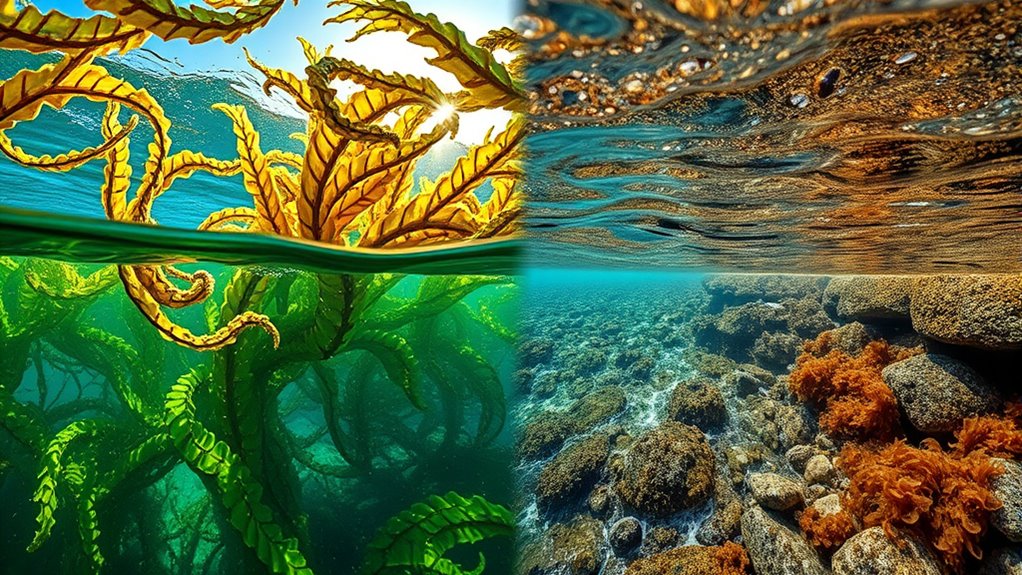

If you’re looking at seaweed seasonality, you’ll find that Pacific regions typically peak during late spring to early fall when warmer temperatures and increased sunlight promote growth. In contrast, Atlantic areas see more distinct seasonal shifts, with harvesting usually peaking in summer when seaweed reaches ideal size. Understanding these regional differences helps you plan better for sustainable harvesting cycles. To learn more about how climate influences these patterns, keep exploring this fascinating topic.
Key Takeaways
- Pacific seaweed growth peaks in late spring to early fall, aligning with warmer months and increased sunlight.
- Atlantic seaweed exhibits pronounced seasonal cycles, with peak harvests during spring and summer.
- Harvesting in the Pacific is concentrated during warm months for optimal yield and quality.
- Atlantic regions experience distinct seasonal shifts, especially in northern areas, affecting seaweed availability.
- Climate variability influences regional timing and intensity of seaweed growth and harvesting cycles.
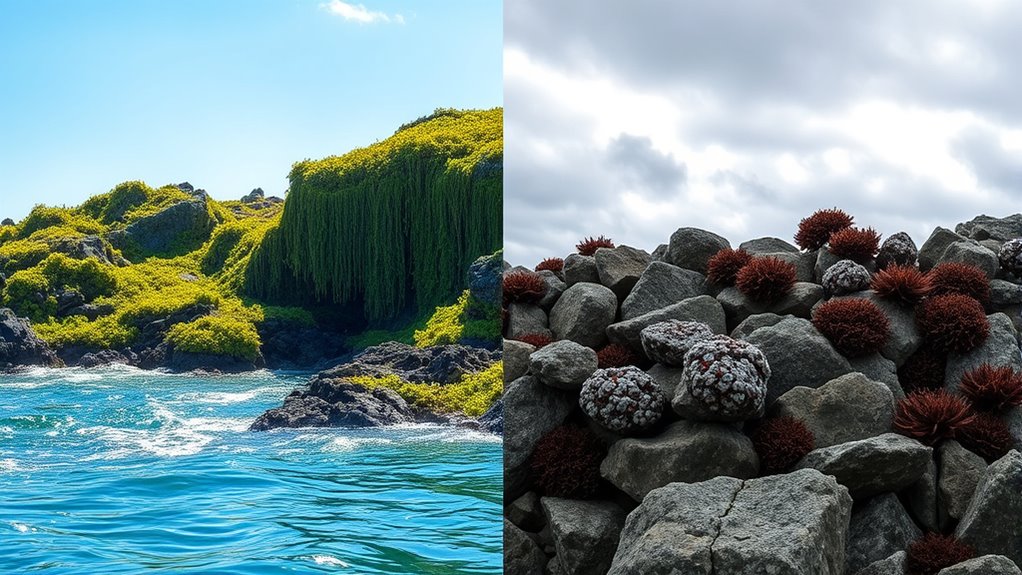
Have you ever wondered why seaweed seems to flourish at certain times of the year? The answer lies in a mix of climate influence and harvesting cycles that vary between regions, especially when comparing the Pacific and Atlantic coasts. These factors shape when seaweed grows most abundantly and when it’s best suited for harvesting. Understanding these patterns can help you appreciate the seasonal rhythm of this essential marine resource.
Seaweed blooms follow seasonal cycles driven by regional climate and harvesting practices.
In the Pacific, particularly along coasts like California and Alaska, climate influence plays a significant role in seaweed seasonality. Warmer months, such as late spring through early fall, create ideal conditions for seaweed growth, with increased sunlight and nutrient flow fueling rapid development. During this period, the longer daylight hours and stable water temperatures promote photosynthesis and growth, which aligns with local harvesting cycles. Harvesters tend to target seaweed during these peak seasons to guarantee high yields and quality. Conversely, colder months slow down growth, making harvests less productive and sometimes risking damage from storms or rough seas. As a result, the Pacific’s harvesting cycles are closely tied to these climatic shifts, with most activity concentrated during the warm, productive months. Additionally, the unique flora and fauna of the region influence the types of seaweed harvested and their seasonal availability.
In the Atlantic, the pattern differs somewhat due to the region’s distinct climate influence. The Atlantic experiences more pronounced seasonal changes, especially in northern areas like Canada and parts of Europe. Cold winters inhibit seaweed growth, leading to a clear seasonal cycle where growth accelerates in spring and peaks during summer. Harvesting cycles follow this pattern closely; fishermen and foragers wait for the growth spurt in spring to start collecting, then continue during the summer when seaweed reaches ideal size and nutrient density. As autumn approaches, growth slows again, and harvesting tapers off. The Atlantic’s climate influence creates a more distinct seasonal rhythm, with harvests often aligned with the natural growth cycle to maximize yield and sustainability.
These climate influences and harvesting cycles are essential for managing seaweed resources responsibly. They help determine not only when to harvest but also guarantee that seaweed populations remain healthy and sustainable for future seasons. Whether you’re observing Pacific or Atlantic regions, understanding these seasonal patterns reveals how closely marine harvesting is tied to the natural environment’s rhythms. It also emphasizes the importance of timing in sustainable seaweed production, ensuring that this versatile resource continues to thrive year after year. Recognizing climate variability is crucial for adaptive management and sustainable harvesting practices.
Frequently Asked Questions
How Do Regional Climate Differences Affect Seaweed Growth Cycles?
Regional climate differences, like variations in temperature and ocean currents, directly influence seaweed growth cycles. Warmer regional temperatures promote faster growth, while cooler areas slow it down. Ocean currents bring nutrients and affect water movement, impacting where and when seaweed thrives. You’ll notice that in regions with strong currents and ideal temperatures, seaweed grows more consistently and abundantly, shaping local ecosystems and harvesting patterns.
Are There Specific Seaweed Species Unique to the Pacific or Atlantic?
You’ll find unique seaweed species in both the Pacific and Atlantic, shaped by their distinct habitats and climate. The Pacific boasts high species diversity and many habitat-specialized seaweeds like kelp forests, while the Atlantic hosts species adapted to colder waters, such as Irish moss. Recognizing these regional differences helps you understand how habitat specialization influences seaweed distribution and diversity across regions.
How Does Ocean Acidity Influence Seaweed Seasonality?
Your understanding of ocean chemistry reveals that acidification impacts seaweed seasonality profoundly. As ocean acidity rises, it can dramatically shift growth cycles, causing seaweed to bloom earlier or later than usual—almost as if nature’s clock is out of sync. This environmental change stresses seaweed species, altering their typical patterns and potentially disrupting entire coastal ecosystems. You see, acidification impacts are a powerful force shaping the rhythm of seaweed life.
What Human Activities Impact Seaweed Seasonal Patterns?
You impact seaweed seasonal patterns through harvesting practices and pollution impacts. Unsustainable harvesting can disrupt growth cycles, reducing seaweed populations at key times. Pollution, like runoff containing chemicals and plastics, degrades water quality, affecting seaweed health and reproduction. By managing harvesting responsibly and reducing pollution, you help maintain natural seasonal cycles, supporting healthy ecosystems and ensuring sustainable seaweed availability for future generations.
Can Seaweed Seasonality Change Due to Long-Term Climate Shifts?
Have you wondered if climate change could alter seaweed seasonality? It definitely can. Long-term climate shifts lead to seasonal changes, affecting water temperatures, nutrient availability, and light levels. These factors influence seaweed growth cycles, causing unpredictable seasonal shifts. As global temperatures rise, you might notice seaweed blooms happening earlier or lasting longer, disrupting ecosystems. Staying aware of these changes helps us understand the broader impact of climate change on marine life.
Conclusion
Understanding seaweed seasonality reveals fascinating regional differences. For example, Pacific regions see peak growth in late summer, while Atlantic areas experience their highest yields in early fall. Did you know that Pacific seaweed harvests can increase by up to 50% during peak season? By paying attention to these patterns, you can better appreciate the ocean’s natural rhythms and even plan for sustainable harvesting. Explore the seasonal cycle and reveal the secrets of seaweed’s oceanic dance.