
To guarantee shellfish safety, you must cool them from harvest or delivery to storage within two hours, keeping temperatures between 32°F and 39°F. Avoid overcrowding and use shallow containers or ice baths to cool quickly. Proper temperature control prevents bacteria growth and cross contamination. Fluctuating temperatures or delays can lead to unsafe shellfish, posing health risks. If you want to know how to master this process and avoid costly mistakes, there’s more to learn.
Key Takeaways
- Cool shellfish from harvest/delivery to 32°F–39°F within two hours to prevent bacterial growth.
- Use shallow containers, ice, or chilled water baths for even and rapid cooling.
- Avoid temperature fluctuations by maintaining consistent storage temperatures below 40°F.
- Cover shellfish during cooling to prevent cross contamination from surfaces or other foods.
- Regularly monitor and document temperatures to ensure the cold chain is maintained throughout the process.
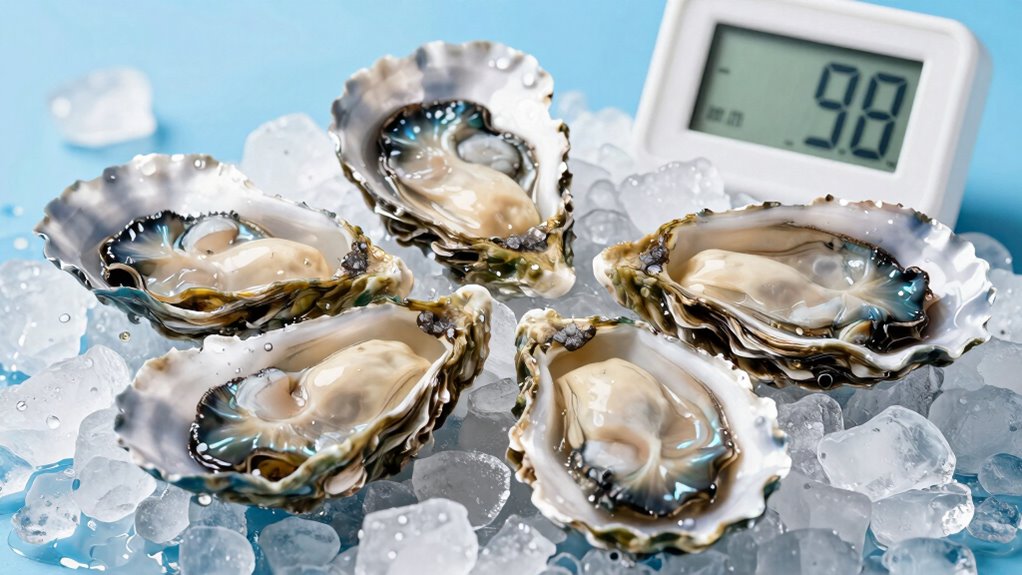
Properly cooling shellfish is fundamental to prevent foodborne illnesses and guarantee safety. Shellfish, like oysters, clams, and mussels, are highly perishable and can harbor harmful bacteria if not handled correctly. When you’re working with shellfish, maintaining strict control over temperature is paramount, especially during the cooling process. If you neglect proper cooling procedures, you risk cross contamination risks and breaking the cold chain, which could lead to serious health issues for consumers.
One of the biggest threats during shellfish cooling is cross contamination risks. If you don’t separate raw shellfish from other foods or contaminated surfaces, bacteria can transfer easily. For example, using unclean tools or placing shellfish on contaminated surfaces can introduce pathogens. To prevent this, always keep shellfish on sanitized surfaces and use dedicated utensils. Covering shellfish properly during cooling also helps keep contaminants out. Remember, bacteria multiply rapidly at temperatures above 40°F (4°C), so any delay or mishandling increases the risk of foodborne illness.
Prevent cross contamination by using sanitized surfaces and dedicated utensils when cooling shellfish.
Maintaining the cold chain is essential throughout the entire cooling process. From the moment shellfish is harvested or delivered, it should stay within a temperature range of 32°F to 39°F (0°C to 4°C). Any break in this cold chain—such as leaving shellfish out at room temperature or storing it at improper temperatures—can allow bacteria to grow exponentially. To keep the cold chain intact, use calibrated refrigerators or ice packs, and always monitor temperatures regularly. Rapid cooling is necessary; aim to bring shellfish from harvest or delivery temperature down to safe storage levels within two hours. If you cannot cool shellfish quickly enough, it’s better to discard it than risk serving unsafe food.
When cooling shellfish, avoid common pitfalls like overcrowding containers or stacking shells, which can trap heat and slow down cooling. Instead, spread shellfish out in shallow containers to promote even cooling. Using ice or chilled water baths can accelerate the process, but ensure these are kept at safe temperatures and changed frequently to prevent bacterial growth. Once cooled, store shellfish at the correct temperature and avoid temperature fluctuations, which can compromise safety.
Frequently Asked Questions
What Are the Signs of Spoiled Shellfish?
You can tell shellfish is spoiled if it has a strong, unpleasant odor, like ammonia or sourness. Look for slimy or sticky textures, discolored shells, or shells that don’t close when tapped. Shellfish freshness is compromised when you notice these spoiled shellfish signs, so avoid eating them. If in doubt, discard shellfish to prevent foodborne illness. Always trust your senses to determine if shellfish is safe to enjoy.
How Long Can Shellfish Stay Unrefrigerated Safely?
You shouldn’t leave shellfish unrefrigerated for more than two hours, as shellfish spoilage accelerates quickly without proper temperature control. Bacteria grow rapidly at room temperature, increasing the risk of foodborne illnesses. If the ambient temperature is above 90°F, reduce that window to just one hour. Always keep shellfish cold, ideally below 40°F, to guarantee safety and freshness. When in doubt, discard shellfish that’s been unrefrigerated too long.
Can Freezing Shellfish Affect Its Safety?
Freezing shellfish can impact its safety if not done properly, but it generally preserves it when done correctly. The freezing impact helps prevent bacterial growth, making it safe to eat later. However, safety considerations include ensuring shellfish is fresh before freezing, using airtight packaging, and keeping the freezer at 0°F (-18°C). Proper freezing extends shelf life and maintains quality, so you can enjoy shellfish safely later.
What Is the Optimal Temperature for Storing Shellfish?
Your shellfish’s safety depends on strict temperature control; the essential storage temperature is just above freezing, around 32°F (0°C). Follow storage guidelines meticulously to prevent spoilage. Keep shellfish chilled in the coldest part of your refrigerator or a properly maintained cooler. Maintaining this precise temperature is vital—any deviation could turn your prized catch into dangerous seafood. Stay vigilant, and your shellfish will stay fresh and safe to enjoy.
How Do I Safely Reheat Cooked Shellfish?
To safely reheat cooked shellfish, use gentle reheating techniques like steaming or microwaving on medium power. Confirm the internal temperature reaches at least 165°F (74°C) according to temperature guidelines, which kills bacteria and prevents foodborne illness. Avoid reheating multiple times, and check the temperature with a food thermometer. By following these steps, you preserve flavor and safety, making sure your shellfish remains delicious and safe to eat.
Conclusion
Ignoring shellfish cooling guidelines might seem harmless until you face foodborne illness. The danger lurks silently, much like a ticking clock threatening your health, reminding you that safety isn’t optional. While the feast on your table promises joy, neglecting proper temperature control can turn celebration into tragedy in an instant. Don’t let complacency be the last thing you taste—stay vigilant, keep temperatures in check, and enjoy your seafood safely, because some lessons are better learned early than the hard way.