

To keep beaches open for razor clam digging, follow unspoken rules that show respect and responsibility. Use proper gear to harvest efficiently and avoid disturbing the environment. Stay within designated areas, respect other clammers, and keep the beach clean by removing trash and gear. Follow local regulations and size limits to support sustainable harvesting. Practicing these etiquette tips helps protect the resource and ensures everyone can enjoy clam digging for years to come. Keep going to learn more.
Key Takeaways
- Use proper, well-maintained gear to minimize environmental disturbance and ensure efficient harvesting.
- Respect designated clamming areas, size limits, and local regulations to promote sustainability.
- Be courteous to fellow clam hunters, avoid crowding, and leave the beach clean.
- Practice responsible harvesting by taking only what is needed and preserving fragile habitats.
- Stay informed about rules and contribute to maintaining open, healthy beaches for future generations.
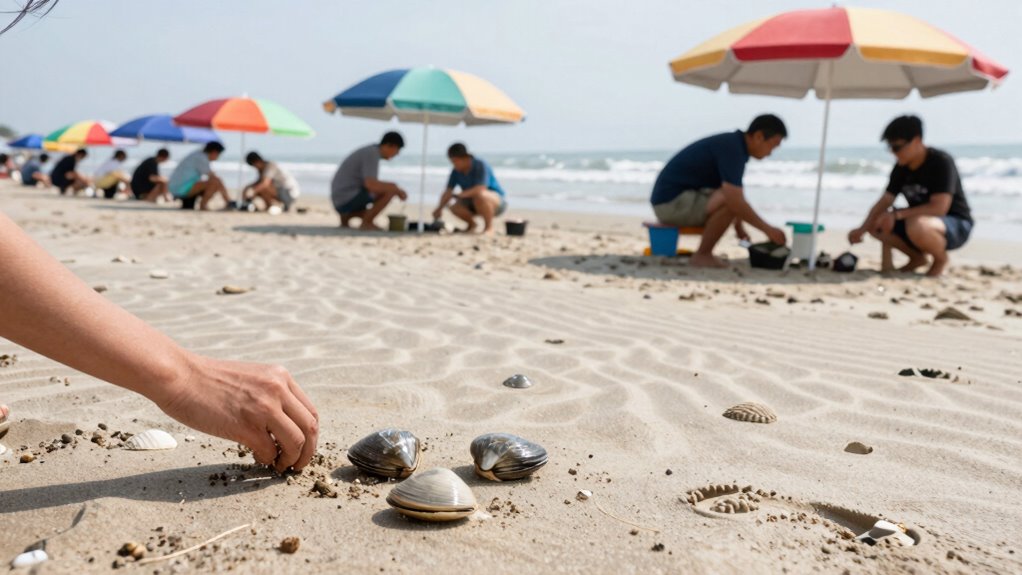
Razor clam etiquette is essential for ensuring a respectful and enjoyable experience for everyone involved. When you head out to the beach for clamming, it’s important to remember that your actions can impact not only your own day but also the health of the shoreline and the future of this activity. One of the key ways to show respect is by being prepared with the right clamming gear. Having your shovel, rake, and other tools in good condition shows you’re serious about efficient and responsible harvesting. It also helps prevent unnecessary disturbance to the environment, especially if you avoid damaging the fragile beach ecosystem. Proper gear use guarantees you can quickly and cleanly extract razor clams without excessive digging or harm to surrounding areas.
Using proper gear ensures responsible harvesting and protects fragile beach ecosystems.
Beach conservation plays a critical role in maintaining the health of razor clam habitats. As you enjoy your time on the beach, be mindful of your footprint. Stick to designated areas for clamming to avoid trampling sensitive dune vegetation or disturbing wildlife. Remember that beaches serve as vital ecosystems, and your respect for these spaces helps keep them healthy for future generations. Practice responsible harvesting by taking only what you need and adhering to local size and bag limits. Overharvesting can deplete clam populations and disrupt the natural balance of the beach environment.
Another important aspect of clamming etiquette is respecting fellow clammers. Be patient and courteous if someone is working nearby, and avoid crowding or rushing them. If the beach is busy, wait your turn and share the space amicably. When you’ve finished, clear your area of any trash or unused gear, leaving the beach as pristine as you found it. This demonstrates your commitment to preserving the natural beauty of the location. Additionally, understanding the importance of color accuracy and its impact on visual perception can enhance your appreciation of the natural scenery while enjoying your time on the beach.
Furthermore, it’s crucial to stay informed about local regulations and closures. These rules are in place to protect the clam populations and ensure sustainable use of the resource. Ignoring them not only risks fines but also harms the future of razor clam harvesting. By following these unspoken rules, you contribute to a culture of respect and conservation that benefits everyone. Remember, responsible clamming isn’t just about personal success; it’s about maintaining the health of the beach environment and the shared enjoyment of all visitors. When you act with care and consideration, you help keep beaches open and thriving for years to come.
Frequently Asked Questions
Can I Take Razor Clams From Protected Areas?
No, you can’t take razor clams from protected areas. Protected area regulations strictly prohibit harvesting in these zones to preserve ecosystems. Always check local rules before you go, and obtain any necessary harvesting permits if allowed outside protected zones. Ignoring these regulations can lead to fines or loss of access. Stay informed, respect the environment, and follow the rules to ensure razor clams and beaches stay healthy and open for everyone.
Are There Age Restrictions for Razor Clam Digging?
Age restrictions for razor clam digging vary by location, but generally, kids under 15 need adult supervision and may have limited access. Some areas offer youth programs to introduce young anglers to clam digging responsibly. Check local regulations before heading out, and confirm your youth participants understand the rules. By doing so, you help preserve the tradition and ensure everyone enjoys a safe, fun experience while respecting the environment.
What Should I Do if I Find Injured Wildlife on the Beach?
If you find injured wildlife on the beach, act quickly and carefully. Prioritize wildlife rescue by gently stabilizing the animal if possible, then contact local wildlife agencies or rescue organizations for professional help. Avoid touching or moving the animal unnecessarily. You should also participate in beach cleanup efforts to protect habitats, ensuring the environment stays safe for wildlife and visitors alike. Your actions make a real difference in preserving coastal ecosystems.
How Do I Handle Razor Clam Shells Responsibly?
When handling razor clam shells, you should practice shell recycling and proper disposal. Collect the shells carefully, avoid breaking them, and dispose of them in designated recycling bins or trash containers. Leaving shells on the beach can harm wildlife and disrupt the environment. By recycling shells properly, you help keep beaches clean and protect the ecosystem, ensuring everyone can enjoy the area responsibly.
Are There Specific Times of Day Better for Clam Digging?
Coincidentally, the best times for clam digging align with tidal schedules, making early low tides your prime opportunity. You’ll find the most suitable digging times are during low tide, especially just before sunrise or after sunset when the tide is at its lowest. Planning your trip around these periods ensures you access the clam beds when the clams are most active and accessible, increasing your chances of a successful harvest.
Conclusion
By respecting razor clam etiquette, you become a guardian of the sands, ensuring the beach’s delicate dance continues. Think of each unspoken rule as a thread weaving harmony between you and fellow clam diggers, shielding the shoreline’s heartbeat. When you follow these silent guidelines, you nurture a vibrant, thriving ecosystem—like a well-tended garden where all can flourish. Embrace the unspoken rules, and you’ll keep the beach open for generations to come, a timeless symphony of nature and community.