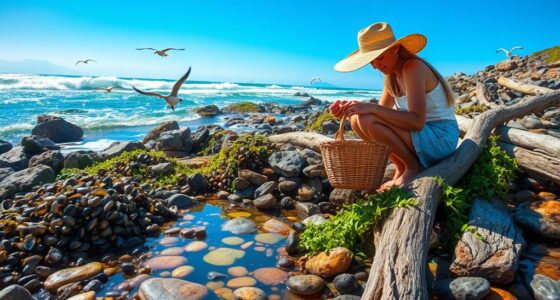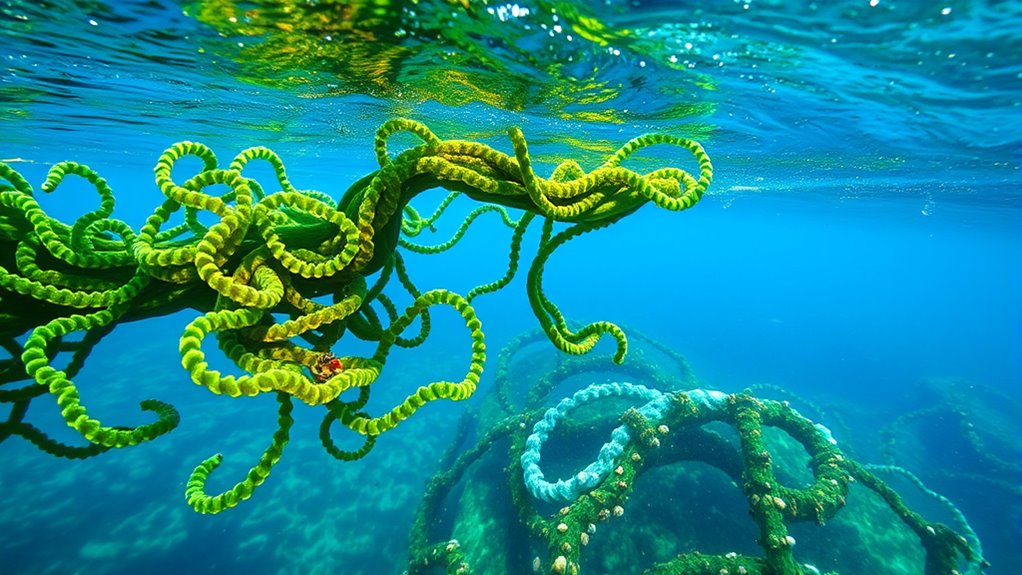

Kelp rafts and drift lines act as natural indicators of ocean currents, guiding you to nutrient-rich areas full of marine life and superfoods. By observing their movement and clustering, you can identify hotspots where edible seaweed, fish, and other resources gather. These floating ecosystems reveal ocean flow patterns and productive zones, helping you locate the best spots for foraging. Keep exploring, and you’ll uncover how these clues can unseal bountiful and sustainable food sources.
Key Takeaways
- Kelp rafts and drift lines indicate nutrient-rich areas where wild edible seaweeds and marine resources can be sustainably harvested.
- Observing kelp movement and clustering reveals ocean currents and ecosystem hotspots for foraging.
- Floating debris and kelp serve as natural guides to locate productive zones teeming with marine life.
- Tracking drift lines helps identify areas of high biological activity, ideal for gathering super-foods like seaweed.
- Understanding ocean flow patterns through floating structures enhances sustainable resource exploration and harvesting.
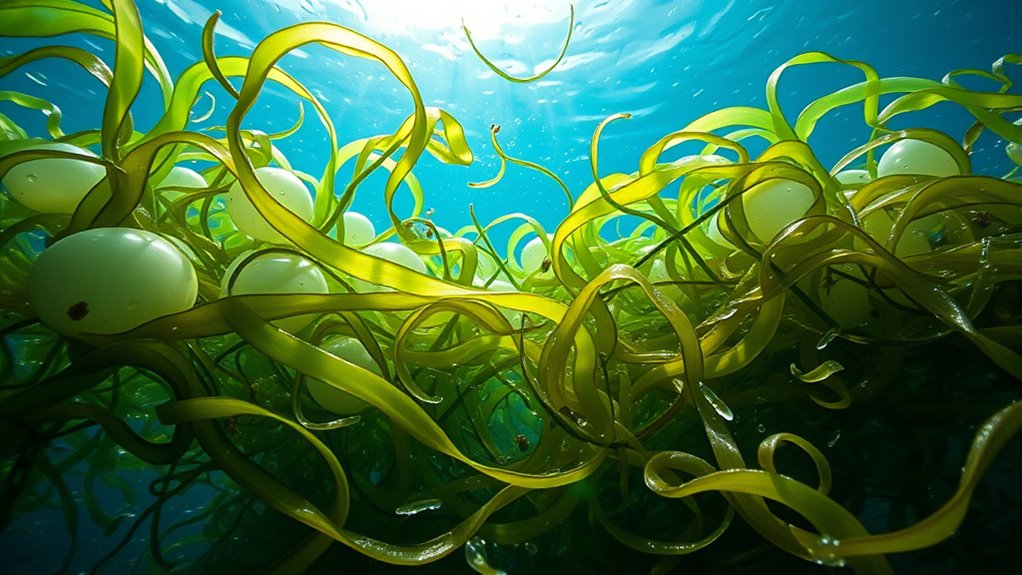
Kelp rafts and drift lines are crucial components of ocean ecosystems, serving as floating habitats and transportation routes for a variety of marine life. These natural structures often drift across the surface, carried by the powerful currents that shape our oceans. As they move, they collect marine debris—detritus, plastic fragments, and other refuse—that becomes part of the floating ecosystem. While marine debris can be problematic, in the context of kelp and drift lines, it also provides additional shelter and nutrients for small organisms, which in turn attracts larger predators. You might notice that these floating platforms act like highways on the water, guiding a diverse array of marine creatures along predictable routes determined by ocean currents.
By observing where kelp and drift lines accumulate, you can gain insights into the movement of ocean currents and the distribution of marine life. Ocean currents influence the flow and position of these floating habitats, which means they can serve as natural indicators for locating thriving ecosystems. For example, warm currents often carry nutrient-rich kelp toward colder regions, creating hotspots of productivity. When you spot a large mass of kelp tangled with marine debris, it’s not just random trash; it’s a sign of an active transit route that supports a complex web of life. These areas often host abundant plankton, fish, and even seabirds, making them prime spots for foraging.
Kelp and debris clusters reveal ocean currents and thriving marine ecosystems.
Understanding how ocean currents drive the formation and movement of kelp rafts and drift lines empowers you to read the ocean’s clues. These floating ecosystems can lead you to areas teeming with life—places where natural resources like edible seaweed and fish are more accessible. As you explore the ocean surface, pay attention to how these floating structures shift and cluster. They reveal the underlying flow patterns and help you anticipate where marine life congregates. This knowledge is especially valuable if you’re interested in sustainable harvesting of wild foods, as it guides you to regions where nature’s abundance is concentrated.
In essence, kelp rafts and drift lines aren’t just debris or random occurrences; they’re dynamic indicators of ocean health and movement. By learning to read these signs, you reveal a map to the ocean’s hidden treasures, revealing a network of natural pathways that can lead you to nutritious, wild foods. Recognizing the influence of marine debris and ocean currents on these floating habitats transforms your perspective—no longer are they mere waste or accidents of nature, but crucial clues to understanding and sustainably exploring the ocean’s bounty. Additionally, the presence of seaweed in these areas can be a valuable source of nutritional super-foods, naturally abundant in many coastal regions.
Frequently Asked Questions
How Do Kelp Rafts Affect Local Marine Ecosystems Long-Term?
You might wonder how kelp rafts influence marine ecosystems long-term. They boost marine biodiversity by providing habitats for various species, supporting complex food webs. Additionally, kelp rafts play a role in nutrient cycling, transporting essential nutrients across vast ocean areas. Over time, these processes help maintain healthy, resilient ecosystems, fostering a balanced environment that benefits marine life and supports sustainable fisheries.
Can Drift Lines Indicate Upcoming Ocean Weather Changes?
Imagine spotting a line of floating debris and kelp on the water’s surface, stretching across the horizon. You realize these drift lines are more than just ocean debris—they’re essential clues for marine navigation and weather prediction. As winds shift or storms approach, these lines gather and change, alerting you to upcoming weather changes. Recognizing these signs helps you anticipate rough seas, making your marine journeys safer and more informed.
Are There Risks Associated With Harvesting Free Superfoods From Kelp Rafts?
When harvesting free superfoods from kelp rafts, you should consider contamination risks from pollutants or bacteria that can affect safety. Overharvesting concerns also exist, as taking too much kelp can harm ecosystems and reduce future supplies. Always make certain proper identification, harvest responsibly, and be aware of local regulations to minimize risks and protect the environment while enjoying these ocean treasures.
How Can Communities Utilize Drift Lines Sustainably?
You can utilize drift lines sustainably by practicing responsible harvesting and promoting community education. Focus on only collecting what’s needed, avoiding overharvesting, and leaving plenty behind for natural regeneration. Educate your community about the importance of respecting ocean ecosystems, so everyone understands how to gather superfoods without harming marine life. By working together, you guarantee these resources remain available for future generations while enjoying the benefits of free superfoods.
What Role Do Kelp Rafts Play in Global Carbon Cycles?
You might not realize it, but kelp rafts play a crucial role in the global carbon cycle. They facilitate carbon sequestration by capturing CO2 as they grow and helping to transport it to deeper ocean layers. Additionally, kelp contributes to nutrient cycling, enriching marine ecosystems. This natural process supports climate regulation and sustains ocean health, making kelp rafts essential in maintaining a balanced and resilient global carbon cycle.
Conclusion
Just like a detective following a trail of clues, you can read the ocean’s signals through kelp rafts and drift lines. These floating markers reveal hidden treasures and suggest a bounty of superfoods waiting beneath the waves. By paying attention to these natural signs, you’re revealing nature’s pantry, offering you a free, sustainable source of nutrition. Think of it as uncovering a secret garden floating on the sea, just waiting for you to explore and enjoy.