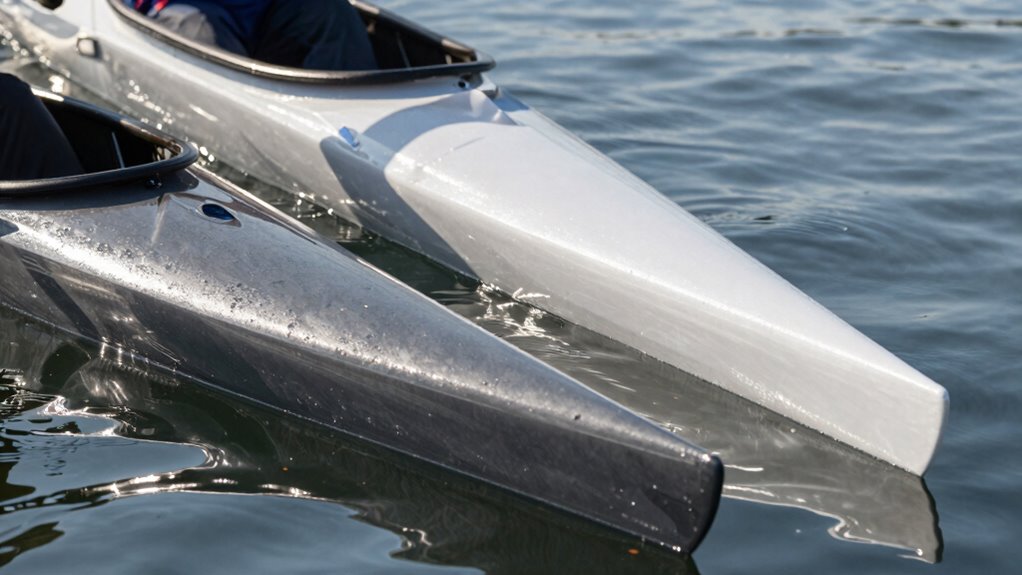

Kayak hull shapes influence both stability and speed, but excelling in both at once is tough due to shared trade-offs. Flat-bottom hulls offer great stability, making them ideal for beginners and calm waters, but slow you down. V-shaped hulls cut through water quickly, boosting speed, but reduce stability, especially in choppy conditions. Understanding how these designs balance performance helps you choose the right kayak—if you want to know more, keep exploring the details behind each shape.

Get garden gear delivered free — and shop member deals
- Fast, free delivery on millions of items
- Access to Prime Big Deal Days deals on October 6–7
- Prime Video, Amazon Music and more included
Key Takeaways
- Flat-bottom hulls provide stability but increase drag, limiting speed.
- V-shaped hulls improve speed but reduce stability in choppier waters.
- Design trade-offs occur because features that enhance stability often hinder speed, and vice versa.
- Hull shape influences how water flows around the kayak, affecting handling and velocity.
- Balancing stability and speed depends on choosing the right hull for specific paddling needs.
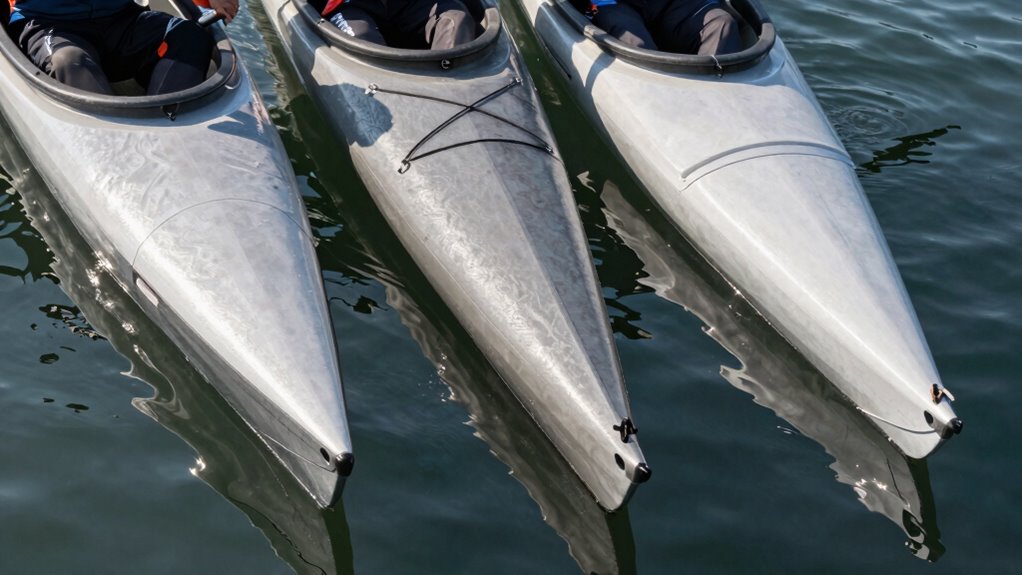
Have you ever wondered how the shape of a kayak’s hull affects its performance on the water? The hull shape is essential because it determines how your kayak handles, how fast it can go, and how stable you’ll feel while paddling. Different hull designs serve different purposes, and understanding these can help you choose the right kayak for your needs. For example, some hull shapes prioritize stability, making them perfect for beginners or those who enjoy calm lakes. Others focus on speed, ideal for racing or covering long distances quickly. But here’s the catch: stability and speed rarely come together in a single hull shape. You often have to compromise, depending on what matters most to you.
Choosing the right kayak hull depends on balancing speed, stability, and your paddling needs.
The traditional flat-bottom hull offers excellent stability, making it easier to get in and out of the kayak and feel secure while paddling. However, this shape increases drag, which slows you down and reduces speed. Conversely, a sleek, V-shaped hull slices through the water more efficiently, boosting speed and maneuverability. But this design sacrifices some stability, especially for beginners or those on choppier waters. To balance these factors, many modern kayaks incorporate eco-friendly materials, such as recycled plastics or sustainably sourced composites, which not only reduce environmental impact but also help craft lightweight, durable hulls. eco-friendly materials are increasingly being used to create lightweight hulls that are easier to handle, transport, and paddle, whether you’re paddling on a tranquil lake or a rushing river. Additionally, advancements in material technology contribute to better performance and sustainability. These innovations often lead to more optimized hull designs, further enhancing performance without sacrificing eco-consciousness. Incorporating innovative manufacturing techniques also allows for more precise hull shapes that optimize the balance between speed and stability.
Seating ergonomics also play a critical role in your overall experience. A well-designed hull combined with ergonomic seating ensures that you remain comfortable during long paddles, reducing fatigue and improving your control. When you’re comfortable, it’s easier to maintain proper posture and paddle efficiently, which can influence your kayak’s performance. Many manufacturers now pay close attention to eco-friendly materials not just for sustainability but to enhance seating ergonomics, providing better support and comfort. An ergonomic seat placed within the hull’s shape ensures your body aligns properly, allowing for stronger strokes and less strain on your back and shoulders. Additionally, the choice of eco-friendly materials can contribute to sustainable design, making your paddling experience more environmentally conscious.
In the end, choosing a kayak with the right hull shape involves weighing your priorities—speed, stability, comfort, and environmental impact. While these elements often pull in opposite directions, understanding the trade-offs helps you make an informed choice that best suits your paddling adventures. Whether you’re after a stable, eco-conscious model or a sleek speedster, knowing how hull shape influences performance puts you in control of your kayaking experience.
As an affiliate, we earn on qualifying purchases.
Frequently Asked Questions
How Do I Choose the Right Kayak Hull Shape for Beginners?
To choose the right kayak hull shape for beginners, opt for a wider, flat-bottomed design that offers stability and ease of use. Consider hull materials like polyethylene for durability, and focus on kayak ergonomics for comfort during long paddles. Such hull shapes help you stay balanced, while sturdy materials guarantee longevity. Prioritize comfort and stability to build confidence, and gradually explore more advanced hull types as your skills improve.
Are There Hybrid Hull Designs That Balance Stability and Speed?
Ever wonder if you can get the best of both worlds? Yes, hybrid hulls are designed to balance stability and speed, making them a versatile choice. These designs combine features of different hull types to provide a stable platform while still allowing for reasonable speed. If you’re seeking a kayak that offers a good mix of stability speed, then exploring hybrid hulls might be your ideal solution.
How Does Water Temperature Affect Kayak Hull Performance?
Water temperature impacts your kayak’s performance because of water density and thermal expansion. Warmer water is less dense, providing less buoyancy and potentially reducing stability. Conversely, colder water is denser, offering better support and responsiveness. Thermal expansion causes slight changes in water volume, affecting how smoothly your kayak glides. So, as water warms or cools, expect subtle shifts in speed, stability, and handling, making temperature an important factor to take into account.
Can Hull Shape Influence Kayak Maneuverability in Rough Waters?
Yes, hull shape considerably influences your kayak’s maneuverability in rough waters. A pointed or V-shaped hull improves wave handling by cutting through water efficiently, giving you better control. However, this design can increase resistance factors, making paddling more effortful. Conversely, flatter hulls offer more stability but reduce agility. So, choosing the right hull shape depends on balancing your need for quick maneuvering against stability in challenging conditions.
What Maintenance Is Required for Different Kayak Hull Materials?
Ever wondered how to keep your kayak in top shape? You need to regularly perform hull cleaning and inspect the material for cracks or wear. For fiberglass, check for chips or delamination, while plastic hulls require more attention to scratches and dents. For composite or inflatable kayaks, guarantee seams are secure and inflate properly. Proper maintenance extends your kayak’s lifespan, helping it stay smooth and safe on the water.
As an affiliate, we earn on qualifying purchases.
Conclusion
Just like Icarus who dared to soar too close to the sun, understanding kayak hull shapes reminds you that chasing speed often means sacrificing stability. You navigate the delicate balance, knowing each hull type offers its own adventure—whether it’s slicing through waves or feeling grounded in calm waters. Embrace the journey, and remember, in the world of kayaks, as in life, harmony between speed and stability is a quest worth pursuing.
performance kayak with V-shaped hull
As an affiliate, we earn on qualifying purchases.
As an affiliate, we earn on qualifying purchases.
As an affiliate, we earn on qualifying purchases.
Fall yard work Picks
leaf blowers
As an affiliate, we earn on qualifying purchases.