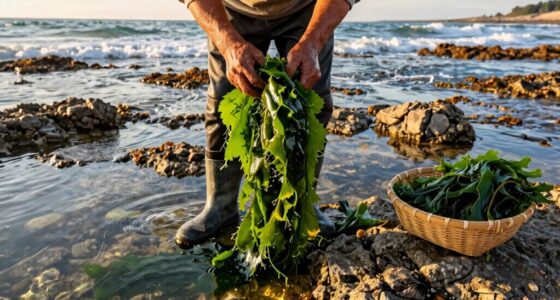
To spot a healthy shoreline before harvesting, look for minimal, balanced algae with no thick mats or excessive floating patches. Observe bird activity; a variety of foraging and nesting birds indicates ecosystem stability, while sparse activity may signal issues. Check for native plants that reduce erosion and filter pollutants—healthy shoreline vegetation is a good sign. Clear water free of trash or unnatural scum also signals good water quality. Keep these indicators in mind, and you’ll discover even more essential tips ahead.
Key Takeaways
- Observe minimal, balanced algae levels; excessive or thick mats indicate nutrient pollution.
- Check for diverse bird activity, especially active foraging and nesting.
- Ensure native plants dominate shoreline, with no invasive species overgrowth.
- Confirm water is clear, free of debris, foam, or unnatural scum.
- Look for overall ecosystem stability, including native vegetation, water quality, and wildlife presence.

Ever wondered how to tell if a shoreline is healthy? It’s a good question, especially if you’re thinking about harvesting from the area. A healthy shoreline isn’t just about the scenery; it’s about the balance of nature that keeps the ecosystem thriving. One of the first signs you should look for is algae growth. While some algae is normal, excessive algae can indicate nutrient pollution, often from runoff containing fertilizers or sewage. If you see thick mats of algae covering rocks or floating in patches, it might mean the water quality is compromised. On the other hand, a shoreline with minimal, naturally balanced algae suggests a stable environment where native plants and animals can flourish. Keep an eye out for algae that’s green and slimy but not overwhelming; this balance is a good sign. Healthy algae levels are a key indicator of a balanced ecosystem, reflecting the overall health of the shoreline. Additionally, observing the diversity of algae types can provide further insight, as a variety of algae species often indicates a resilient environment. Recognizing key indicators of shoreline health can help you make more informed decisions about harvesting and conservation. Bird activity is another vital indicator of shoreline health. Birds are natural bioindicators—they respond quickly to changes in their environment. If you notice a variety of bird species actively foraging and nesting along the shoreline, it’s a positive sign. Birds that feed on small invertebrates, fish, or plants depend on a healthy ecosystem to find food. A diverse and active bird population means there’s likely a good balance of prey and habitat. Conversely, if bird activity is sparse or dominated by only a few species, it could signal environmental stress or pollution. Observe whether birds are engaging in natural behaviors, like foraging or nesting, rather than appearing disoriented or avoiding the area altogether. The presence of native plants further supports a healthy shoreline by providing essential habitat and reducing erosion. Healthy shoreline ecosystems also rely on natural water filtration processes performed by native vegetation, which improve water quality over time. Beyond algae and bird activity, check for other signs like the presence of native plants and clean water. Native vegetation helps stabilize the shoreline, reduce erosion, and filter pollutants. Clear water with little debris or foam indicates better water quality. If you see trash, oil slicks, or unnatural scum, it’s a red flag that the environment isn’t in prime health. The shoreline should also feel stable underfoot, with no signs of severe erosion or invasive plant species overtaking native flora. It’s essential to evaluate the entire ecosystem—healthy algae levels, vibrant bird activity, native plants, and clean water all work together to indicate a thriving shoreline. When these elements are in harmony, you can confidently harvest knowing you’re respecting and preserving a resilient, healthy environment.
As an affiliate, we earn on qualifying purchases.
Frequently Asked Questions
How Often Should I Check Shoreline Health?
You should check shoreline health at least once every season, or more often after storms or heavy rainfall. During these inspections, look for stable soil and healthy vegetation cover, which are signs of a resilient shoreline. Regular monitoring helps you catch erosion or vegetation loss early, so you can take action before environmental damage worsens. Consistent checks guarantee your shoreline remains stable and supportive of local ecosystems.
What Tools Are Best for Shoreline Assessment?
Did you know that remote sensing can analyze large shoreline areas quickly? For evaluating shoreline health, use remote sensing tools like aerial photos or satellite images to spot erosion and vegetation. Soil testing kits are also essential—they help assess soil quality and nutrient levels. Combining these tools gives you an all-encompassing view of shoreline stability, guiding responsible harvest decisions and ensuring the ecosystem remains healthy and resilient.
Can Shoreline Health Indicators Vary by Region?
Yes, shoreline health indicators can vary by region because of regional variations and ecosystem diversity. You’ll notice that different areas have unique plant species, water conditions, and soil types, which influence what a healthy shoreline looks like locally. Recognizing these regional differences helps you accurately assess shoreline health, ensuring you don’t mistakenly identify an unhealthy area as healthy or vice versa. Tailoring your assessment to local ecosystem characteristics is essential.
How Does Shoreline Health Impact Local Wildlife?
A healthy shoreline directly benefits local wildlife by maintaining habitat diversity, which provides food, shelter, and breeding sites. When pollution levels are low, water quality improves, supporting aquatic species and preventing harmful algal blooms. You’ll notice thriving plant and animal life, indicating a balanced ecosystem. By protecting shoreline health, you help guarantee that diverse wildlife continues to flourish, preserving the natural beauty and ecological function of the area.
What Signs Indicate Shoreline Degradation or Erosion?
You can spot shoreline degradation or erosion by observing unstable vegetation, such as plants with missing roots or leaning over. Look for exposed soil or bare patches where vegetation has died back. Erosion patterns, like gullies or uneven slopes, indicate ongoing loss of shoreline material. These signs show that the shoreline’s vegetation stability is compromised, making it vulnerable to further erosion and negatively impacting the ecosystem.
As an affiliate, we earn on qualifying purchases.
Conclusion
By learning to spot a healthy shoreline, you’re helping protect essential ecosystems and ensuring sustainable harvests. Remember, a thriving shoreline often features diverse plant life, clear water, and stable soil. Did you know that healthy coastal areas can support up to 20 times more fish and wildlife than degraded ones? So, take the time to observe these signs before harvesting—it’s a simple step that makes a big difference for both your harvest and the environment.
As an affiliate, we earn on qualifying purchases.
As an affiliate, we earn on qualifying purchases.