When harvesting goose barnacles, make sure to follow local laws about quotas, seasonal limits, and protected zones to avoid legal troubles. Use careful techniques to minimize habitat damage and prevent overharvesting, and always stay updated on current regulations to guarantee compliance. Proper record-keeping and monitoring help protect the environment and support sustainable use. Responsible harvesting benefits the ecosystem and your community—continue exploring to learn more about best practices and safety tips.
Key Takeaways
- Always comply with local harvesting quotas, seasonal limits, and designated zones to avoid legal penalties.
- Use careful prying methods to prevent habitat damage and ensure safe, sustainable collection.
- Keep accurate records of harvests for regulatory inspections and to support conservation efforts.
- Stay informed about current regulations, as rules may change based on scientific assessments.
- Practice restraint and follow safety guidelines to protect ecosystems and ensure your safety during harvesting.
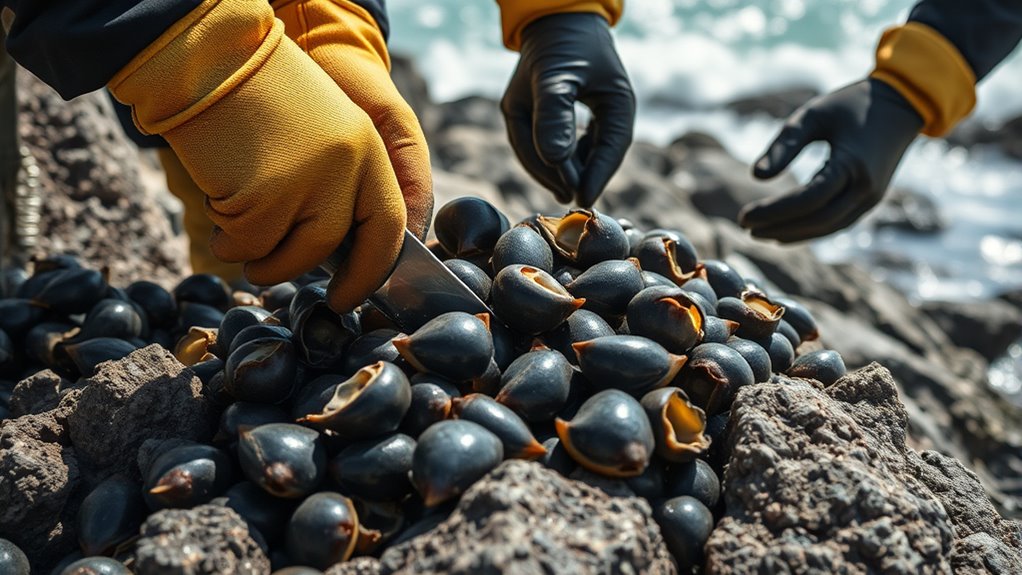
Have you ever wondered how goose barnacles are harvested from their rugged ocean habitats? The process involves more than just grabbing these unique creatures from rocky surfaces; it requires careful adherence to sustainable practices and strict harvesting regulations. These rules exist to protect both the barnacles and the delicate ecosystems they inhabit, ensuring that harvesting continues without causing long-term environmental damage. When you’re involved in collecting goose barnacles, understanding and respecting these regulations is essential. They specify quotas, seasonal limits, and designated harvesting zones, all designed to prevent overharvesting that could threaten local populations. Ignoring these rules not only risks legal consequences but also jeopardizes the sustainability of this resource for future generations. Implementing monitoring systems and maintaining accurate records are crucial for ensuring compliance and supporting conservation efforts. Sustainable practices are at the core of responsible harvesting. This means selecting times when barnacle populations are naturally abundant or when environmental conditions are ideal, avoiding overharvesting that could leave populations depleted. Harvesters often use methods that minimize damage to the rocky surfaces or the surrounding habitat, such as carefully prying barnacles off without breaking the shells or disturbing the substrate. By practicing restraint and precision, harvesters help maintain the health of the ecosystem, allowing goose barnacle populations to thrive year after year. Many regions also implement rotational harvesting, which involves collecting from different sites in succession, giving each area time to recover before being harvested again. This approach balances economic interests with ecological conservation. Following harvesting regulations isn’t just about legality; it’s about stewardship. These rules are typically enforced by local authorities, who may conduct inspections or monitor activity through reporting systems. As a harvester, you’re responsible for staying informed about current regulations, which can change based on scientific assessments of population health. Missteps, whether accidental or intentional, can lead to hefty fines, license suspensions, or other penalties that might hinder your ability to harvest in the future. Additionally, complying with these regulations demonstrates your commitment to sustainable practices, which benefits the entire community—preserving the resource for local markets and ensuring the ecological balance of the ocean habitats.
Frequently Asked Questions
Are Goose Barnacles Edible Raw or Cooked?
You can eat goose barnacles raw or cooked, but most people prefer cooking them to improve flavor and safety. When wild harvesting or farming in aquaculture, cooking helps eliminate potential contaminants and makes the barnacles more palatable. If you choose to eat them raw, make sure they’re fresh and properly handled. Cooking methods like boiling or steaming are common, and always follow safety guidelines to enjoy these delicacies safely.
What Equipment Is Essential for Harvesting Goose Barnacles?
To harvest goose barnacles, you’ll need vital harvesting gear like sturdy gloves, a sharp knife, and a scraper or small saw to detach them from rocks. Safety precautions are essential—wear gloves to avoid cuts and protect your hands, and use the proper tools carefully to prevent injury. Additionally, consider a ladder or scaffolding if harvesting from cliffs, always prioritizing safety to guarantee a successful and secure harvest.
How Do I Identify Legal Harvesting Areas?
Think of marine protected areas as secret gardens, off-limits to harvesters, where nature’s balance is preserved. To identify legal harvesting zones, look for marked boundaries and signs indicating Marine Protected Areas. Always check local harvesting regulations, which detail rules for sustainable collection. Respect these areas to avoid fines and ensure the future of goose barnacle populations. When in doubt, consult local authorities or fisheries departments for guidance.
What Is the Maximum Daily Harvest Limit?
You can typically harvest up to 20 to 30 goose barnacles per person daily, but this varies depending on local harvesting regulations and specific daily quotas. Always check with your regional authorities before harvesting, as these regulations are in place to protect the species and guarantee sustainable harvesting practices. Staying within the legal limits helps avoid fines and supports the conservation of these marine creatures.
Are There Specific Seasons for Harvesting Goose Barnacles?
Ever wonder if you’re permitted to harvest goose barnacles year-round? Seasonal regulations and regional restrictions vary, so it’s essential to verify local rules before you start. Some areas have specific seasons to protect the populations during breeding times, while others may restrict harvesting altogether. Are you ready to harvest responsibly and stay within legal boundaries? Always stay informed on regional restrictions to ensure sustainable harvesting practices.
Conclusion
As you gently set out on harvesting goose barnacles, remember that respecting regulations and prioritizing safety keeps your journey smooth and enjoyable. Think of it as tending a delicate garden—patience and care guarantee a bountiful harvest without disturbance. By staying mindful of the rules and safety tips, you’re nurturing not just your catch, but your passion for this unique bounty. Ultimately, it’s about savoring the experience while honoring the harmony of nature and tradition.