To forage mussels safely and legally, first check local regulations for designated harvesting zones and obtain any permits required. Always choose clean, unpolluted sites away from industrial discharge or sewage outlets, and harvest during approved seasons to avoid fines and support sustainable populations. Use gentle methods to prevent habitat damage and only take what you need. Staying informed about local rules and best practices will help you enjoy safe, responsible foraging—there’s more to learn about getting started right.

Get garden gear delivered free with Prime
- Fast, free delivery on millions of items
- Prime Video, Amazon Music and more included
- Member-only deals all year
Key Takeaways
- Check local regulations and obtain permits before harvesting mussels in designated areas.
- Harvest during recommended seasons, avoiding spawning periods and times of pollution or algae blooms.
- Select clean, unpolluted sites away from industrial or sewage outlets, ensuring healthy mussel populations.
- Use gentle methods to collect mussels, minimizing habitat disturbance and shell damage.
- Confirm mussel safety by avoiding contaminated sites and adhering to legal guidelines for sustainable foraging.

Mussels are a delicious and nutritious seafood option, but foraging for them requires careful attention to safety and legality. One of the first steps is understanding the harvesting regulations in your area. Local laws often specify where and when you can collect mussels to protect wild populations and ensure sustainable harvesting. These regulations might include designated harvesting zones, limits on the amount you can gather, or restrictions during certain times of the year. Ignoring these rules can lead to hefty fines or even legal trouble, so it’s crucial to research the specific guidelines for your region before heading out. Check with local environmental agencies or marine resource departments to find up-to-date information on harvesting permits, closed areas, and any seasonal restrictions.
Seasonal considerations play a significant role in mussel foraging. Mussel beds tend to be most productive during particular times of the year, often in late fall through early spring, depending on your location. During spawning seasons, usually in warmer months, mussels may be less flavorful and could contain higher levels of contaminants. Additionally, certain times of the year might see increased pollution or algal blooms, which can make mussels unsafe to eat. Always verify local seasonal patterns to ensure you’re collecting during the safest and most sustainable periods. Harvesting outside of the designated seasons not only risks legal penalties but also harms the health of the ecosystem, as mussels are crucial for water filtration and habitat structure. Properly identifying and understanding the seasonal cycles can help you avoid harvesting during spawning periods, which is important for conservation efforts.
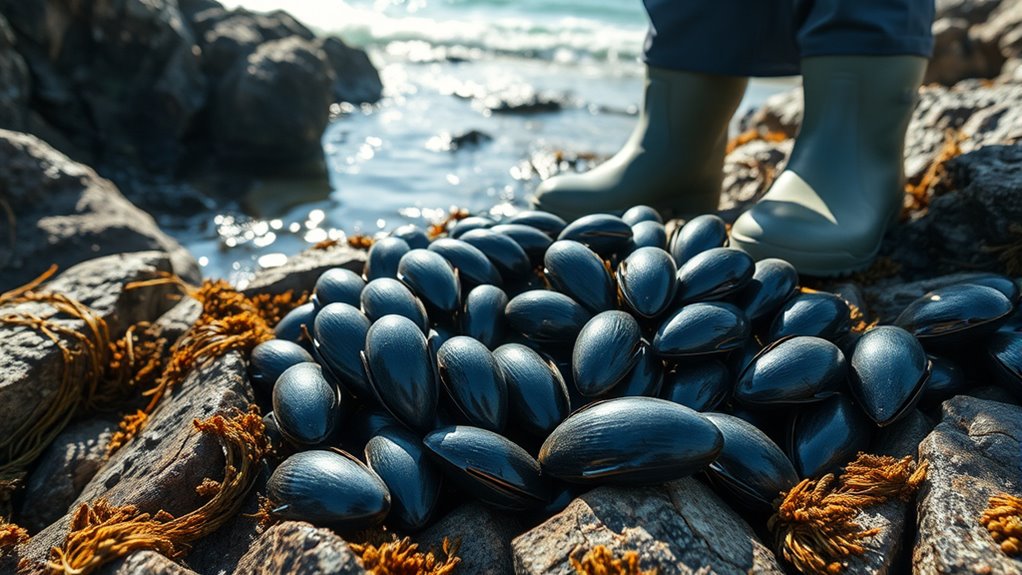
Before you begin gathering mussels, it’s wise to scout for clean, unpolluted waters. Avoid areas near industrial discharges, sewage outlets, or busy marinas, as these can contaminate the shellfish. When you find a suitable site, look for healthy, plump mussels attached to rocks or other hard surfaces. Use a sturdy knife or your hands to gently pry them loose, being careful not to damage their shells or disturb nearby populations unnecessarily. Remember that conservation is key; only harvest what you need, leaving enough behind for the ecosystem to thrive.
Frequently Asked Questions
Are Mussels Safe to Eat Raw After Foraging?
Eating raw mussels isn’t safe due to potential mussel toxicity and your risk of shellfish allergies. Raw mussels can carry harmful bacteria and toxins that cause illness. Always cook mussels thoroughly to reduce these risks and verify they’re safe to eat. If you have shellfish allergies, avoid eating mussels altogether, raw or cooked. Properly preparing mussels protects you from health issues and ensures a safe, enjoyable seafood experience.
How Do I Identify Mussel Harvesting Season Restrictions?
You need to check local regulations to identify mussel harvesting season restrictions. Look for signs of seasonal closures and obtain any required harvesting permits from your state or local agency. These permits often specify open harvesting periods and areas. Always stay updated on seasonal closures, which protect mussel populations. By following these rules, you guarantee you’re harvesting legally and help conserve the environment for future foraging.
What Gear Is Best for Collecting Mussels Sustainably?
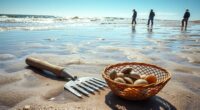
Imagine a delicate balance where your mussel gear makes a difference. Use hand tongs or a rake designed for sustainable harvesting—these tools minimize damage to the ecosystem. Avoid heavy gear or dredges, which can harm seabeds. By choosing lightweight, selective mussel gear, you safeguard marine life and ensure future harvests. Your responsible approach supports healthy waters and a thriving mussel population for years to come.
Can I Forage Mussels in Protected or Private Areas?
You can forage mussels on private property only if you have permission from the owner. In protected zones, it’s typically illegal to harvest mussels without proper authorization because these areas aim to conserve marine life. Always check local regulations before foraging. Respect private property and protected zones to avoid fines or ecological harm. Ensuring you’re compliant helps preserve mussel populations and ecosystems for future foraging adventures.
How Do I Dispose of Excess or Unsafe Mussels Properly?
If you find mussels that seem unsafe or excess, don’t ignore them—dispose of them properly to prevent pollution effects. Place them in sealed plastic bags and discard them in designated waste containers, avoiding contamination of aquaculture practices and natural waters. Leaving unsafe mussels unaddressed risks spreading contamination, possibly harming ecosystems. Stay vigilant, act responsibly, and protect both the environment and future harvests by handling unsafe mussels with care.
Conclusion
Now that you know the ropes, foraging mussels becomes a treasure hunt worth your effort. Think of the shoreline as a vast, hidden garden waiting to be explored—just make sure you’re harvesting only what’s safe and legal. Respect the rules, identify the right spots, and always prioritize safety. With these steps, you’ll be harvesting nature’s gems responsibly, turning your foraging adventure into a rewarding journey of discovery, like uncovering a secret treasure chest along the coast.
Fall yard work Picks
leaf blowers
As an affiliate, we earn on qualifying purchases.