
After storms, coastal foraging presents both risks and rewards. Storms shift debris, exposing new tide pools and uncovering marine life, offering rich foraging spots. However, debris like broken glass, jagged plastics, and strong currents can pose hazards. Always stay aware of changing tide patterns and watch out for sharp objects or unstable footing. If you stay cautious and observe the environment carefully, you’ll find great opportunities to gather food while keeping safe. Keep exploring to learn more.
Key Takeaways
- Storms redistribute debris and marine life, creating new foraging opportunities on the shoreline.
- Post-storm tide patterns fluctuate, exposing intertidal zones rich in prey like mollusks and crustaceans.
- Displaced marine creatures gather in shallow waters, offering accessible foraging spots.
- Hazards include sharp debris, strong currents, and unpredictable water surges that pose safety risks.
- Caution is essential when exploring storm-affected shores due to changing environments and potential hazards.
Have you ever wondered how storms can temporarily transform coastal ecosystems and create new foraging opportunities? When a storm rolls through, it stirs up the shoreline, shifting sand, uprooting plants, and redistributing debris along the coast. These changes can profoundly impact the local environment, especially in terms of marine debris and tide patterns. As the storm’s winds and waves subside, the shoreline often becomes a bustling hub of activity, drawing in an array of marine life and offering fresh foraging prospects. However, it’s vital to recognize both the potential rewards and hazards that come with these post-storm conditions.
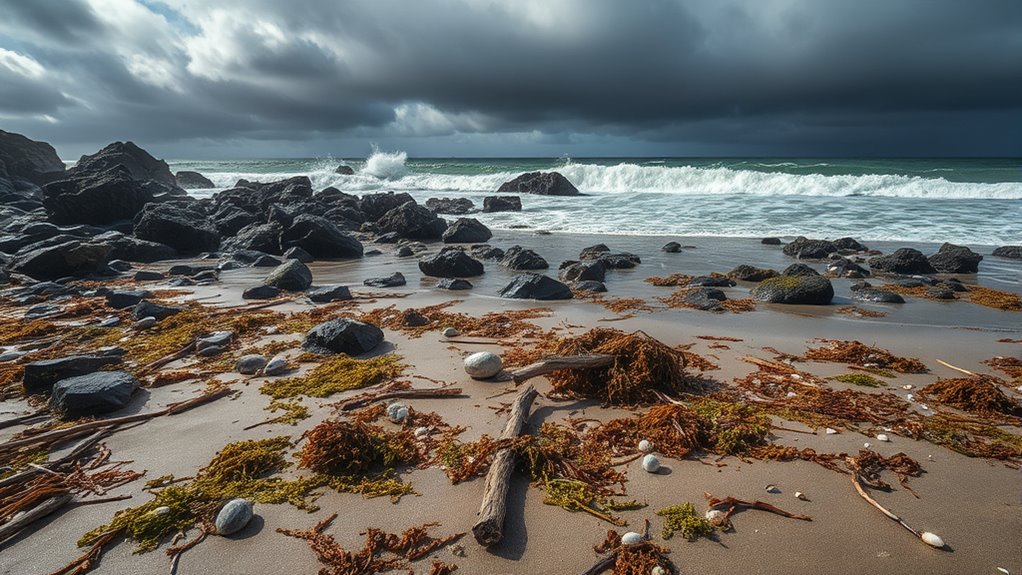
One of the most immediate effects of a storm is the deposition of marine debris on the beach and shallow waters. Debris like driftwood, plastic, shells, and seaweed gets displaced by powerful waves and currents. For foragers like you, this debris can serve as a treasure trove. Marine debris can attract small invertebrates and serve as hiding spots for crabs, mollusks, and other prey species. As these creatures gather around debris, they become easier targets for foraging. Plus, the debris can act as a temporary barrier, creating microhabitats that support different species than those found before the storm. The accumulation and redistribution of marine debris also influence tide patterns, as the debris can alter water flow and wave action along the shoreline. These changing tide patterns can either expose or submerge foraging grounds, influencing when and where you should look for food.
Storm debris attracts prey and alters tide patterns, creating new foraging opportunities and microhabitats along the shoreline.
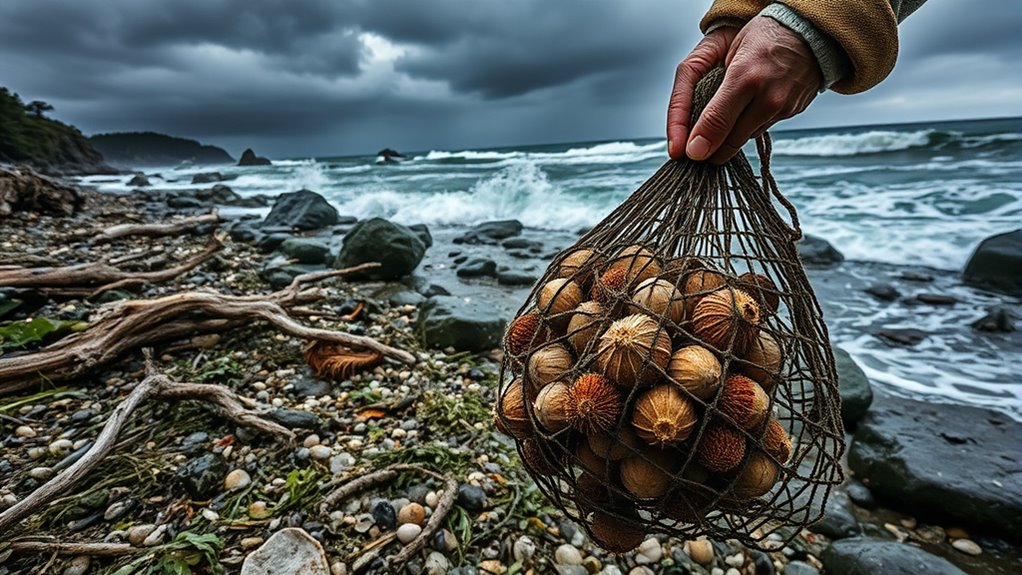
Post-storm tide patterns are often unpredictable but can be advantageous. As the storm’s energy dissipates, tides may fluctuate more dramatically, exposing new intertidal zones or uncovering hidden tide pools. These newly accessible areas can be rich with marine life that has been displaced or brought into shallower waters by the storm’s turbulence. For example, crustaceans, small fish, and mollusks often congregate in these zones, providing abundant opportunities for gathering fresh catches. Keep an eye on the changing water levels and wave actions, as they can signal the best moments to forage. During low tide, exposed rocks and tide pools are prime spots to find clams, sea urchins, and other shellfish. High tide, on the other hand, may bring in larger predators or flush out hidden prey, making them more accessible.
While the aftermath of storms can open up exciting foraging opportunities, it’s vital to stay alert to hazards. Marine debris can sometimes include sharp, dangerous objects like broken glass or jagged plastics. Unpredictable tide patterns can also cause strong currents and sudden surges, posing risks of being swept off balance or caught in dangerous areas. By understanding how storms influence debris distribution and tide behavior, you can better navigate these dynamic environments. Approach with caution, look for the signs of changing water levels, and always consider safety first. With awareness and respect for the environment, you’ll maximize your chances of a successful and responsible foraging experience after a storm.
Frequently Asked Questions
What Safety Gear Is Recommended for Storm Foraging?
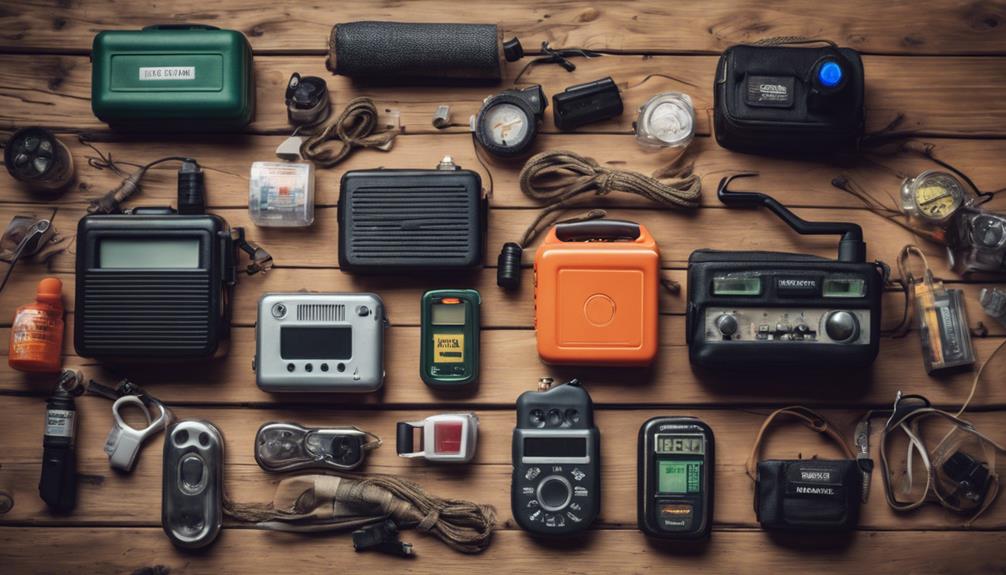
You should wear proper personal protective equipment like sturdy gloves, waterproof boots, and a helmet to stay safe during storm foraging. Carry emergency communication devices such as a waterproof phone or a two-way radio to stay connected. Additionally, bring a high-visibility vest to be seen easily. These safety gear essentials help guard you from hazards and ensure you can call for help if needed while exploring storm-affected coastal areas.
How Do Storm Debris Affect Edible Marine Life?
Storm debris can considerably impact edible marine life by introducing pollution risks and causing habitat disruption. You might find that debris contaminated with chemicals or pollutants has settled on or near marine creatures, increasing health hazards. The disruption also damages breeding grounds and feeding areas, making foraging riskier. Always be cautious, thoroughly clean your harvest, and avoid consuming marine life from heavily affected areas to guarantee safety.
Are There Legal Restrictions on Foraging After Storms?
You might think there are no restrictions when foraging after storms, but regulatory compliance and fishing regulations still apply. Always check local laws before harvesting marine life, because many areas have seasonal closures or limits to protect ecosystems. Ignoring these rules can lead to fines or environmental harm. Stay informed, respect regulations, and enjoy foraging responsibly, even after a storm, to guarantee your activities remain legal and eco-friendly.
What Signs Indicate Dangerous or Contaminated Waters Post-Storm?
You should watch for water contamination signs like foul odors, discoloration, or visible debris, as these hazard indicators suggest unsafe conditions. Avoid waters with foam, oily sheens, or dead fish floating, which also signal potential contamination. Post-storm, these signs can indicate dangerous or contaminated waters, so always err on the side of caution. If you’re uncertain, test the water or consult local authorities before foraging to stay safe.
How Can I Identify New Foraging Spots After a Storm?
Finding new foraging spots after a storm is like chasing hidden treasures. Look for areas where storm residue has washed up or settled, such as debris or unusual seaweed. Pay attention to tidal changes that reveal new rocky patches or sandbars. These shifts often expose edible shellfish or seaweed not visible before. Always check local advisories to guarantee safety, and trust your instincts when exploring these dynamic coastal environments.
Conclusion
After storms, coastal foraging offers both risks and rewards. While you might find fresh seafood, be aware that nearly 60% of foragers encounter unexpected hazards like sharp debris or unstable grounds. Staying cautious and prepared lets you safely enjoy these opportunities. Remember, respecting nature’s power not only protects you but also preserves these fragile ecosystems for future foragers. Embrace the bounty, but always prioritize safety and sustainability in your post-storm adventures.