
If you ignore beach metal detecting etiquette, you risk destroying the environment, disturbing other visitors, or even getting banned from spots. Leave trash behind, dig large holes, or make too much noise, and you might face fines or prohibitions. Respect natural habitats, keep a safe distance from others, and follow local rules to stay in good standing. Want to find out how to enjoy your hobby responsibly? Keep going for more tips.
Key Takeaways
- Ignoring local regulations or detecting in restricted protected areas can lead to fines or confiscation.
- Leaving trash behind or damaging natural features shows disrespect and can result in being shut down.
- Setting up equipment too close to others or making excessive noise disrupts fellow beachgoers and violates etiquette.
- Digging large or deep holes without filling them in risks safety hazards and breaches responsible detecting practices.
- Using improper tools or careless handling of equipment causes environmental damage and can lead to losing access.

Beach metal detecting can be a fun and rewarding hobby, but it’s important to follow proper etiquette to guarantee everyone enjoys the shoreline responsibly. When you’re out treasure hunting, respecting the environment and fellow beachgoers isn’t just considerate—it’s essential for maintaining access and preserving the beauty of the area. Beach conservation starts with your actions, making sure the beach remains a safe and clean place for everyone to enjoy.
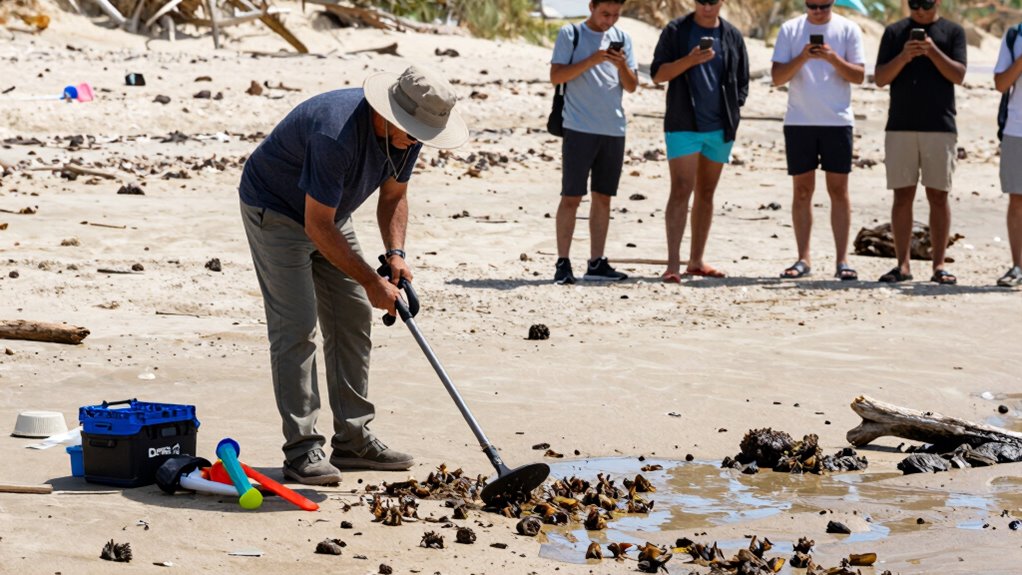
One of the biggest mistakes you can make is leaving behind trash or disturbing natural features. Always carry a trash bag and pick up any debris you come across, even if it’s not yours. Not only does this support beach conservation, but it also shows respect for others who want to enjoy a pristine shoreline. Avoid digging large holes that could trap or injure other beach visitors. When you dig, fill in your holes completely, leaving the area just as you found it. This prevents accidents and keeps the beach safe for everyone.
Always remove trash and fill in holes to protect the beach and fellow visitors.
Another key aspect is understanding where you’re allowed to metal detect. Many beaches have rules about where and when you can search for treasure, especially in protected areas or during nesting seasons for local wildlife. Ignoring these rules can lead to losing access to popular spots or even fines. Always check with local authorities or signage before you start hunting. Respecting these guidelines demonstrates good beach etiquette and helps ensure your hobby stays sustainable and enjoyable for future treasure hunters.
Respect for other beachgoers is equally important. If you find a good spot, don’t set up right on top of someone else’s space—it’s courteous to give others room to relax and enjoy the beach. Keep noise levels down and avoid disruptive behavior, especially during early mornings or late evenings when others might be resting or enjoying quiet time. If you’re using headphones, make sure your detection activities don’t disturb nearby visitors.
Finally, be mindful of your equipment. Use tools that minimize damage to the environment, and always carry out whatever you bring in. Respecting the natural habitat, wildlife, and other visitors helps foster a positive environment for treasure hunting and beach conservation alike. Additionally, choosing metal detectors with high accuracy can greatly increase your success while reducing unnecessary disturbance to the environment. By following these simple rules, you’ll not only avoid getting shut down but also contribute to the preservation of the shoreline for future generations. Responsible beach metal detecting ensures everyone can enjoy the thrill of treasure hunting without compromising the beauty and safety of the beach.
Frequently Asked Questions
Can I Detect on Private Beach Property Without Permission?
You can’t detect on private beach property without permission, as trespassing is illegal. Always respect private property rights and seek the owner’s consent before metal detecting. Ignoring trespassing legality risks fines or getting banned from the area. Even if it’s a beach, private sections are off-limits unless you have explicit permission. Stay within public zones and follow local laws to enjoy your hobby without issues.
Are There Specific Times When Metal Detecting Is Prohibited on Beaches?
Timing troubles arise when you ignore beach hours and seasonal restrictions. You shouldn’t detect during designated quiet times, like early mornings or late evenings, or during busy beach hours when crowds congregate. Seasonal restrictions might ban detecting during nesting seasons or specific months. Always check local regulations and respect posted signs to prevent penalties. Staying aware of these time limits helps you enjoy your hobby without risking shutdowns or fines.
How Do I Handle Found Artifacts or Historical Items Responsibly?
When you find artifacts or historical items, handle them with care by practicing ethical recovery and artifact conservation. Avoid cleaning or removing them without proper knowledge, and always report significant finds to local authorities or archeologists. This shows respect for cultural heritage and guarantees proper preservation. By doing so, you contribute to responsible metal detecting and help protect valuable history for future generations.
What Equipment Is Considered Acceptable for Beach Metal Detecting?
Imagine wielding your treasure-hunting wand with the right tools—your proper gear makes all the difference. Acceptable equipment includes lightweight metal detectors with discrimination controls, a sturdy digging tool, and a small finds pouch. Avoid bulky or prohibited devices. By choosing proper gear, you guarantee a respectful and successful beach detecting experience, staying within boundaries and keeping the shoreline inviting for everyone.
Is There a Way to Report Illegal Metal Detecting Activities?
Yes, you can report illegal metal detecting activities by contacting local authorities or law enforcement agencies. Reporting violations helps protect the environment and guarantees everyone follows beach regulations. When you see someone breaking rules, notify the appropriate legal enforcement agencies promptly. Your quick action supports responsible beach use and preserves the area for everyone. Always provide detailed information about the location and nature of the violation to help authorities address the issue effectively.
Conclusion
Remember, following proper beach metal detecting etiquette isn’t just about avoiding trouble—it’s about respecting the environment and fellow beachgoers. Play your part, and you’ll keep the good vibes flowing and the beaches open for everyone. Don’t bite off more than you can chew or push your luck; otherwise, you might find yourself in hot water. Stay courteous, leave no trace, and enjoy the thrill of discovering treasures responsibly. After all, a little courtesy goes a long way.