TL;DR

Get garden gear delivered free with Prime
- Fast, free delivery on millions of items
- Prime Video, Amazon Music and more included
- Member-only deals all year
An Ideal Home report says mulching garden beds, borders and containers can offer benefits in cold, wet and hot weather while supporting soil health and wildlife. Experts quoted in the report recommend organic materials and suggest applying a layer about 5–7 centimetres deep, though results depend on the mulch and garden conditions.
Mulching garden beds, borders and containers can help insulate roots from frost, reduce soil erosion in heavy rain and support healthier soil, according to gardening experts quoted in an Ideal Home report. The seasonal advice sets out six potential benefits, while the degree of protection and improvement will depend on the material used and local conditions.
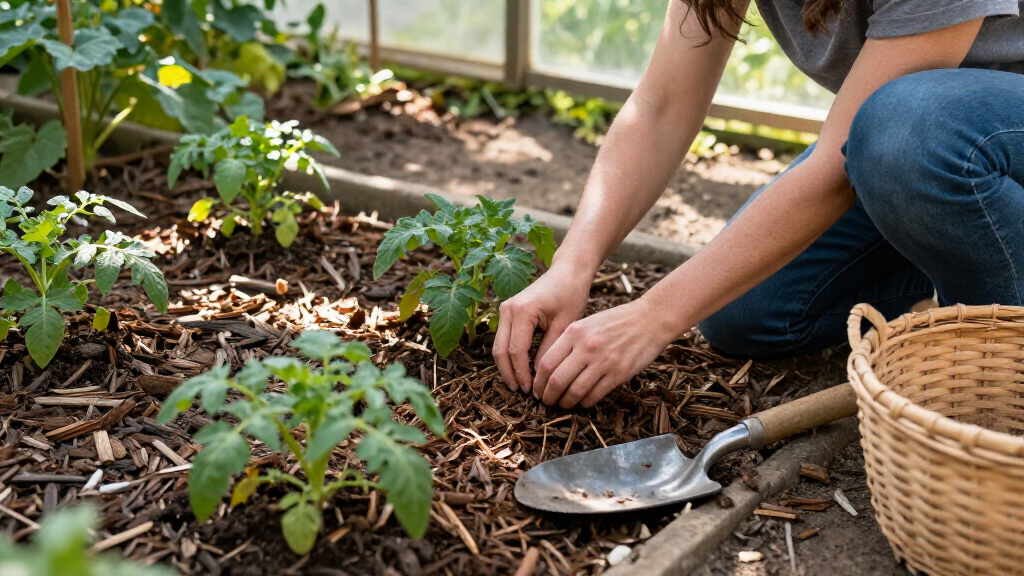
Mulch is a layer of organic matter placed over soil. For frost protection, wildlife expert James Ewens of Green Feathers says it can act as insulation. Grow-your-own author Huw Richards advises covering compost mulch with straw, leaves or grass clippings to help protect it through winter. The report does not provide trial data comparing materials or quantify how much temperatures around roots may change.
Mulch may also help limit damage from heavy rain. Landscape gardener Carl Jones of CJ Landscapes says rain can wash nutrients from soil and compact it, and recommends organic mulch to protect roots and reduce erosion. As it breaks down, mulch can add organic matter and support soil organisms. Richards recommends a layer 5–7 centimetres (2–3 inches) deep.
Other benefits described in the report include helping soil retain moisture during hot weather, potentially reducing how often plants need watering, and improving soil structure over time. Ewens says compost, leaf mould and bark chippings can also support invertebrates that provide food for birds, hedgehogs, frogs and toads. The article notes that mulch can shelter slugs and snails as well as other garden life.
Mulch Can Help Across Seasons
The advice matters to gardeners preparing beds for winter because a mulch layer may address several needs at once: root insulation, reduced erosion and soil improvement. In warmer or drier periods, moisture retention may also help plants cope with heat. These are practical potential benefits, not guarantees; the source does not quantify savings on watering, changes in harvests or protection against extreme weather.
Mulch can also contribute to a garden’s food web. By supporting soil organisms and invertebrates, it may make foraging habitat available to birds and other wildlife. That does not mean every mulch suits every garden or that pests will disappear: the report specifically acknowledges that mulch can provide shelter for slugs and snails.
Popular right now

Shark Rocket Ultra-Light Corded Stick Vacuum, HV301, Gray/Orange

Shark PowerPro Reveal Plus Cordless Vacuum Cleaner, Charcoal, IZ376H

Shark Clean & Empty Cordless Stick Vacuum with Auto-Empty System, BU3521
As an affiliate, we earn on qualifying purchases.
Six Benefits in Seasonal Advice
The Ideal Home article frames mulching as a task for November and describes benefits in both cold and warm conditions. Its six themes are frost protection, protection from heavy rain, soil enrichment, moisture retention, improved soil structure and wildlife support. It discusses organic materials such as compost, leaf mould, bark, straw, leaves and grass clippings.
The report also includes product suggestions and prices, but those are shopping details rather than evidence that one product performs better than another. Its recommendations rely on comments from named gardening and landscaping experts; the supplied material does not include independent experiments, citations to research papers or a comparison of different mulch types.
“A layer of mulch acts like a blanket to protect the soil from frost.”
— James Ewens, wildlife expert at Green Feathers
Results Depend on Garden Conditions
The source does not establish how much mulch reduces frost damage, erosion or watering needs, or how quickly soil structure changes. It also does not specify a single best material for every plant, soil type or climate. The suggested depth is Richards’ general recommendation, not a universal rule shown to suit all gardens.
The report says mulch may shelter slugs and snails while also supporting predators that eat them, but it provides no evidence that wildlife will keep those populations in balance in every garden. Its claims are expert guidance reported by Ideal Home, rather than results from a controlled study.
Choose Materials for the Bed
Gardeners considering the task can follow the report’s seasonal guidance by choosing an organic mulch suited to the bed and applying it at the recommended depth of 5–7 centimetres, while keeping in mind that conditions and plant needs vary. Where compost is used for winter protection, Richards recommends adding straw, leaves or grass clippings as a cover.
The source sets out no scheduled follow-up study or official update. The practical next step is to monitor how the garden responds through winter and warmer weather, including soil moisture, plant condition and signs of pests.
Key Questions
Is mulching worth doing before winter?
The Ideal Home report says mulch may help insulate soil from frost and protect roots, making it a useful seasonal task. The amount of protection will vary with the material, plants and local weather.
How deep should a mulch layer be?
Grow-your-own author Huw Richards recommends 5–7 centimetres (2–3 inches). The report presents this as general advice; gardeners may need to account for the plants and conditions in their beds.
Can mulch reduce watering?
Organic mulch can help soil retain moisture for longer, according to the report, which may reduce how often plants need watering. It does not give a measured reduction or guarantee that watering will not be needed.
Does mulch attract slugs?
Mulch can provide shelter for slugs and snails, the report says. It can also support wildlife that feeds on invertebrates, but the source does not claim this will control slug numbers in every garden.
Which materials does the report recommend?
Materials discussed include compost, leaf mould, bark chippings, straw, leaves and grass clippings. Richards advises covering compost mulch with straw, leaves or grass clippings for winter protection.
Source: idealhome.co.uk