TL;DR
Wildlife experts are warning that stretchy artificial spider-web decorations hung outdoors can trap birds, bats and small mammals, including hedgehogs. They recommend using solid decorations outside, keeping fake webbing indoors and contacting a wildlife rescue if an animal is caught.
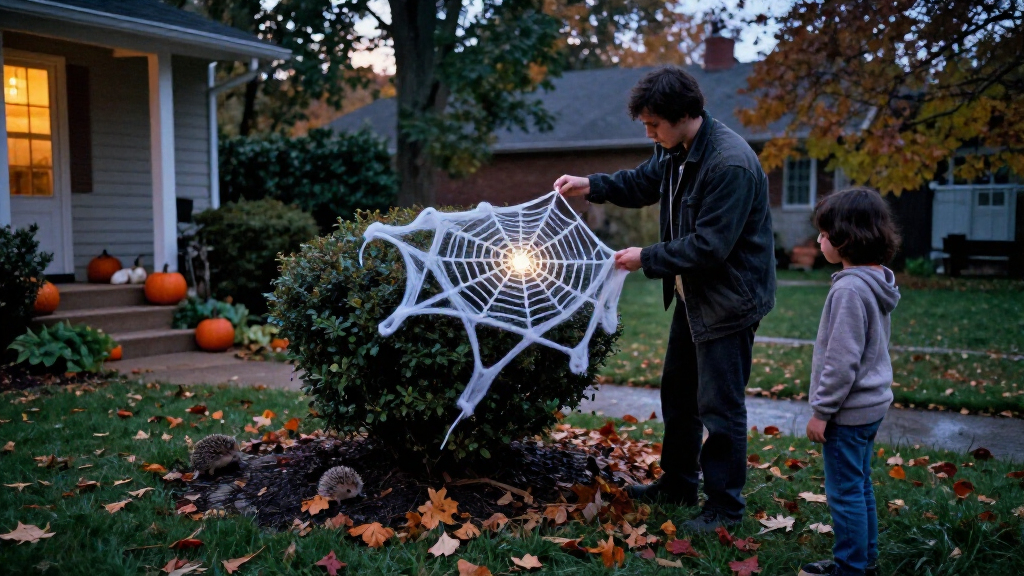
Wildlife experts are urging people to avoid hanging stretchy fake spider webs outdoors this Halloween, warning that birds, bats and small mammals such as hedgehogs can become tangled in the synthetic fibres. The warning, reported by Ideal Home, focuses especially on cotton-style webbing and larger netted decorations that can catch animals as they move through gardens and hedges.

Get garden gear delivered free with Prime
- Fast, free delivery on millions of items
- Prime Video, Amazon Music and more included
- Member-only deals all year
Lucy Taylor, a wildlife expert from Vine House Farm, told Ideal Home that artificial web decorations can be made from tough, stretchy plastic that does not break apart easily when a larger animal becomes caught. Mosh Latifi, co-owner of EcoCare Pest Management, said an animal struggling to get free may cause the strands to tighten around a wing, foot or leg. The source names birds, bats and hedgehogs among the wildlife at risk.
The experts also warn that animals may swallow pieces of synthetic webbing or mesh. Taylor said plastic material could pose a choking or internal blockage hazard if picked up by wildlife, and that birds may mistake artificial webbing for natural spider silk when gathering nesting material. These are expert warnings; the report does not provide figures on how many animals are affected or independently quantify the risk.
Latifi distinguished between spray-on webbing and stretchy cotton-style or netted decorations. He said dried spray-on products present less of a tangling risk, but may still coat small insects or remain in shrubs. The larger webbing is the greater concern, particularly if it has openings an animal could put its head, wing or leg through, is draped over a hedge, or is left outside for an extended period.
How Outdoor Webbing Can Harm Wildlife
The warning matters because decorations placed on hedges, shrubs and other outdoor routes can create a hazard where wildlife is already moving or feeding. Unlike a solid ornament, loose, stretchy mesh can catch animals and tighten when they struggle. That creates a possible risk of entanglement and injury, while swallowed material may cause further harm.
The advice does not mean Halloween decorating outdoors must stop. The experts recommend choosing solid decorations without loose fibres, strings or ribbons, and using artificial webbing indoors, away from wildlife. Taylor also advises bringing decorative pumpkins inside at night, saying animals that eat them may become unwell. The report does not specify which species are affected by pumpkin consumption or describe the conditions behind that warning.
Popular right now

KitchenAid Commercial Series 8-Quart Bowl-Lift Stand Mixer, White

KitchenAid Artisan Mini Tilt-Head Stand Mixer, 3.5 Quart, Aqua Sky Blue

De'Longhi Magnifica Duo Fully Automatic Espresso Machine with Milk Frother, Silver
As an affiliate, we earn on qualifying purchases.
The Decorations Behind the Warning
Ideal Home’s report describes two commonly used types of artificial web decoration: spray-on webbing and larger, stretchy cotton-style or netted products. It says wildlife warnings about spray-on products have appeared in previous years, while the larger plastic webbing has become more popular this season. The report offers no sales data or other evidence measuring that increase.
The key distinction in the experts’ advice is the material and how it is used. Taylor said real spider webs can break apart more readily under the weight of larger animals, while synthetic decorations may hold fast. Latifi compared the larger products to garden netting: openings can trap a head, wing or leg, especially when the material is stretched across vegetation. The experts’ concern is specifically about decorations accessible to wildlife outdoors, rather than web-themed decorations kept inside.
“Wildlife can easily become caught in fake spider web decorations commonly used around Halloween, especially the artificial cobwebs.”
— Lucy Taylor, wildlife expert at Vine House Farm
What the Report Does Not Establish
The report provides expert assessments but does not include incident counts, research data or a measured comparison of risks across different decoration types. It also does not establish how widespread wildlife entanglement is during Halloween, or whether the reported increase in larger web decorations is supported by sales or usage data.
The advice about pumpkins is attributed to Taylor, but the report does not identify which animals may become unwell, how much pumpkin could pose a risk, or whether the concern applies to all pumpkin varieties and preparations. Readers should treat that statement as the expert’s warning as reported, not as a detailed veterinary assessment.
Safer Choices for Halloween Displays
The experts recommend keeping fake spider-web decorations indoors and choosing solid outdoor ornaments that do not use plastic fibres, ropes, ribbons or strings. Anyone who has already put webbing outside can remove it to reduce the chance of an animal becoming caught. The source does not announce any formal guidance or enforcement action; the next step it describes is a change in household decorating choices.
If an animal is found tangled, Taylor advises contacting a local wildlife rescue or organisation, such as the RSPCA, for guidance before trying to free it. If a rescue service advises a person to help, Latifi says to keep calm, avoid pulling the strands, wear thick gloves and use small blunt-ended scissors carefully. He also advises placing an animal that cannot be freed safely or appears injured in a ventilated box in a quiet place while contacting a rescue service. The article stresses that these steps should follow professional advice, since an animal may have injuries that are not immediately visible.
Key Questions
Which Halloween decorations are wildlife experts warning against?
The warning focuses on stretchy cotton-style fake spider webs and larger netted web decorations hung outdoors, particularly over hedges or shrubs.
Which animals could be affected?
The report names birds, bats and hedgehogs, and also refers to small mammals and insects as potentially exposed to different risks from the decorations.
What should I do if I find an animal caught in fake webbing?
Contact a local wildlife rescue or organisation, such as the RSPCA, before attempting to handle or release the animal. The experts warn that injuries may not be obvious.
What can I use outside instead?
The experts recommend solid decorations without plastic webbing, loose fibres, ropes, ribbons or string. They suggest keeping fake spider webs indoors.
Does the report quantify how often animals are trapped?
No. It provides warnings from two wildlife and pest-management experts but gives no incident totals or measured risk comparison.
Source: rss