TL;DR

Get garden gear delivered free with Prime
- Fast, free delivery on millions of items
- Prime Video, Amazon Music and more included
- Member-only deals all year
A Gardening Know How contributor describes a fall trench-composting method that buries kitchen scraps and a few household ingredients directly in empty garden beds. The approach needs no compost bin, but the source presents it as a personal soil-improvement practice, not a measured or guaranteed formula.
A Gardening Know How contributor has described a fall trench-composting method that turns selected kitchen scraps into soil organic matter by burying them in empty garden beds before winter. The approach uses no compost bin, but the contributor frames the ingredients as a flexible personal mix, not a scientifically tested recipe or a guarantee of improved yields.
The six ingredients are fruit and vegetable scraps, used coffee grounds, crushed eggshells, plain rolled oats, cinnamon and flat beer. The contributor says the produce scraps make up most of the mixture, while the other ingredients are optional additions. The report advises leaving out anything unavailable rather than substituting other materials.
For a batch, the contributor uses about one cup of cooled coffee grounds, shells from a couple of eggs that have been rinsed, dried and finely crushed, roughly a quarter cup of oats, about half a teaspoon of cinnamon and, if available, around half a cup of flat beer. The contributor says beer is used only when it is already leftover and does not claim it makes a measurable difference. The reported amounts are examples, not a strict formula.
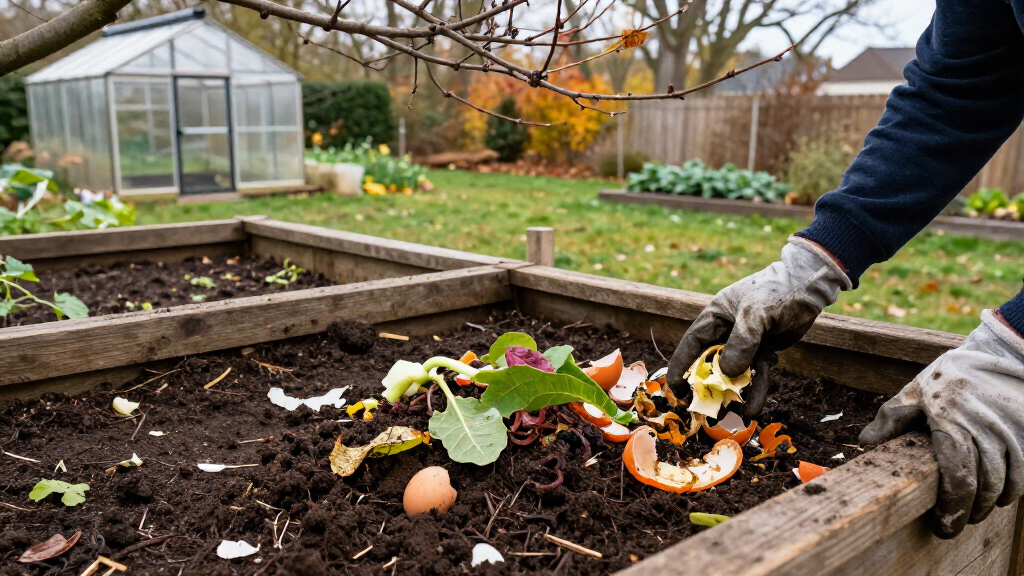
The method is to chop larger scraps into pieces around one inch long, dig a trench about 12 to 18 inches deep in an empty bed, mix in a modest amount of scraps and soil, then cover the material fully. The report suggests about one gallon of scraps for a four-by-four-foot bed and at least six to eight inches of soil over the buried waste. The contributor says to avoid beds intended for immediate planting and areas close to established plants, where digging could disturb roots.
A Bin-Free Option for Fall Beds
The method offers gardeners a way to handle some food waste at home while adding organic material directly to unused beds. Instead of maintaining a separate compost pile or bin, gardeners bury small batches in place and leave them to break down over winter. That may suit people with limited space or those preparing empty raised beds for a later planting season.
The report does not provide trial data comparing this method with conventional composting, nor does it quantify changes in soil quality or plant growth. Its practical value is therefore best understood as a low-cost reuse practice, not a proven soil treatment. Results can depend on the amount and type of material, soil conditions, temperature and the time allowed for decomposition.
Popular right now

De'Longhi Rivelia Automatic Espresso Machine with Grinder and Milk Frother, Beige

KitchenAid Artisan 5-Qt Tilt Head Stand Mixer, Milkshake

KitchenAid Artisan 5-Quart Tilt-Head Stand Mixer, Blue Velvet
As an affiliate, we earn on qualifying purchases.
How the Trench Method Works
The contributor says they collect suitable scraps in a kitchen caddy and empty it into shallow batches in different spots in the garden every few days, continuing until the ground freezes. The material is buried in a trench rather than left exposed, with soil placed over it to reduce the chance of attracting animals. The scraps are left in the bed over winter, where they are expected to decompose before spring planting.
The source also recommends mixing in dry material such as shredded leaves when available, because the contributor says kitchen scraps are moist and dry leaves can help keep them from clumping. A small amount of fresh grass clippings is another occasional addition. These are described as supplementary materials, not part of the stated six-ingredient list. The contributor excludes food waste coated in oil, sauce or dressing, as well as meat, fish, bones and dairy.
Several proposed benefits are presented cautiously. The report says eggshells contain calcium but break down slowly, and the contributor does not treat them as a quick calcium source. Cinnamon is included because gardeners commonly promote it for fungal, rooting or pest-related uses, but the contributor cautions that a small buried amount should not be relied on to solve an existing problem. The report likewise describes oats’ proposed effects on roots and soil fungi as beliefs among gardeners rather than demonstrated outcomes of this recipe.
“I don’t know whether it makes a measurable difference to my soil.”
— Gardening Know How contributor
Results Depend on Bed Conditions
The report does not specify how quickly the buried ingredients break down in different climates or soils, or how much they change soil nutrient levels. It also provides no controlled comparison with compost-bin methods and no measured harvest or plant-growth results. Claims about cinnamon, oats, beer and eggshells should not be read as proof that the mix prevents disease, deters pests, stimulates roots or supplies nutrients on a predictable schedule.
The contributor does not set a universal amount for every bed, describing the one-gallon-per-four-by-four-foot guide as approximate. The source also does not establish how much dry material is needed to balance a particular batch. Gardeners should treat the approach as a personal practice, keep scraps buried and modest in volume, and avoid using it where they plan to plant immediately.
Allow Winter Decomposition
The contributor’s next step is to keep adding small batches to empty beds until the ground freezes, then leave the covered scraps in place over winter. The report offers no scheduled follow-up test or spring assessment, so whether the mix has fully decomposed by planting time will depend on local conditions and the materials used. Gardeners considering the method should check the bed before planting and avoid assuming that every ingredient will have broken down at the same rate.
Key Questions
Does this method require a compost bin?
No. The scraps are buried directly in trenches in empty garden beds, rather than processed in a separate bin.
What ingredients are in the six-part mix?
The contributor lists fruit and vegetable scraps, used coffee grounds, crushed eggshells, rolled oats, cinnamon and optional leftover flat beer. The source presents the amounts as flexible examples, not a fixed formula.
How deep should the scraps be buried?
The report suggests a trench about 12 to 18 inches deep, with at least six to eight inches of soil covering the waste. It advises keeping the material fully covered to reduce the chance of attracting animals.
Can the mix be used in a bed that will be planted right away?
The contributor advises against burying scraps in beds intended for immediate planting. The method is described for empty beds, with time for the material to break down over winter.
Is the recipe proven to improve plant growth?
The report gives no controlled results or measurements of soil improvement or plant growth. It describes the method as a personal way to return food waste to the soil, so its effects are not established by the source.
Source: rss