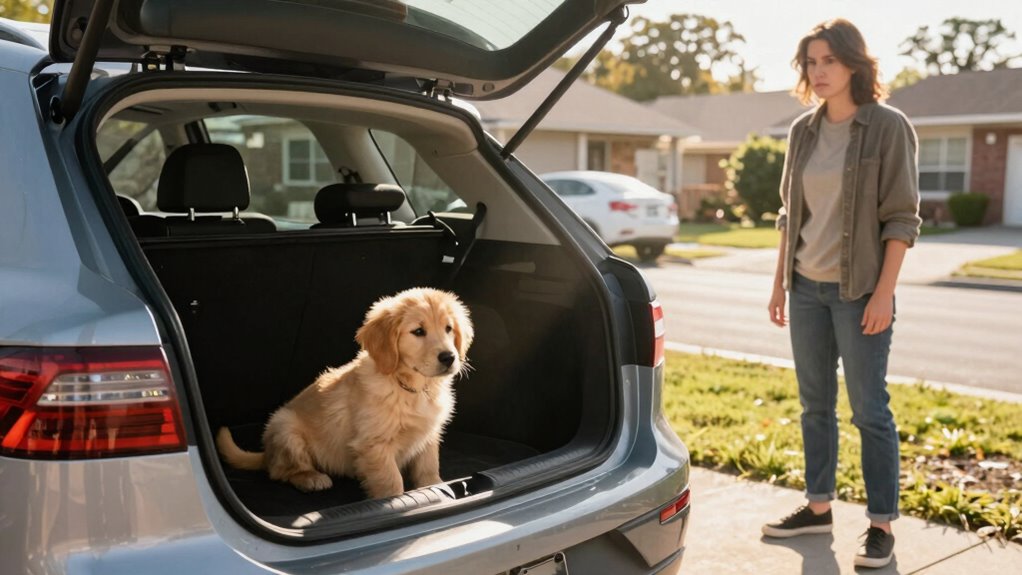

Leaving your dog in a hot vehicle can be deadly within minutes, as temperatures spike rapidly and create a greenhouse effect. Even with cracked windows or partial sun, heat builds up quickly, making panting and cooling ineffective. If you see a dog trapped inside, act fast—recognize signs of heatstroke like excessive panting or weakness. For essential safety tips and emergency steps, keep going to guarantee your four-legged friend’s safety in such situations.
Key Takeaways
- Car temperatures rise rapidly, reaching dangerous levels within minutes, even in partial sun or shaded areas.
- Dogs cool mainly through panting, which becomes ineffective as heat increases, risking heatstroke.
- Early signs include excessive panting, drooling, weakness, and disorientation; quick action is critical.
- Breaking into a hot car to rescue a dog is sometimes necessary but should be documented and followed by authorities.
- Never leave dogs unattended in vehicles; prevention is the best way to avoid heat-related emergencies.
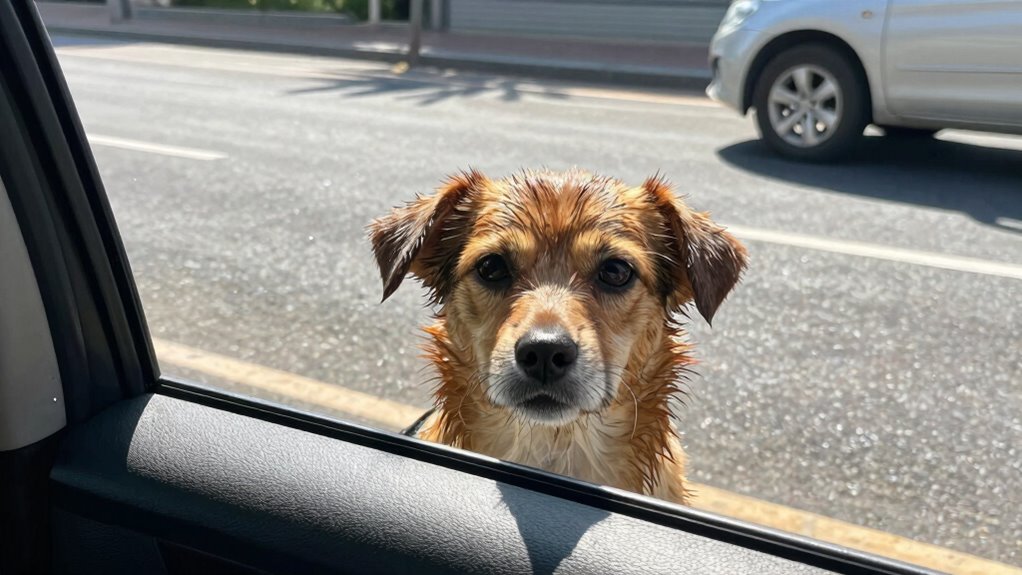
On hot days, leaving your dog in a parked vehicle can quickly turn deadly, even if you think you’ll only be gone for a minute. The temperature inside a car rises rapidly, often reaching dangerous levels within minutes. What might seem like a quick errand can become a life-threatening situation for your pet without you realizing it. The inside of a vehicle acts like a greenhouse, trapping heat and making it difficult for your dog to cool down. Even if it’s only partially sunny or the windows are cracked, the temperature can still escalate to a dangerous point. Dogs don’t sweat the way humans do; they primarily cool themselves through panting, which becomes ineffective as the heat climbs. As a result, heatstroke can develop swiftly, leading to irreversible organ damage or death. Understanding the risks of heat buildup can help pet owners make more informed decisions about outdoor safety.
Knowing what to do in these situations requires emergency preparedness. It’s essential to recognize the signs of heat exhaustion or heatstroke, such as excessive panting, drooling, weakness, vomiting, or unresponsiveness. If you suspect your dog is in distress, acting quickly can save their life. Emergency preparedness involves having a plan in place—knowing where the nearest veterinary clinic is and how to reach it immediately. Keep a dog-specific emergency kit in your car or at home, including water, a towel, and a first-aid guide. If you find a dog in a hot car, your first step should be to try to locate the owner. If you can’t, you might need to take action to free the dog, but only if it’s safe to do so. Breaking a window might be necessary, but be sure to document the incident and contact authorities immediately afterward. Remember, proper emergency response can significantly impact the outcome for an overheated dog.
Veterinary advice emphasizes prevention over cure. Never leave your dog alone in a vehicle, regardless of the weather forecast. Regularly educate yourself on the dangers of heatstroke and the importance of emergency preparedness. It’s also worth noting that urban heat effects can cause temperatures inside vehicles to rise even faster in city environments. If you notice your dog showing signs of overheating, move them to a cooler area, offer water, and contact your veterinarian for guidance. Many veterinarians recommend carrying a portable fan or misting spray in your vehicle during the summer and ensuring your dog has access to shade and plenty of water when outdoors. Remember, your quick response and awareness can be the difference between life and death for your furry friend. Ultimately, the best way to protect your dog from the dangers of hot vehicles is to prevent them from being left unattended in a car at all.
As an affiliate, we earn on qualifying purchases.
Frequently Asked Questions
How Quickly Can a Dog Suffer Heat Stroke in a Car?
You might not realize how fast a dog can suffer heat stroke in a car—sometimes within just 10 minutes. As vehicle temperatures climb quickly, your dog’s body struggles to cool down, risking serious health issues or death. To prevent this, always leave your dog at home or guarantee proper dog cooling measures if you need to bring them along. Never underestimate how quickly the heat builds inside a vehicle.
Are There Legal Penalties for Leaving a Dog in a Hot Vehicle?
You might think leaving a dog in a hot car is harmless, but the law disagrees. Legal consequences can include hefty fines and even jail time. Enforcement measures are strict, with many areas equipped with patrols ready to intervene. Ironically, what’s meant to protect your pet from harm can quickly lead to penalties if you neglect their safety. Always prioritize your dog’s well-being—it’s the law and the right thing to do.
What Signs Indicate a Dog Is Overheating in a Car?
You’ll notice signs of overheating in a dog, like excessive panting, drooling, weakness, or vomiting, indicating urgent dog safety concerns. If you see these, act quickly to cool your pet, as vehicle maintenance and awareness of temperature risks are essential. Never leave a dog in a hot vehicle, as the risk of heatstroke escalates rapidly. Recognizing these signs helps prevent tragedy and keeps your dog safe.
How Can I Safely Help a Dog Trapped in a Hot Car?
If you see a dog trapped in a hot car, act quickly. Call emergency services first, then try to cool the dog with a dog cooling towel or spray, focusing on the paws and neck. If possible, open a window or crack the door for better car ventilation. Never break windows unless you’re sure help is on the way, but prioritize the dog’s safety to prevent heatstroke.
What Are the Best Ways to Prevent Accidental Heat Exposure?
To prevent accidental heat exposure, prioritize pet safety by always checking that your car is well-ventilated before bringing your dog inside. Never leave your pet alone in a vehicle, especially during hot weather. Keep windows slightly open for better car ventilation, but make certain your dog can’t escape or get trapped. Regularly monitor the temperature, and carry water to keep your pet hydrated, reducing the risk of heat-related issues.
dog cooling vest for hot weather
As an affiliate, we earn on qualifying purchases.
As an affiliate, we earn on qualifying purchases.
Conclusion
You might think your car isn’t hot enough to harm your dog, but the truth is, temperatures can rise quickly and dangerously inside a vehicle. Even if it feels cool outside, the inside can become deadly in just minutes. Don’t assume your pet is safe—always check, never leave them alone, and remember that heat builds faster than most people expect. Protect your furry friend by staying vigilant and never risking their life for a quick errand.
car window breaker tool for pet rescue
As an affiliate, we earn on qualifying purchases.
As an affiliate, we earn on qualifying purchases.
dog heatstroke treatment supplies
As an affiliate, we earn on qualifying purchases.
As an affiliate, we earn on qualifying purchases.