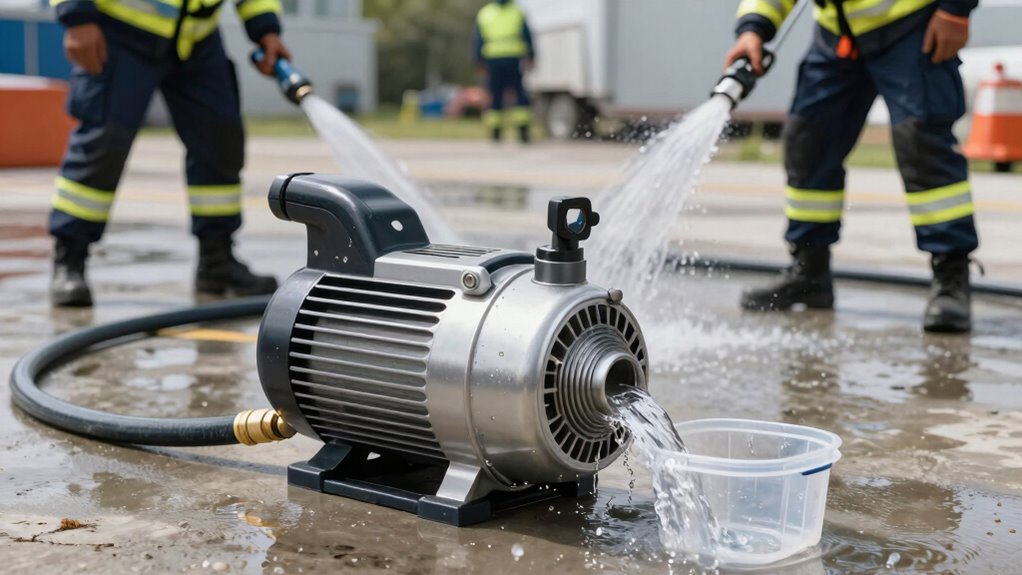
To move water quickly during emergencies, you need reliable transfer pumps that are easy to operate and maintain. Regularly check seals, hoses, and lubricate moving parts to prevent failures when seconds count. Using filters ensures water safety by removing contaminants. Choose the right pump size for your task and keep spare parts handy. With proper maintenance and filtration, your system will be prepared when urgency strikes; keep exploring to learn more tips for smooth water transfer during crises.
Key Takeaways
- Regularly maintain transfer pumps, including seals, hoses, and lubrication, to ensure reliability during emergencies.
- Select appropriate pump capacity and portability based on water transfer needs and emergency scenarios.
- Use water filtration to ensure safety and prevent contamination during emergency water transfer.
- Keep spare parts and filters accessible for quick repairs and continuous operation.
- Conduct routine system checks to enhance readiness and prevent failures when urgent water movement is required.

When an emergency strikes and water needs to be moved quickly, transfer pumps become your dependable solution. These devices are designed to handle sudden demands, whether you’re removing floodwaters, supplying water to a remote location, or managing industrial spills. To guarantee your transfer pump works effectively when you need it most, regular pump maintenance is essential. Proper upkeep includes checking seals, inspecting hoses, and lubricating moving parts, which helps prevent unexpected failures during critical moments. Well-maintained pumps operate more efficiently, reducing downtime and minimizing the risk of breakdowns when every second counts.
Regular maintenance ensures transfer pumps work efficiently during emergencies, preventing failures when every second counts.
In emergency situations, water filtration also plays a key role. Even when you’re transferring water from a contaminated source, using filtration systems helps guarantee the water’s safety. Incorporating filtration into your transfer process can eliminate harmful particles, bacteria, and chemicals, making the water suitable for consumption or reuse. Many transfer pumps are compatible with filtration attachments, allowing you to streamline operations without sacrificing water quality. In scenarios where clean water is crucial—like disaster relief or industrial cleanup—this integration becomes invaluable.
Choosing the right transfer pump involves understanding your specific needs. For large-scale water movement, you might need a high-capacity pump with robust construction. For more delicate tasks, such as moving potable water or managing water with specific filtration requirements, smaller or specialized pumps may be better. Regardless of the size, always prioritize models that are easy to maintain and operate. Look for features like accessible filters and quick-release fittings, which simplify routine maintenance and filter replacement. Additionally, understanding the importance of biodiversity in water ecosystems can help inform sustainable water management practices. Recognizing the impact of water ecosystems can guide you toward more environmentally responsible choices.
Another advantage of transfer pumps is their portability. In emergencies, you often need to set up quickly and move the equipment to different locations. Portable pumps, combined with simple maintenance routines, ensure you can keep your system running efficiently on the go. Remember, keeping spare parts and replacement filters handy can save you time when troubleshooting or performing water filtration upgrades. Incorporating water quality considerations into your maintenance routine can help ensure that the water remains safe and suitable for its intended use. Regularly checking and maintaining your equipment also supports system reliability, making sure your setup is always prepared for unexpected demands. By staying proactive with pump maintenance and filtration checks, you’ll be ready to respond swiftly and effectively whenever water needs to be moved in a hurry.
Ultimately, the key to successful emergency water movement lies in preparation. Regular maintenance keeps your transfer pumps in top shape, while integrated water filtration guarantees the quality of the water you’re handling. When you combine these practices, you guarantee your system is reliable, efficient, and ready to serve you during critical moments. Whether it’s a flood, industrial spill, or disaster response, your preparedness will make all the difference in managing water swiftly and safely.
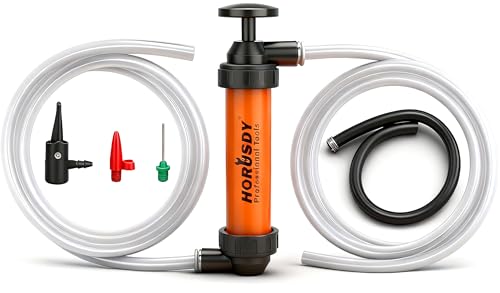
HORUSDY Multi-Use Siphon Transfer Pump Kit Hand Fuel Pumps for Gas Oil Water with Air Hose, Portable Manual Fuel Transfer Pump for Boat, Car, RV, Emergency, Lawn Mower Fluid Drainage
- Versatile Usage: Includes hoses for various fluids
- Portable Design: Compact with connectors for easy transport
- Quick & Safe Transfer: Fast, manual fluid transfer without electricity
As an affiliate, we earn on qualifying purchases.
As an affiliate, we earn on qualifying purchases.
Frequently Asked Questions
What Are the Key Differences Between Various Types of Transfer Pumps?
You’ll notice that different transfer pumps vary mainly in design, power source, and fluid compatibility. For pump maintenance, choose a pump suited to your fluid type—some handle corrosive or viscous liquids better. Electric pumps are ideal for quick, consistent transfers, while manual pumps work in emergencies or remote locations. Understanding these differences helps you select the right pump, ensuring efficiency and longevity in your water movement tasks.
How Do I Choose the Right Pump Size for My Needs?
Choosing the right pump size is like picking a straw for your giant milkshake—you want enough power without splashing everywhere. Think about your water flow needs, the distance, and the volume. Remember, a larger pump demands more maintenance and risks water contamination if neglected. So, size up carefully, guarantee proper pump maintenance, and avoid pumping problems—no one wants contaminated water turning your emergency into a disaster.
What Safety Precautions Should I Follow During Emergency Water Transfer?
During emergency water transfer, you should always wear appropriate safety gear, like gloves and goggles, to protect yourself. Be cautious of electrical hazards—make certain all electrical connections are dry and properly grounded before operating the pump. Keep a safe distance from moving parts and never handle pumps with wet hands. Regularly inspect equipment for damage, and shut off power immediately if you notice any issues. Safety precautions keep you protected and guarantee efficient water transfer.
How Long Can a Transfer Pump Operate Continuously?
A transfer pump can run continuously like a marathon runner—usually for several hours, but it depends on the model and conditions. You should monitor pump maintenance and guarantee your power sources are reliable. Many pumps have built-in safety features, but prolonged operation can cause overheating or wear. Always follow manufacturer guidelines, and give your pump regular breaks if you’re operating it for extended periods to prevent damage.
Are There Environmentally Friendly Options for Emergency Water Movement?
Yes, there are eco-friendly options for emergency water movement. You can choose eco-friendly alternatives like biodegradable transfer fluids, which break down naturally and reduce environmental impact. Additionally, look for transfer pumps designed to operate efficiently with minimal energy use, reducing emissions. Using these options helps protect the environment during emergencies, ensuring you can move water safely without harming ecosystems or wildlife.

Gas Powered Water Pump, 43cc Portable Water Transfer Pump with Bonus Air Filter Oil Bottle & Funnel High Flow for Garden Irrigation Farm Pool Draining Backyard Homeowners Outdoor Easy Start
- Power Source: Gas-powered for robust performance
- Flow Capacity: High flow for efficient water transfer
- Versatile Use: Suitable for irrigation, draining, and cleanup
As an affiliate, we earn on qualifying purchases.
As an affiliate, we earn on qualifying purchases.
Conclusion
Now that you know how transfer pumps simplify emergency water movement, you’re better prepared for unexpected situations. Did you know that portable transfer pumps can move up to 100 gallons of water per minute? That’s enough to fill a bathtub in just a minute! With the right pump, you can quickly and efficiently manage water flow, ensuring safety and peace of mind during emergencies. Stay informed, stay prepared, and keep your water moving smoothly.

Fill-Rite 400KTH1456 Diaphragm Rebuild Kit – OEM Maintenance Kit for 400B Series Chemical Transfer Pumps, Filcon Diaphragms with Gaskets, Hardware & Internal Pump Components
- OEM Rebuild Kit for 400B Pumps: Designed to restore pump performance
- Filcon Diaphragm Construction: Chemical-resistant and durable diaphragms
- Complete Repair Components: Includes diaphragms, gears, valves, gaskets, and fasteners
As an affiliate, we earn on qualifying purchases.
As an affiliate, we earn on qualifying purchases.

LifeStraw Personal Water Filter for Hiking, Travel and Emergency, Blue, 1PK
- Bacteria & Parasite Removal: Removes 99.999999% bacteria and parasites
- Microplastics Filtration: Filters microplastics down to 1 micron
- Turbidity Reduction: Reduces turbidity to 0.2 microns
As an affiliate, we earn on qualifying purchases.
As an affiliate, we earn on qualifying purchases.