Your VHF radio range increases substantially when you boost your antenna height, as higher positions reduce obstructions and allow signals to travel farther. Weather also plays a big role; clear, dry conditions improve range, while rain, fog, or storms cause signal loss. Properly aligning your antenna and adjusting for atmospheric factors can maximize performance. Keep in mind that understanding these effects can help you get the most out of your VHF radio in different conditions.
Key Takeaways
- Higher antenna placement reduces obstructions, increasing VHF radio range significantly.
- Clear weather conditions improve signal strength and extend communication distance.
- Rain, fog, and storms cause signal attenuation, decreasing VHF range.
- Atmospheric refraction and bouncing can temporarily extend or reduce signal reach.
- Proper antenna orientation and polarization optimize signal clarity regardless of weather.
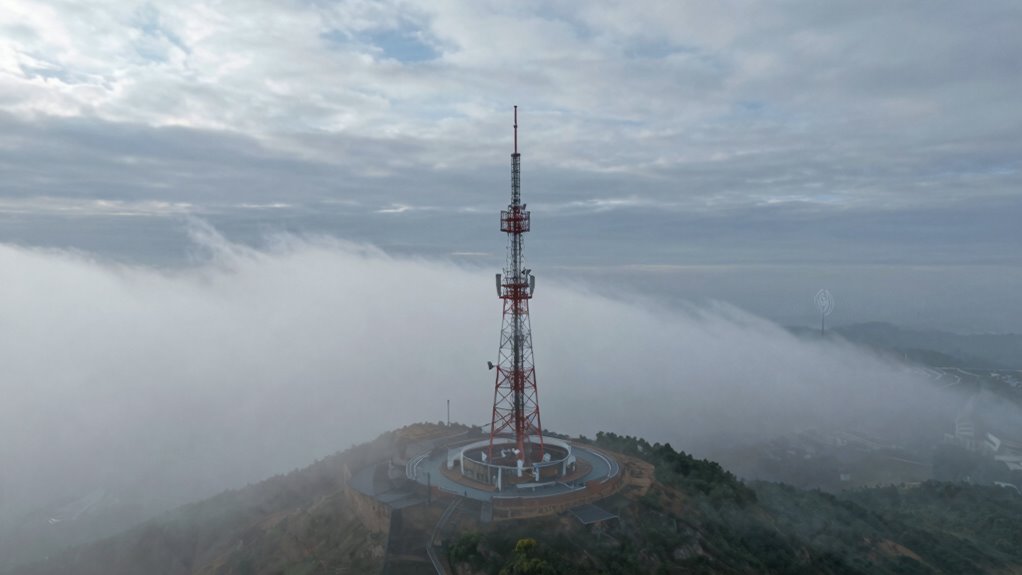
VHF radio range is considerably affected by both height and weather conditions, which can either enhance or limit your communication distance. When you’re trying to extend your radio’s reach, understanding how antenna orientation and signal polarization influence performance is essential. Proper antenna placement isn’t just about height; it’s about aligning your antenna correctly to optimize signal transmission and reception. If your antenna isn’t oriented properly, even the best weather conditions won’t maximize your range. For instance, keeping your antenna vertical ensures the polarization matches that of other radios, which is usually vertical for most handheld and fixed VHF radios. Mismatched polarization can cause signal loss, reducing clarity and range. Making sure your antenna’s polarization aligns with the transmitting station helps you maintain a stronger, clearer signal over longer distances. Additionally, antenna polarization plays a crucial role in maintaining signal integrity and maximizing range. Height plays a significant role in VHF communication because radio signals tend to travel further when you’re elevated. The higher you go, the fewer obstructions you encounter, allowing your signals to bounce over terrain and obstacles more effectively. If you’re on a boat, mount your antenna as high as possible to clear the masts and rigging; if you’re on land, climbing to a hill or rooftop can make a noticeable difference. The increased height reduces the likelihood of signal blockages caused by buildings, trees, or terrain features, effectively expanding your radio’s effective range. However, simply elevating your antenna isn’t enough if you don’t also pay attention to its orientation and polarization. Weather conditions have a dynamic impact on VHF signals. Clear, dry weather generally offers the best conditions for long-distance communication. Rain, fog, or stormy weather can cause signal attenuation, making signals weaker or more prone to interference. Humidity and atmospheric pressure fluctuations can also influence how far your signals travel. During certain weather patterns, signals might bounce or refract more effectively, increasing range temporarily, but adverse weather usually hampers communication. In these conditions, maintaining correct antenna orientation and polarization becomes even more critical. An aligned, properly polarized antenna helps ensure your signals are as resilient as possible, even when weather isn’t cooperating. Additionally, understanding signal propagation can help you better anticipate how different weather patterns will affect your VHF communication. Recognizing the effects of atmospheric conditions can guide you in choosing optimal times and locations for communication. Being aware of weather-related signal loss can also help you troubleshoot and adapt your setup for better performance. Knowing how antenna placement impacts overall signal strength can further enhance your communication effectiveness under varying weather conditions.
As an affiliate, we earn on qualifying purchases.
Frequently Asked Questions
How Do Different VHF Radio Models Affect Range?
Different VHF radio models affect range based on their antenna placement and susceptibility to signal interference. A model with a high-quality antenna and better power output can transmit farther, especially if you position the antenna correctly—higher and unobstructed. Cheaper models may struggle with interference from other electronics, reducing effective range. Choose a reliable radio with adjustable antenna placement to maximize your communication distance, especially in challenging environments.
Can Weather Improve VHF Radio Communication?
Weather phenomena can sometimes unexpectedly improve your VHF radio communication. Although heavy rain and fog often cause signal attenuation, in rare cases, atmospheric conditions like a temperature inversion can create a ducting effect, extending your range. But beware—most weather typically hampers signals. Stay alert to changing conditions, because a sudden shift might turn an unfavorable forecast into an unexpected boost, revealing clearer, farther communication when you least expect it.
What Is the Maximum Possible VHF Range?
The maximum VHF radio range is typically around 30 to 50 miles under ideal conditions. Your antenna placement greatly influences this, as higher placement can extend the range. Signal reflection from terrain or structures can cause interference, limiting effective communication. To maximize range, position your antenna at a higher point, away from obstructions, and minimize signal reflection. Weather can also impact the range, but proper antenna placement is key.
How Does Atmospheric Pressure Influence VHF Signals?
Atmospheric pressure affects VHF signals by influencing ionospheric reflection and signal attenuation. When pressure drops, the ionosphere becomes more ionized, enhancing reflection and extending range. Conversely, high pressure reduces ionization, decreasing reflection and causing more signal attenuation. You’ll notice these changes as your VHF signals may travel farther during low-pressure conditions due to better ionospheric reflection, while high pressure can weaken signals through increased attenuation.
Are There Legal Restrictions on VHF Radio Power?
Yes, there are legal restrictions on VHF radio power. You must follow regulations for legal compliance and adhere to power limitations set by authorities like the FCC. These restrictions guarantee safe and effective communication, preventing interference with other devices. Typically, power limits are around 25 watts for marine radios and 50 watts for land mobile radios. Always check local regulations to avoid penalties and ensure responsible use of your VHF radio.
As an affiliate, we earn on qualifying purchases.
Conclusion
Understanding how height and weather affect VHF radio range helps you make better communication choices. Just picture standing on a hilltop; your signal reaches farther because there’s less obstruction. Even in bad weather, increasing your antenna height can boost your range, much like how a lighthouse’s beam shines farther from a higher perch. So, don’t let weather or low placement limit you—raising your antenna offers a simple way to improve your signal, no matter the conditions.
VHF radio antenna polarization adapter
As an affiliate, we earn on qualifying purchases.
As an affiliate, we earn on qualifying purchases.
As an affiliate, we earn on qualifying purchases.