A 48V off-grid power system beats 12V when you need higher capacity, better efficiency, and easier expansion for demanding appliances or larger setups. With less energy loss and longer run times, it’s ideal for bigger homes or commercial use. However, if you prioritize simplicity and lower initial costs for small projects like RVs or boats, 12V might suffice. Curious about which system suits your needs? Keep exploring to find out more.
Key Takeaways
- 48V systems offer higher capacity and longer run times, making them better for demanding off-grid applications.
- They typically pair with more efficient inverters, reducing energy loss and improving overall system performance.
- 48V setups are more scalable and easier to expand, suitable for increasing energy needs over time.
- 12V systems are simpler and cheaper initially, ideal for small, low-power applications like RVs or boats.
- Higher complexity and cost of 48V systems may not be justified for basic or minimal energy requirements.
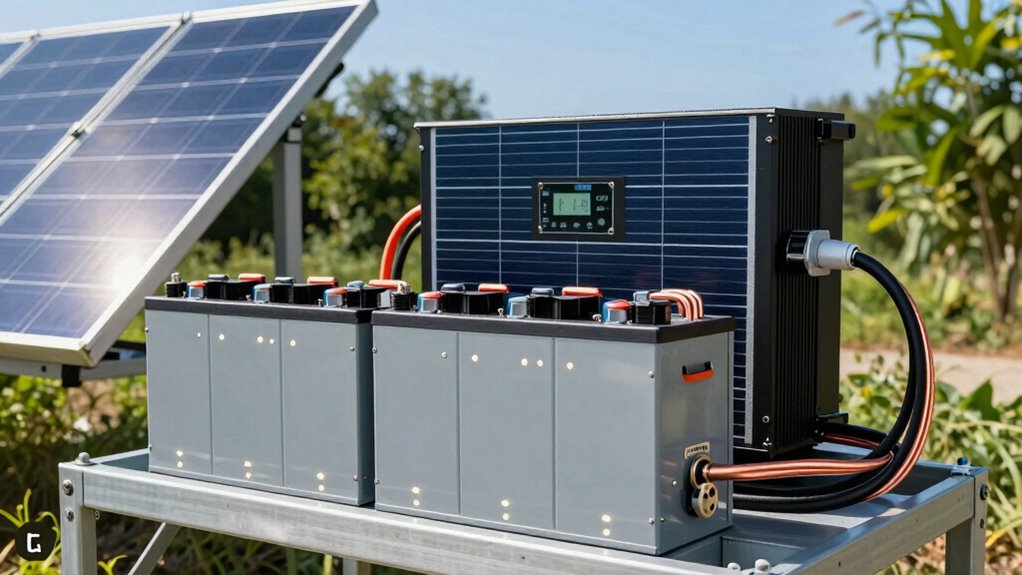
Are you looking for a reliable, efficient way to power your off-grid setup? If so, understanding the differences between 48V and 12V systems can help you make the right choice. One of the key advantages of a 48V system is its larger battery capacity. With higher voltage, you can store more energy without increasing the size of your batteries substantially. This means longer run times and the ability to power more demanding appliances. Plus, when paired with a high-quality inverter, a 48V system often offers better inverter efficiency. This efficiency translates to less energy lost during conversion, which means more of your stored energy gets used to run your devices instead of dissipating as heat.
In terms of scalability, 48V systems tend to be more adaptable. As your energy needs grow, upgrading a 48V setup is usually simpler and more cost-effective. You can add more batteries or larger inverters without overhauling the entire system. This scalability is especially valuable if you plan to expand or if your energy demands fluctuate seasonally. On the other hand, 12V systems are generally simpler and cheaper upfront. They are often suitable for small, low-power applications like RVs, boats, or tiny cabins. But because they operate at lower voltages, they require larger current flows for the same power output, which can lead to increased wiring costs and potential efficiency losses if not managed properly.
However, it’s important to recognize the limitations. While 48V systems provide improved efficiency and capacity, they also require more sophisticated components and wiring, which can add to initial costs and complexity. If your power needs are modest and limited to basic devices, a 12V system might be more practical and easier to set up. It’s also worth noting that inverter efficiency plays a pivotal role in overall system performance. Higher voltage systems often support inverters with better efficiency ratings, meaning you get more usable energy from your batteries. This not only saves money over time but also extends the lifespan of your batteries since they won’t need to be cycled as often. Additionally, understanding projector technology can help optimize energy consumption when integrating such devices into your off-grid setup.

48V Lithium Battery Golf Cart Batteries Kit with Smart 200A BMS 58.4V 18A Charger Touch Monitor & Mobile APP 10000 Rechargeable Cycles 48V 100Ah LiFePO4 Battery for Solar RV and Off Grid Applications
10,000+ Cycles, Easy Installation: 48V lithium battery golf cart conversion kit can achieve more than 10,000 deep cycles…
As an affiliate, we earn on qualifying purchases.
As an affiliate, we earn on qualifying purchases.
Frequently Asked Questions
How Does 48V Compare to 24V Systems in Efficiency?
You’ll find 48V systems generally more efficient than 24V setups because they reduce voltage conversion losses, making power transfer smoother. This improved efficiency benefits system compatibility, allowing you to run higher loads with less energy loss. Plus, 48V systems often require thinner wiring, saving costs and installation time. However, if your current setup is already optimized for 24V, upgrading might not yield significant efficiency gains, so consider your specific needs.
Can Existing 12V Appliances Be Adapted for 48V Systems?
You can adapt existing 12V appliances for 48V systems through voltage conversion, but it’s not always straightforward. Many appliances aren’t directly compatible with higher voltages, so you’ll need a step-down converter or inverter to guarantee safe operation. Be aware that some devices may not work efficiently or could get damaged if used without proper voltage regulation. Always check appliance compatibility and consider professional assistance for safe voltage conversion.
What Are the Safety Concerns With Higher Voltage Systems?
Think of higher voltage systems like a roaring river—you need to respect its power. Voltage hazards can cause severe shocks or fires if insulation requirements aren’t met. You must guarantee proper insulation, grounding, and safety protocols to prevent accidents. Always handle wiring carefully, wear protective gear, and stay aware of the risks. Ignoring these concerns can turn a powerful system into a dangerous one, risking injury or property damage.
How Does Cost Vary Between 12V and 48V Setups?
You’ll find that 48V setups usually cost more upfront due to higher-quality components and increased safety measures, but they can save you money in the long run through better efficiency. A 12V system is cheaper initially, making it ideal for tight budgets. Consider your budget and energy needs carefully, because while 48V offers advantages, the higher cost might impact your overall budget considerations.
What Maintenance Is Required for 48V Off-Grid Systems?
You’re in for a smooth ride if you stay on top of your 48V off-grid system’s maintenance. Regularly check your inverter to confirm it’s running efficiently, and don’t forget battery maintenance—keep terminals clean and monitor voltage levels. This proactive approach prevents surprises down the road. With some routine checks, you’ll keep your system humming along, proving that a little maintenance goes a long way in avoiding headaches.
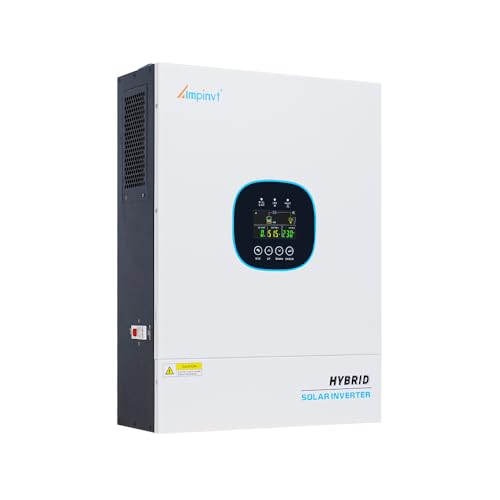
Ampinvt Solar Inverter 5000 Watt 48V to 120V, inbuilt 100A MPPT Solar Charger, Max PV Input 5500W 500Vdc,Off Grid Pure Sine Wave Inverter Support up to 6 in Parallel for Lead Acid Lithium Battery
This Pure Sine Wave Solar Inverter is a combination of an inverter, ac battery charger , MPPT solar…
As an affiliate, we earn on qualifying purchases.
As an affiliate, we earn on qualifying purchases.
Conclusion
Switching to a 48V off-grid power system can markedly improve efficiency and safety, especially for larger setups. Did you know that 48V systems reduce energy loss by up to 30% compared to 12V systems? This makes them ideal for demanding applications, but not always necessary for small-scale needs. Carefully weigh your power requirements before upgrading — sometimes, sticking with 12V is simpler and more cost-effective. Choose wisely to guarantee your off-grid system works best for you.
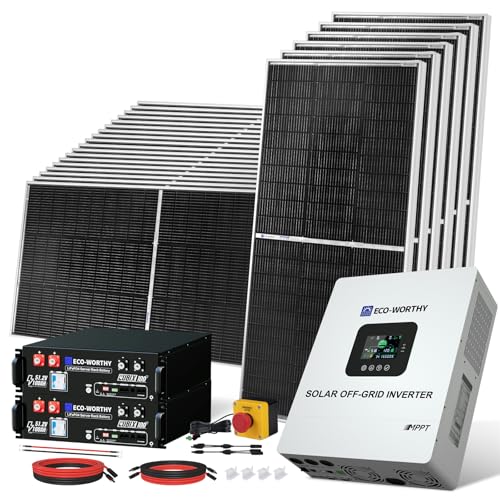
ECO-WORTHY Complete Off-Grid Solar Kit:5000W 120V/48VDC Solar Off-Grid Inverter+10.24kWh Integrated Communication Battery Bank+24×195W Mono Solar Panels | Off Grid, Residential, Home, Back Up
Full Off-Grid Solar Solution: Achieve energy independence with a robust renewable solution! Take control of your energy independence…
As an affiliate, we earn on qualifying purchases.
As an affiliate, we earn on qualifying purchases.

ECO-WORTHY 48V Off Grid Solar System Complete Kit 1600W 6.24KWH Solar Panel Kit for Home:8pcs 195W N-Type Bifacial Solar Panels,48V 100Ah Pro LiFePO4 Server Rack Battery with LED,3500W Solar Inverter
[Ideal Output Power-6.24KWh/day]: This 1600W solar panel complete system generates about 6.24KWh per day under 4 hours full…
As an affiliate, we earn on qualifying purchases.
As an affiliate, we earn on qualifying purchases.