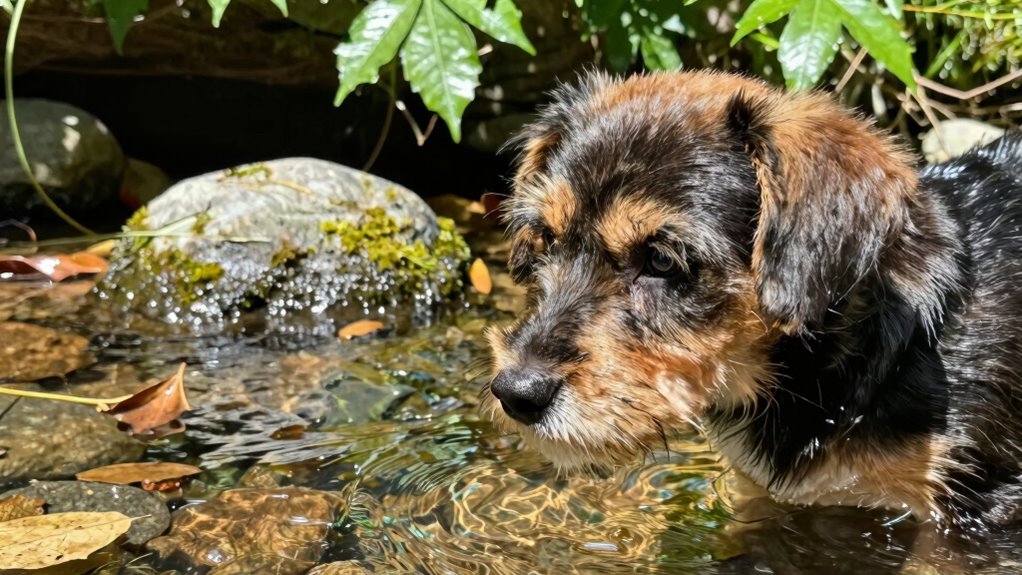

You should avoid letting your pet drink from streams because they can contain dangerous bacteria like Salmonella and Leptospira, as well as harmful chemicals from runoff. Even if the water looks clean, it might hide microbes or toxins that could cause illness or long-term health issues. To keep your pet safe, always supply fresh, treated water. If you want to know more about ensuring safe hydration outdoors, keep going to find helpful tips and precautions.

Get garden gear delivered free with Prime
- Fast, free delivery on millions of items
- Prime Video, Amazon Music and more included
- Member-only deals all year
Key Takeaways
- Avoid letting pets drink from streams due to bacteria like Salmonella and Leptospira.
- Use treated, bottled, or filtered water to hydrate pets during outdoor activities.
- Test natural water sources for contaminants such as pesticides and heavy metals before considering them safe.
- Monitor pets closely for signs of illness after exposure to natural water sources.
- Prevent health risks by preventing pets from drinking untreated stream water altogether.
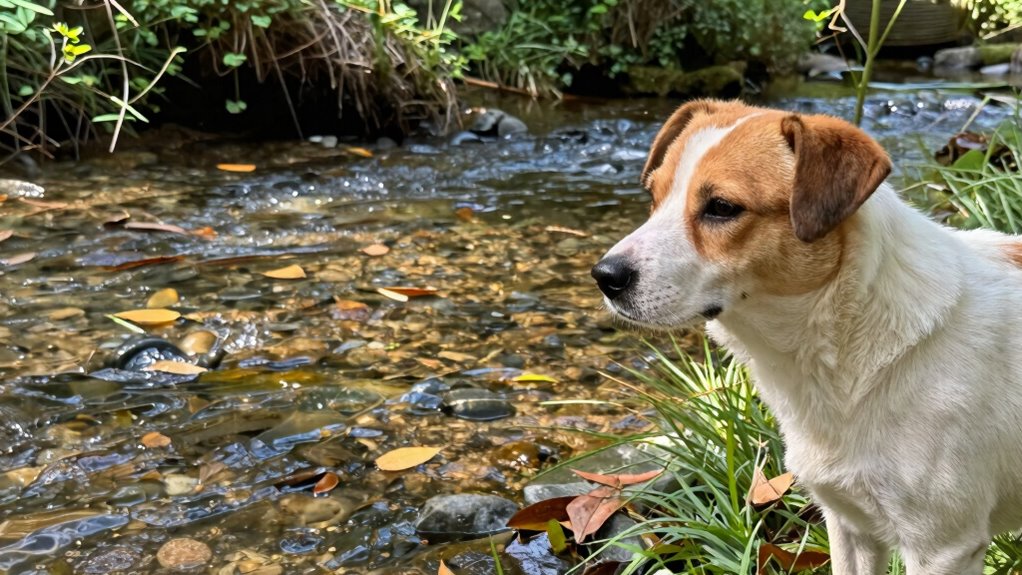
Ever wonder if the water your pet drinks is truly safe? It’s a valid concern, especially when animals are naturally curious and tend to explore their environment. When it comes to stream water, the risks can be significant. Natural water sources like streams often contain waterborne bacteria that can cause illness in pets. These bacteria, such as Salmonella or Leptospira, thrive in untreated water and can lead to serious infections if ingested. Even if the water looks clean and clear, it might still harbor these harmful microorganisms. In addition to bacteria, chemical contaminants pose a real threat. Runoff from agriculture, industrial waste, or pollution can seep into streams, introducing dangerous chemicals like pesticides, heavy metals, or other toxins. These substances can accumulate in your pet’s body over time, leading to health issues that might not be immediately obvious. Testing water sources for contaminants is an important step in ensuring safety. You need to be aware that animals don’t have the same filtering systems humans do. Their bodies are more vulnerable to these contaminants, which can cause everything from mild stomach upset to more severe conditions like organ damage or neurological problems. Drinking contaminated stream water isn’t just an immediate risk; it can also set your pet up for long-term health problems. That’s why it’s best to avoid letting your pet drink from natural water sources whenever possible, especially when you’re unsure of what’s in the water. The presence of waterborne bacteria and chemical contaminants in streams makes them unsafe, even in seemingly pristine environments. Just because water looks fresh and pure doesn’t mean it’s free of dangerous microbes or chemicals. It’s tempting to let your pet explore and hydrate from natural sources during outdoor adventures, but the potential health hazards outweigh the convenience. Instead, opt for clean, treated water or bottled water designed for pets. If you do find yourself in a situation where your pet has ingested stream water, keep an eye out for signs of illness such as vomiting, diarrhea, lethargy, or loss of appetite. Consult your veterinarian promptly to ensure proper treatment and to check for any underlying infections or toxin exposure.
Frequently Asked Questions
Can Pets Drink Rainwater Safely?
Pets can drink rainwater, but you should consider rainwater safety first. Make sure it’s collected in a clean, covered container to prevent contaminants. Unlike stream water, which carries risks like bacteria and parasites, rainwater can be safer if properly filtered and boiled. Always monitor your pet for any signs of illness after drinking rainwater, and avoid letting them drink untreated water from streams or puddles.
How Often Should I Change My Pet’s Water?
You should change your pet’s water at least once a day to keep their hydration habits healthy. It’s easy to forget, but fresh water encourages proper water consumption frequency and prevents bacteria buildup. Coincidentally, pets often refuse stale water, so daily changes ensure they stay well-hydrated and happy. Check their bowl regularly, especially in warm weather, to maintain peak freshness and support their overall health.
Are Water Filters Necessary for Pet Water Bowls?
Water filters are essential for pet bowls because they improve water filtration, ensuring your pet stays hydrated with clean, fresh water. They help remove impurities, odors, and contaminants, making water more appealing and encouraging your pet to drink more. Proper pet hydration supports overall health, so investing in a good filter can keep your furry friend healthier and happy. Regularly changing filters maintains their effectiveness and guarantees ongoing water quality.
What Signs Indicate Water Poisoning in Pets?
Imagine your pet’s body as a delicate garden. If you notice toxicity symptoms like vomiting, diarrhea, or lethargy, it’s like weeds taking over. Dehydration signs—dry gums, sunken eyes, or excessive panting—are like wilting plants needing water. Spotting these signs quickly means you can act fast, preventing further harm. Always keep a close eye on your pet’s behavior and hydration levels for their safety.
Is Bottled Water Better Than Tap Water for Pets?
Bottled water is generally better than tap water for pets because it often has higher water quality and fewer contaminants. You should prioritize your pet’s hydration needs by providing clean, safe water, especially if tap water contains chlorine or other chemicals. Always choose bottled or filtered water when in doubt, ensuring your pet stays well-hydrated and healthy. Regularly check the water source to prevent any health issues.
Conclusion
Remember, your pet’s health depends on the water they drink. Stream water often harbors unseen dangers, so it’s best to stick with clean, fresh sources—think of it as your modern-day Hippocratic oath. Don’t risk a trip to the vet over something as simple as unsafe water. Keep your furry friend happy and healthy by always providing safe hydration. After all, even in this age of progress, common sense still rules the day.
Fall Picks
fall essentials
As an affiliate, we earn on qualifying purchases.