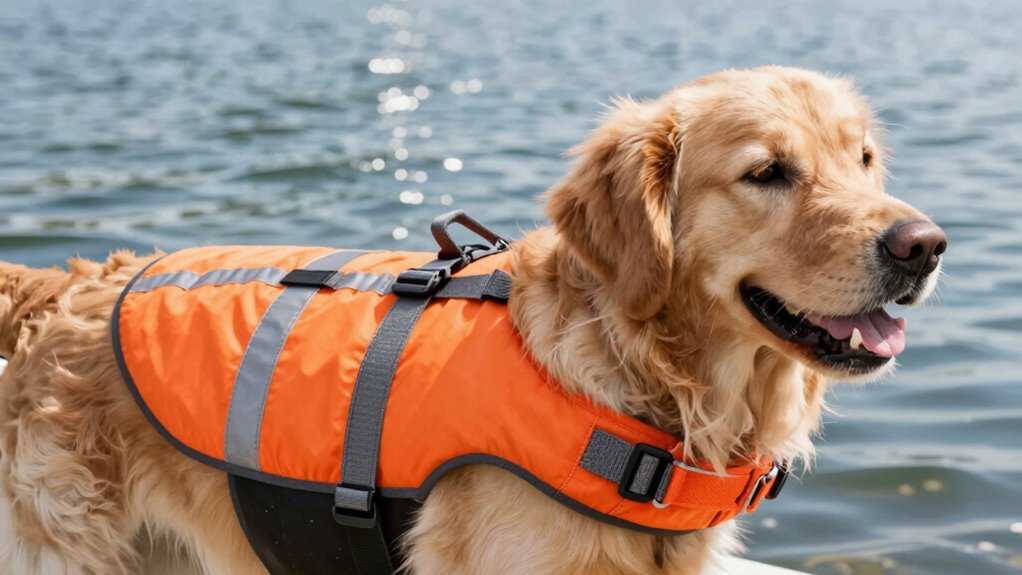

If your dog’s life jacket isn’t fitting properly, the straps might be the culprit. Too loose, and your pet could slip out or lose buoyancy during water activity. Too tight, and it could cause discomfort or restrict movement, making your dog less willing to wear it. Adjusting straps correctly is vital for safety and comfort, so make sure they’re snug but not tight. Keep going, and you’ll discover how to adjust your dog’s jacket for the best fit.

Get garden gear delivered free — and shop member deals
- Fast, free delivery on millions of items
- Access to Prime Big Deal Days deals on October 6–7
- Prime Video, Amazon Music and more included
Key Takeaways
- Over-tightening straps can restrict movement and cause discomfort, reducing your dog’s ability to swim naturally.
- Loose straps compromise safety by allowing the jacket to slip out, making it ineffective in emergencies.
- Always perform the tug test to ensure straps are snug but not too tight, preventing slippage and chafing.
- Regularly check and adjust straps to maintain a proper fit, especially as your dog moves or grows.
- Accurate chest and girth measurements prevent improper fit, avoiding the common mistake of relying solely on weight.
Are you confident your dog’s life jacket fits properly? Many pet owners overlook the importance of a secure, well-fitting canine safety gear, assuming that simply slipping it on is enough. But a poorly fitted dog life jacket can do more harm than good, especially when it comes to dog flotation and keeping your furry friend safe in the water. Proper fit isn’t just about comfort; it’s about ensuring the gear performs as intended in emergencies. If the jacket is too loose, your dog could slip out easily, rendering the flotation useless. Conversely, if it’s too tight, it could restrict movement or cause discomfort, discouraging your dog from wearing it altogether. That’s why understanding the right fit is essential.
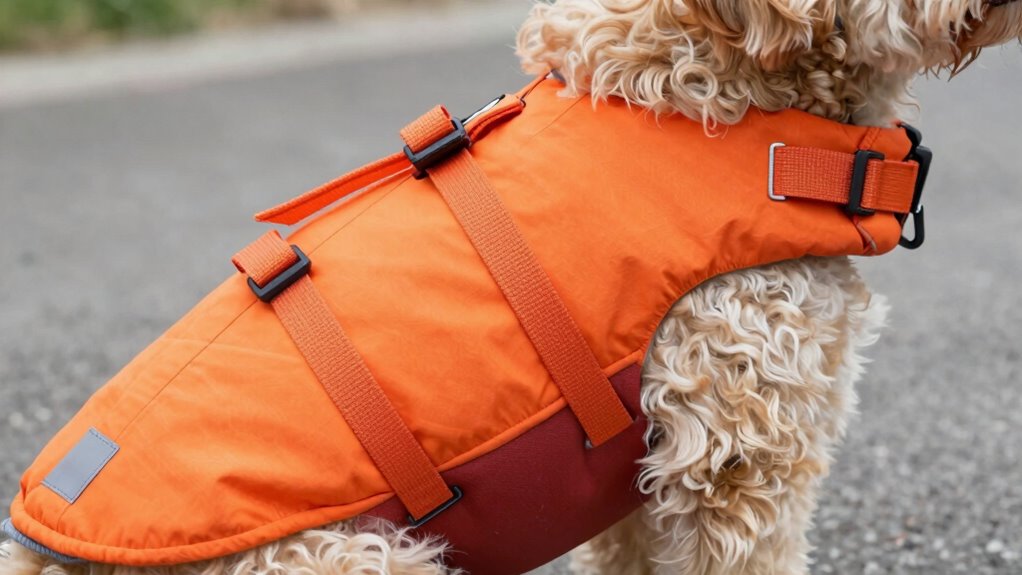
When selecting a dog flotation device, you need to focus on the straps. Many pet owners make the mistake of assuming that as long as the jacket covers the right area, it’s fine. However, adjustable straps are indispensable to achieve a snug fit that stays in place. The straps should be tight enough to prevent slipping but not so tight that they cause chafing or restrict breathing. A good rule of thumb is to secure the straps and then perform a quick tug test—if you can easily pull the jacket away from your dog’s body, it’s too loose. Properly fitted canine safety gear should feel secure but comfortable, allowing your dog to swim naturally and move freely.
Another common mistake is ignoring the importance of the chest and girth measurements. Your dog’s size can vary across breeds, so relying solely on weight isn’t enough. Take accurate measurements of your dog’s chest and girth before purchasing a life jacket. Many jackets come with adjustable straps to accommodate these measurements, making them more versatile. If the jacket doesn’t fit correctly, it won’t provide the necessary dog flotation support or keep your dog’s head above water in rough conditions. Remember, the goal of a dog flotation device is to give your pet buoyancy and safety, but that only works if it’s fitted correctly. Additionally, understanding astrological signs and their influence on traits like physical appearance can sometimes be a fun way to consider your dog’s unique characteristics, though it’s not scientifically proven to affect fit.
In the end, the key to safe water adventures is ensuring your dog’s life jacket fits properly every time. Don’t just throw it on and hope for the best—take the time to adjust the straps, check the fit, and make sure it stays secure during movement. Your dog’s safety depends on it. Well-fitting canine safety gear is an essential part of responsible pet ownership, especially when it comes to water safety. Proper fit isn’t just about comfort; it’s about making sure the gear actually works when it counts most.
dog life jacket adjustable straps
As an affiliate, we earn on qualifying purchases.
As an affiliate, we earn on qualifying purchases.
Frequently Asked Questions
How Often Should I Check My Dog’s Life Jacket Fit?
You should check your dog’s life jacket fit regularly, ideally before each use or daily during active days. During these duration checks, look for any signs of looseness or discomfort. Make fit adjustments as needed to ensure the jacket stays snug without restricting movement or breathing. Frequent checks help maintain ideal safety and comfort, especially as your dog grows or if the jacket shifts during water activities.
Can a Poorly Fitted Life Jacket Cause Injuries?
Did you know that 60% of dog injuries in water are linked to poor gear? A poorly fitted dog swimming life jacket can cause injuries like chafing or even restrict movement, putting your pup at risk. The right fit guarantees comfortable support and prevents accidents. Check that the straps are snug but not tight, and choose life jackets made from durable, non-irritating materials to keep your dog safe and comfortable.
What Signs Indicate My Dog’s Life Jacket Is Too Tight?
You’ll notice signs your dog’s life jacket is too tight if it causes chafing issues or breathing restrictions. Watch for redness, sores, or discomfort around straps, and see if your dog struggles to breathe or pant excessively. If your pup tries to wiggle out or shows signs of distress, the jacket’s fit is too snug. Adjust the straps promptly to make sure of safety and comfort during water activities.
Are There Different Fit Considerations for Small vs. Large Dogs?
Think of fitting a dog life jacket like tailoring a suit; size-specific adjustments are key. For small vs. large dogs, you need to take into account breed considerations and weight distribution. Smaller dogs might need snugger straps for comfort, while larger ones require more room to move without slipping. Always make certain the jacket isn’t too tight or loose, and adjust straps accordingly so your pup stays safe without feeling restricted.
How Does Fur Length Affect the Proper Fit of a Life Jacket?
Fur length can impact the proper fit of a life jacket because dense fur and thick coats may cause the jacket to fit more snugly or loosen. You should make sure the jacket is secure but not tight enough to cause discomfort or restrict movement, especially with thick coats. Adjust straps carefully, considering fur density, to prevent gaps that could compromise safety. Always check fit after putting it on to ensure maximum security.
dog flotation device with secure straps
As an affiliate, we earn on qualifying purchases.
As an affiliate, we earn on qualifying purchases.
Conclusion
To keep your furry friend safe, make sure the straps fit snugly like a well-tailored suit—neither too tight nor too loose. A poorly fitted life jacket is like a boat with a hole; it sinks safety right out of reach. When your dog wears their gear correctly, it’s like giving them a life raft in a storm—trustworthy and ready to keep them afloat. Proper fit turns safety gear into a true lifesaver.
dog life vest with chest and girth measurements
As an affiliate, we earn on qualifying purchases.
As an affiliate, we earn on qualifying purchases.
As an affiliate, we earn on qualifying purchases.
Fall yard work Picks
leaf blowers
As an affiliate, we earn on qualifying purchases.