When choosing between a wetsuit and a drysuit for cold water, consider your activity and how cold the water is. Wetsuits are great for moderate cold and allow freedom of movement, but they can lose insulation over time if not snugly fitted. Drysuits keep you dry and warm longer in extreme cold, especially when layered underneath. To discover which option suits your needs best and how to optimize your choice, explore the key differences further.

Get garden gear delivered free with Prime
- Fast, free delivery on millions of items
- Prime Video, Amazon Music and more included
- Member-only deals all year
Key Takeaways
- Wetsuits are suitable for mild to moderate cold water, offering flexibility but less insulation over time.
- Drysuits provide superior warmth in extremely cold water by allowing adjustable insulating layers.
- Wetsuits trap a thin water layer heated by the body, while drysuits keep the wearer completely dry for better insulation.
- Drysuits are less flexible, potentially restricting movement, but ideal for prolonged cold-water exposure.
- Choice depends on water temperature, activity duration, and mobility needs for optimal comfort and safety.
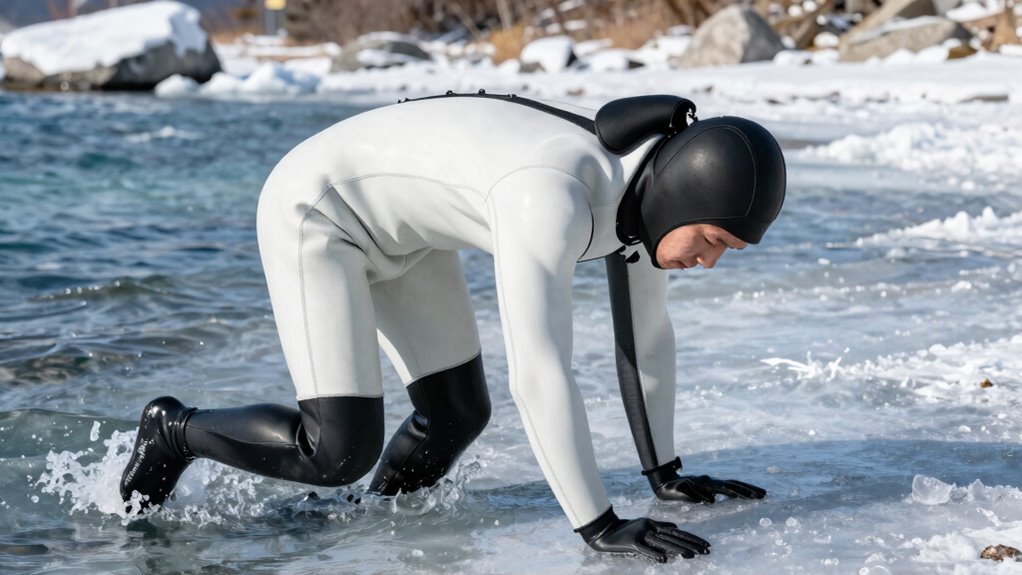
When choosing between a drysuit and a wetsuit, understanding their key differences can help you make the right decision for your water activities. Both suits are designed to keep you warm in cold water, but they approach thermal insulation and mobility comfort quite differently. Knowing how these factors influence your comfort and safety is essential before making a purchase or rental decision.
Choosing between drysuits and wetsuits depends on your activity, water temperature, and mobility needs.
A wetsuit works by trapping a thin layer of water between your body and the suit’s neoprene material. Your body heats this water, providing insulation that helps you stay warm. Because of this design, wetsuits offer good thermal insulation in relatively mild or moderately cold water. However, in very cold conditions, the insulating layer can become less effective over time, especially if the suit doesn’t fit snugly. One advantage of wetsuits is their flexibility; the neoprene material allows for a high degree of mobility comfort. You can move freely, swim naturally, and perform aquatic activities without feeling restricted. This flexibility makes wetsuits popular among surfers, divers, and swimmers who value ease of movement.
Drysuits, on the other hand, keep you completely dry by sealing off your body from water exposure. They are typically made from waterproof materials like latex, rubber, or advanced synthetic fabrics. To stay warm, you wear insulating layers underneath, such as thermal underwear or fleece. This setup provides superior thermal insulation, especially in extremely cold water, because you can add or remove insulating layers based on conditions. The trade-off is that drysuits tend to be less flexible than wetsuits, which can reduce mobility comfort. The suit’s design often restricts movement somewhat, making activities that require a lot of agility more challenging. However, drysuits excel in keeping you warm for extended periods and are especially beneficial in prolonged exposure situations or extremely cold environments.
Your choice depends on your specific needs. If you prioritize ease of movement and moderate water temperatures, a wetsuit might be best. It offers good thermal insulation for milder conditions while allowing you to move freely. If you need to stay dry and warm in frigid water or plan extended outings, a drysuit provides superior thermal insulation, albeit with a slight compromise on mobility comfort. Ultimately, understanding how each suit handles thermal insulation and mobility will help you select the gear that keeps you safe, comfortable, and ready to enjoy your water adventures.
Frequently Asked Questions
How Long Do Drysuits Typically Last With Regular Use?
A drysuit typically lasts around 5 to 10 years with regular use, depending on suit lifespan and durability factors. To maximize its longevity, you should rinse it after each dive, store it properly, and avoid sharp objects. Proper maintenance prevents tears and material degradation, ensuring your drysuit remains functional and comfortable during cold-water adventures. Regular inspections and repairs also help extend its overall durability.
Can I Switch Between Drysuits and Wetsuits Easily?
Switching between drysuits and wetsuits is like changing gears in a car—you can do it, but it takes a little effort. Suit interchangeability depends on your gear setup and fit, so comfort shift might require some adjustments. With practice, you’ll find it easier to move between suits, making your diving experience more flexible. Just remember, each suit offers unique benefits, so choose the one that best fits your water conditions.
Are There Specific Activities Better Suited to One Suit Type?
Certain activities suit one suit type better. For surfing comfort, wetsuits offer flexibility and ease of movement, making them ideal. Scuba advantages shine with drysuits, providing better insulation and dryness in colder waters. If you’re diving in freezing conditions, a drysuit keeps you warmer and more comfortable. For quick dips or warmer water surfing, wetsuits are more practical. Choose based on your activity’s needs and water temperature for the best experience.
Do Drysuits Require Special Maintenance or Repairs?
Drysuits do require special maintenance and repairs to stay in good condition. You should regularly check seals, zippers, and valves for damage, and clean the suit after every use with fresh water. For repairs, it’s best to visit a professional experienced in drysuit maintenance, especially for seal or zipper issues. Proper care guarantees your drysuit remains waterproof, durable, and ready for cold-water adventures.
How Do I Choose the Right Size for Optimal Comfort?
Choosing the right size for your wetsuit or drysuit is like finding a glove that molds perfectly to your hand. Focus on fit considerations—should be snug but not constrictive, allowing layering options underneath without feeling tight. Measure your chest, waist, and inseam accurately, and try suits on if possible. Remember, a well-fitting suit keeps you warm and agile, turning cold water into just another splash in your adventure.
Conclusion
Choosing between a drysuit and wetsuit is like steering the mythic river of Hades—you must decide what keeps you safe and comfortable in the unknown depths. Your suit choice shapes your adventure, just as Theseus’s thread guided him through the labyrinth. Trust your instincts, weigh the risks, and remember that, whether you wear armor or a second skin, your confidence in the water determines whether you conquer the cold or let it conquer you.
Fall Picks
fall essentials
As an affiliate, we earn on qualifying purchases.