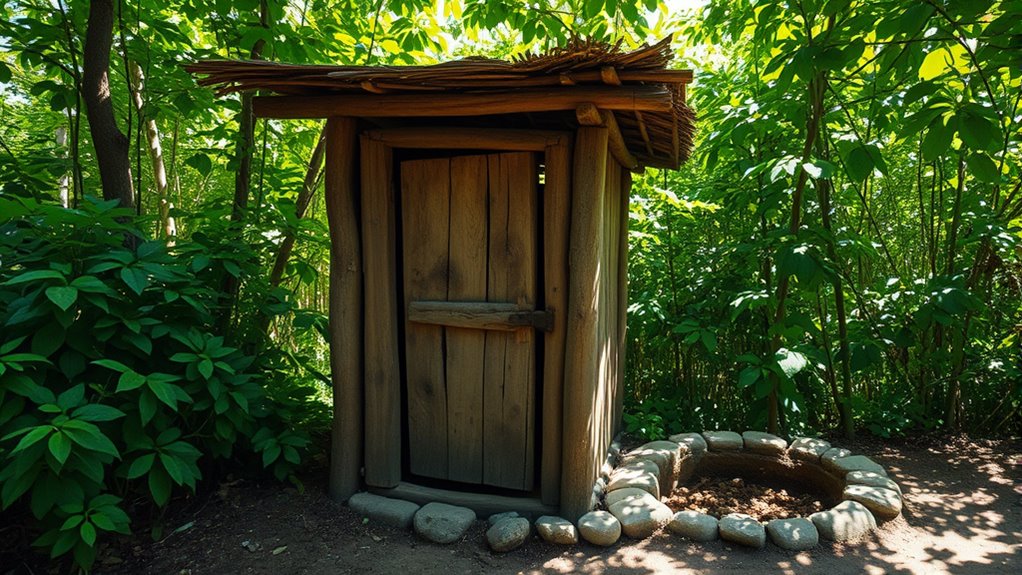

Off-grid sanitation offers eco-friendly latrines and waste management options designed for communities without access to centralized sewage systems. These solutions, like composting toilets and community-built latrines, focus on safe waste containment, minimal environmental impact, and resource recovery. They often include education and community involvement to guarantee proper use and maintenance. If you want to explore sustainable waste solutions tailored to remote areas, there’s much more to discover on effective off-grid sanitation strategies.

Get garden gear delivered free with Prime
- Fast, free delivery on millions of items
- Prime Video, Amazon Music and more included
- Member-only deals all year
Key Takeaways
- Eco-friendly latrines like composting toilets safely treat human waste on-site, reducing water use and environmental impact.
- Community sanitation programs promote hygiene education and local ownership to ensure sustainable latrine maintenance.
- Proper waste containment using natural materials prevents groundwater contamination and pathogen spread.
- Off-grid sanitation solutions are adaptable, cost-effective, and designed for remote areas without centralized sewage systems.
- Training and community engagement are essential for effective construction, operation, and long-term sustainability of latrines.
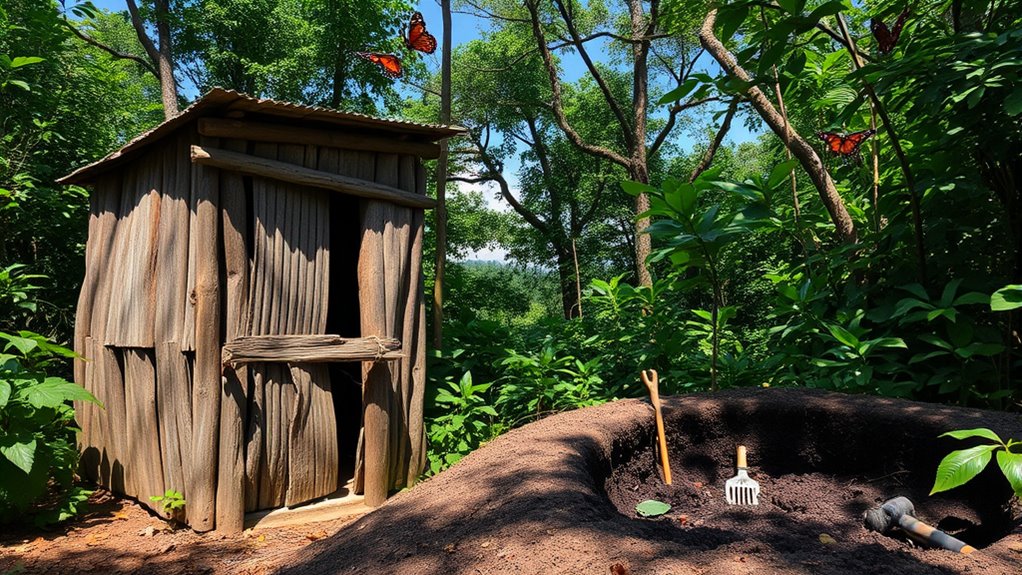
Have you ever wondered how communities without access to centralized sewage systems manage sanitation? It’s a pressing challenge, especially in remote or developing areas, but innovative solutions like off-grid sanitation are making a real difference. These communities rely on eco-friendly waste management methods, which prioritize sustainability and minimize environmental impact. Instead of traditional sewer systems, they often implement community sanitation programs designed to handle waste safely and effectively. These programs typically include the use of simple, affordable latrines that can be built and maintained locally, reducing costs and encouraging community ownership.
You might be surprised to learn how versatile and adaptable these latrines are. They come in various designs, from composting toilets to pour-flush systems, all aiming to contain and treat waste on-site. Composting toilets, for instance, turn human waste into compost through controlled decomposition, which can then be used as fertilizer. This process not only reduces water usage but also transforms waste into a resource, exemplifying eco friendly waste management. Such systems require minimal infrastructure and are ideal for areas with limited water supply or poor sanitation infrastructure. Their simplicity allows communities to implement them quickly and maintain them with local materials and knowledge.
Community sanitation programs often include education efforts to promote proper hygiene and waste disposal practices. These initiatives empower residents to take ownership of their sanitation facilities, ensuring they’re used correctly and maintained over time. Education is essential because it fosters a culture of cleanliness and helps prevent the spread of diseases. In addition, these programs frequently involve training on how to build and repair latrines, which boosts local capacity and sustainability. When communities understand how to manage their waste safely, they become more resilient and self-reliant.
Another key aspect is the integration of eco friendly waste management techniques that respect local ecosystems. Proper waste containment prevents groundwater contamination and reduces the spread of pathogens. Many off-grid sanitation solutions incorporate natural materials like gravel, ash, or biodegradable liners to enhance waste decomposition and containment. These methods are environmentally sound, cost-effective, and suitable for diverse environments. Additionally, understanding community involvement is crucial for the long-term success of sanitation projects, as active participation ensures proper use and maintenance. By focusing on such eco-friendly approaches, communities protect their water sources and promote healthier living conditions.
Top picks for "grid sanitation latrin"
As an affiliate, we earn on qualifying purchases.
Frequently Asked Questions
How Do Off-Grid Latrines Prevent Groundwater Contamination?
You can prevent groundwater contamination by focusing on proper latrine design that promotes groundwater protection. Make certain your latrine includes a sealed, ventilated superstructure and a lined or sealed pit to prevent leaks. Position it away from water sources and use a soak pit or soakaway that filters waste effectively. Regular maintenance also helps, ensuring waste doesn’t seep into the ground, keeping water sources safe.
What Are the Costs Associated With Installing Off-Grid Sanitation Systems?
Imagine building a sturdy bridge across uncertain waters—that’s your cost analysis for off-grid sanitation systems. You’ll face expenses like materials, installation, and maintenance, which vary by location. Funding sources such as government grants, NGOs, or community contributions help anchor these costs. While initial investments can seem steep, they’re often offset by long-term savings and health benefits, making your sanitation solution both feasible and sustainable.
How Is Waste Safely Treated and Disposed of in Remote Areas?
You guarantee waste is safely treated in remote areas through biodegradation processes that naturally break down waste over time. Proper container management is vital; you regularly empty and clean containers to prevent contamination. Using sealed, durable containers helps contain waste, while promoting aeration accelerates biodegradation. You might also implement composting or biogas systems to treat waste sustainably, reducing health risks and environmental impact in off-grid locations.
Are There Any Health Risks Linked to Off-Grid Sanitation?
Think of off-grid sanitation as steering a river—you need the right tools to avoid hidden dangers. Yes, health risks exist if sanitation policies aren’t followed or if cultural practices aren’t respected. Improper waste disposal can lead to water contamination and disease transmission. To stay safe, you must guarantee proper latrine construction, regular maintenance, and cultural awareness, reducing health risks and keeping your community healthy.
What Maintenance Is Required for Long-Term Latrine Sustainability?
To guarantee long-term latrine sustainability, you need to prioritize maintenance that enhances latrine durability. Regularly check for cracks, blockages, and structural issues, and keep the site clean to prevent health risks. User education is essential; teach users how to properly use and maintain the latrine. This ongoing effort helps extend the latrine’s lifespan, reduces repairs, and promotes consistent, safe sanitation practices for everyone involved.
Conclusion
By embracing off-grid sanitation solutions like latrines and waste management, you can turn the formidable task of waste disposal into a manageable part of daily life. Think of it as planting seeds for healthier communities and a cleaner environment—each simple action adds up like droplets forming a steady stream. With innovation and commitment, you hold the power to transform sanitation challenges into opportunities for sustainable change, nourishing both people and the planet.
Fall yard work Picks
leaf blowers
As an affiliate, we earn on qualifying purchases.