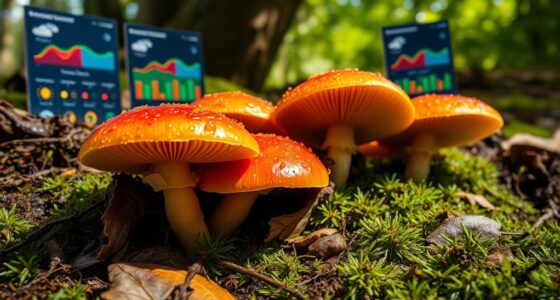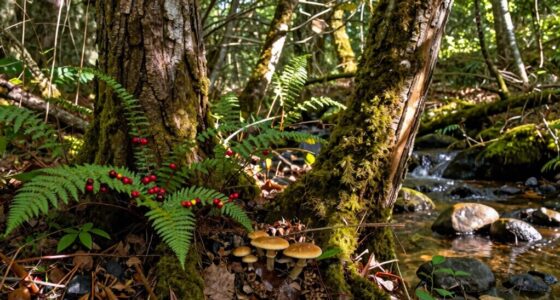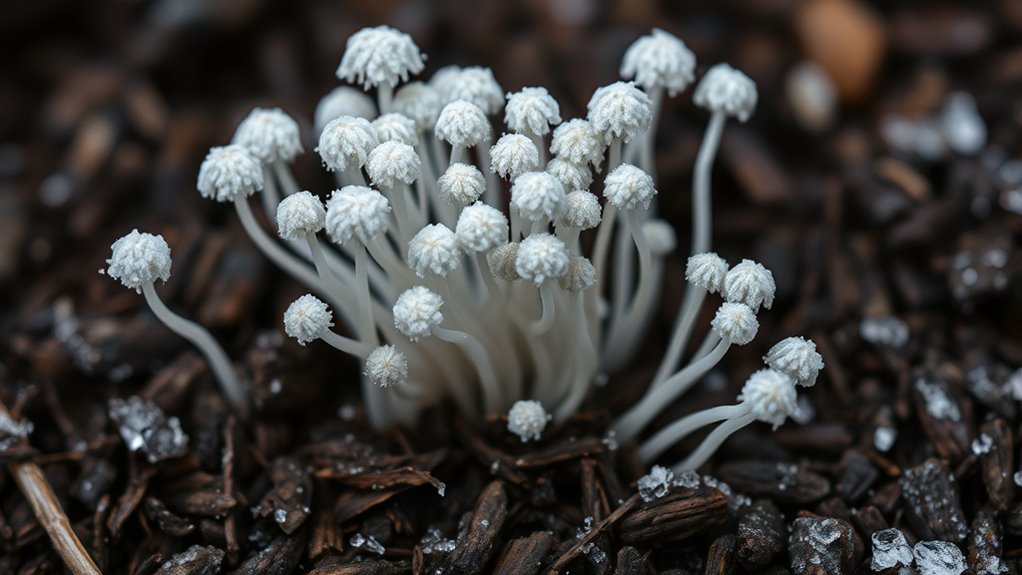
To fruit enoki mushrooms in cold weather, maintain temperatures of 45-50°F (7-10°C) and provide high humidity. Start by preparing a sterilized sawdust or soy hull substrate, inoculate with spawn, and keep it dark during colonization. Once fully grown, expose the substrate to cooler temps and mist regularly to trigger fruiting. Harvest carefully at the right time for best quality and multiple flushes. Keep these tips in mind, and you’ll discover how to optimize your enoki crop.
Key Takeaways
- Enoki mushrooms require temperatures around 45-50°F (7-10°C) to trigger fruiting in cold weather.
- Use sterilized sawdust or soy hulls as substrate, properly hydrated and inoculated with spawn.
- Maintain dark, cool conditions during colonization; expose to cooler temperatures and high humidity to initiate fruiting.
- Keep humidity high through misting and ensure good airflow to prevent mold during cold-weather growth.
- Harvest mushrooms promptly at cap opening using clean tools to ensure quality and encourage multiple flushes.
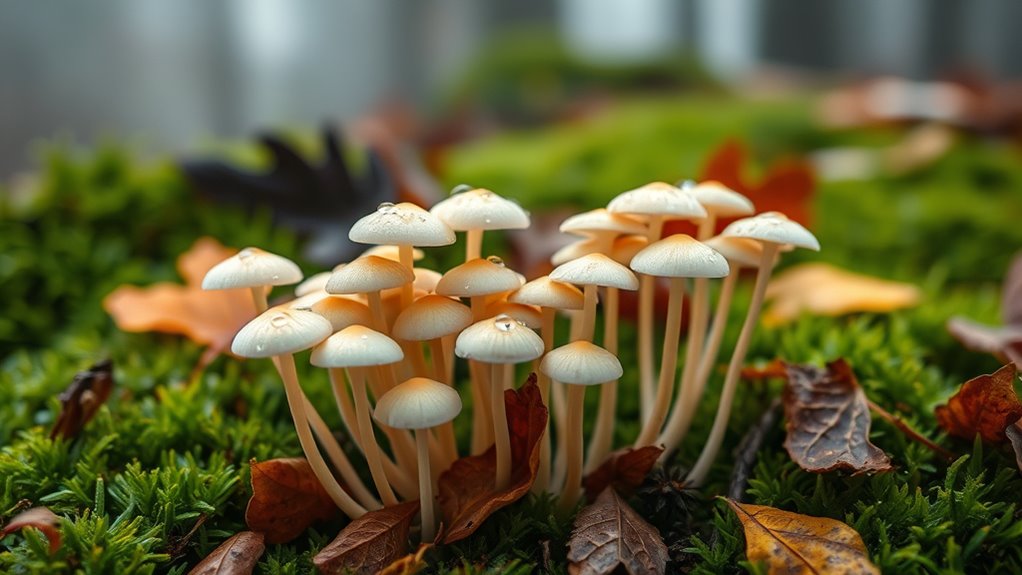
Are you curious about enoki mushrooms and how to incorporate them into your meals? Growing enoki at home can be rewarding, especially when you understand the basics of substrate preparation and harvesting techniques. Enoki mushrooms thrive in cold weather, so planning your cultivation around the right temperature is essential. To start, you’ll need to prepare a suitable substrate—usually a mixture of sterilized sawdust, soy hulls, or other lignocellulosic materials. Proper substrate preparation is vital because it provides the nutrients enoki mushrooms need to fruit. You should hydrate the substrate thoroughly and then sterilize or pasteurize it to eliminate competing fungi and bacteria. Once cooled, inoculate the substrate with enoki spawn, ensuring even distribution to promote uniform growth. After inoculation, pack the mixture into grow bags or containers, sealing them to maintain humidity and prevent contamination. Keep the environment cool and dark initially to allow mycelium to colonize the substrate fully. This process can take several weeks, during which you’ll need to monitor conditions closely. Hydrocolloid material can also be used in some cultivation methods to help maintain moisture levels more effectively.
When the mycelium has fully colonized the substrate, it’s time to shift to fruiting conditions. Exposing the bags or containers to cooler temperatures—around 45-50°F (7-10°C)—and increasing humidity triggers the enoki mushrooms to fruit. It’s important to maintain high humidity levels by misting regularly and ensuring good airflow to prevent mold growth. As your mushrooms develop, you’ll notice slender stems and small caps forming. During this stage, gentle handling is key—avoid disturbing the delicate clusters. Harvesting techniques are straightforward but require attention to detail. Use clean scissors or a sharp knife to cut the mushrooms at the base once they’re fully developed, typically when caps are just beginning to open. Timing is vital; harvesting too early results in small mushrooms, while waiting too long can cause them to over-mature and deteriorate quickly. Proper harvesting not only ensures a better flavor and texture but also encourages the growth of new flushes.

Soil Seed & Water Amazonian Dark Earth Organic Soil Amendment with Biochar & Minerals – Natural Fertilizer for Plants, Vegetables & Lawns - OMRI Listed Organic Fertilizer
- Key Benefits: Enhances garden sustainability and health
- Water & Nutrient Retention: Improves water and nutrient retention
- Versatile Use: Suitable for gardens, nurseries, and indoor plants
As an affiliate, we earn on qualifying purchases.
Frequently Asked Questions
How Can I Tell if My Enoki Mushrooms Are Fresh?
To tell if your enoki mushrooms are fresh, check for firm, white caps and long, slender stems without discoloration or sliminess. Fresh mushrooms should feel firm and dry to the touch, not slimy or sticky. When harvesting, pick enoki at peak freshness for the best flavor and texture. Always store them in a paper bag in the fridge, and use within a few days for ideal mushroom freshness.
What Are Common Pests That Affect Enoki Mushroom Growth?
A stitch in time saves nine, so stay vigilant. Common pests like insect infestations can target your enoki mushrooms, causing damage and spreading disease. Rodent damage is also a concern, as rodents may nibble on mushrooms or contaminate the growing area. Regular inspections, proper sanitation, and pest control measures help protect your crop. Don’t wait until pests take hold—early action keeps your enoki healthy and thriving.
Can Enoki Mushrooms Be Cultivated Indoors Year-Round?
Yes, you can cultivate enoki mushrooms indoors year-round. To do so, you need proper environmental controls, such as maintaining consistent temperature, humidity, and fresh air exchange. Indoor cultivation allows you to monitor and adjust these conditions easily, ensuring ideal growth regardless of outside weather. Keep a dedicated space, use appropriate substrates, and manage airflow to produce healthy, high-yield enoki mushrooms throughout the year.
How Do I Prevent Mold During Enoki Mushroom Cultivation?
Keep mold at bay by staying vigilant—avoid giving mold a foothold. Use mold prevention techniques like maintaining proper humidity, ensuring good air circulation, and sterilizing your tools and substrate regularly. Contamination control methods, such as working in a clean environment and removing any diseased mushrooms promptly, also help. Think of it as keeping your mushroom farm a tidy home, where mold has no room to settle and grow.
What Are the Signs of Overwatering Enoki Mushroom Mycelium?
You’ll notice overwatering in your enoki mushroom mycelium through waterlogging symptoms, like soggy substrate and slow growth. Discoloration of the mycelium, especially turning yellow or brown, also indicates excess moisture. To prevent this, maintain proper humidity levels and avoid overwatering. If you see these signs, reduce watering immediately and ensure good air circulation to help the mycelium recover and prevent mold or rot.

Pocket Hose Ballistic 100 FT Expandable Garden Hose, No-Kink, As Seen on TV
- Expands up to 3X for full coverage: Lightweight, compact, and easy to handle
- Ballistic-grade anti-burst sleeve: 5X stronger than steel for durability
- 360° swivel connector: Reduces twists, snags, and kinks
As an affiliate, we earn on qualifying purchases.
Conclusion
Now that you know how to grow enoki mushrooms in cold weather, you’re all set to give it a shot. With a little patience and the right conditions, you’ll reap a bountiful harvest in no time. Remember, success favors the prepared, so stay attentive to their needs. Don’t let the chance slip through your fingers—this is your moment to master this delicate delicacy. Get started, and watch your mushroom journey flourish!

JMXULONG Outdoor LED Grow Lights, Waterproof String Grow Light, Full Spectrum Plant Growing Lights Greenhouse 44Ft Adjustable Cord 12 Lights
- Waterproof and Durable: IP44 rated for indoor and outdoor use
- Full Spectrum Lighting: Includes 660nm deep red and warm white LEDs
- Energy Efficient: Consumes 45W/90W/180W with high PPF output
As an affiliate, we earn on qualifying purchases.

Monterey B.t. Bacillus Thuringiensis, 32 oz with Spoon
- Insect Killer for Caterpillars: Targets caterpillars and worm insects
- Versatile Foliage Protector: Suitable for vegetables and ornamentals
- Safe for Beneficial Insects: Does not harm bees, earthworms, or birds
As an affiliate, we earn on qualifying purchases.